

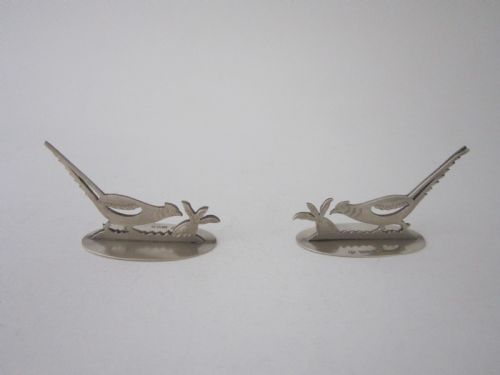


Antique Sterling Menu Stands
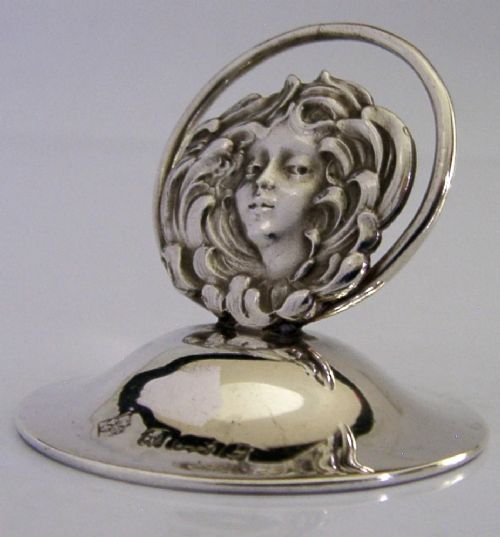
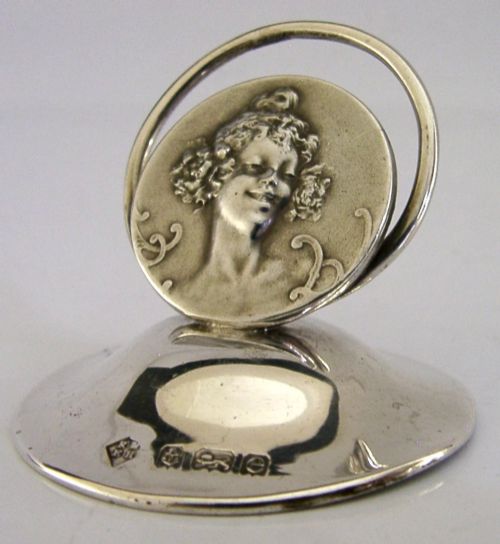
Antique sterling menu stands bring dining tables of the past to life with silver figures, owls, and wildlife.
Antique Sterling Menu Stands
Antique sterling menu stands sit on dining tables to hold dinner menus and place cards upright for guests. When searching for antique sterling menu stands, you encounter table accessories predominantly from the Edwardian period alongside George V, George VI, and Art Nouveau eras.
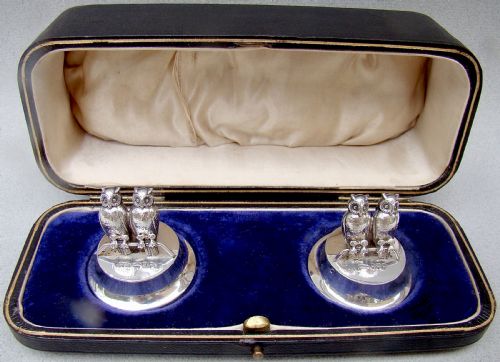
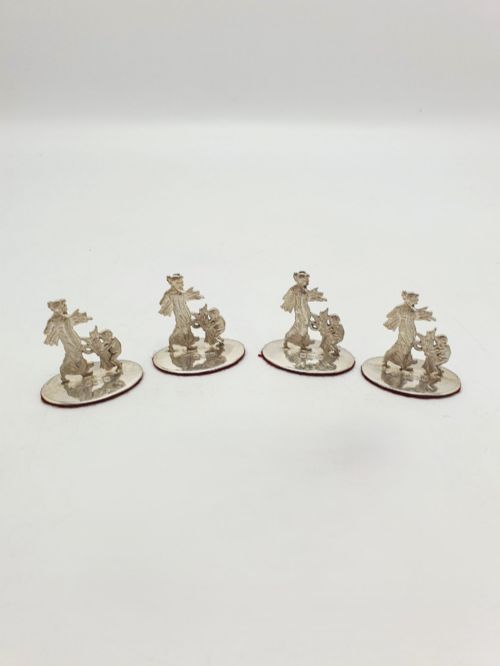
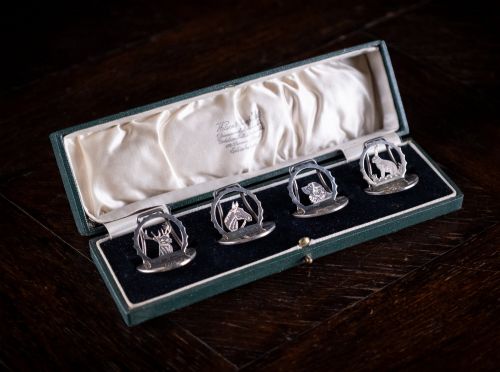
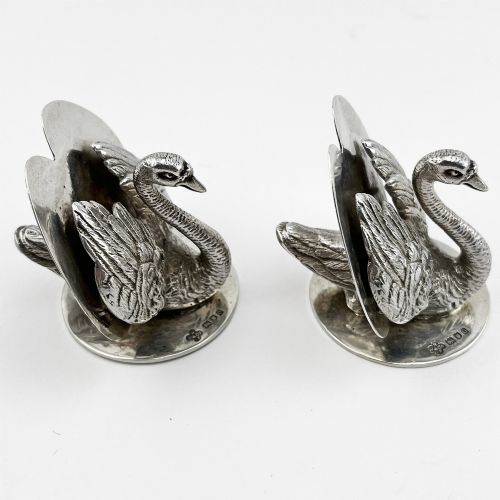
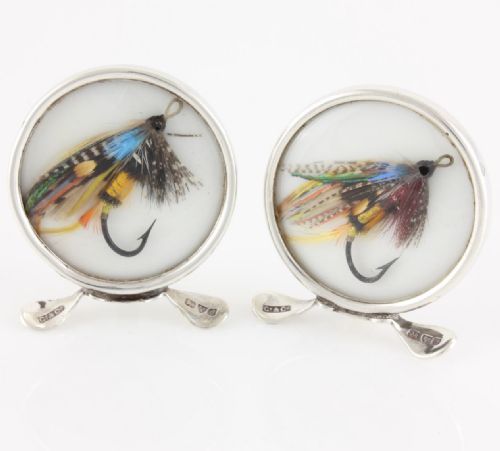
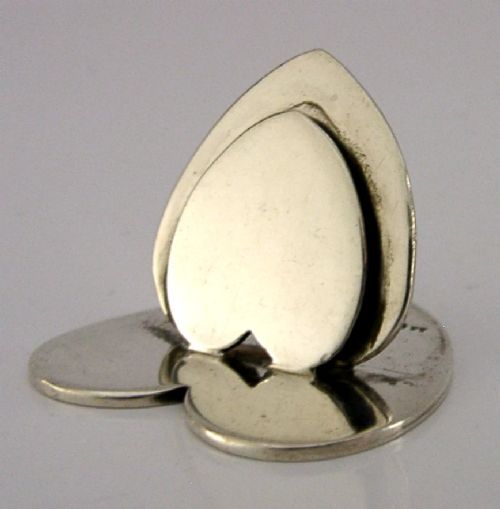
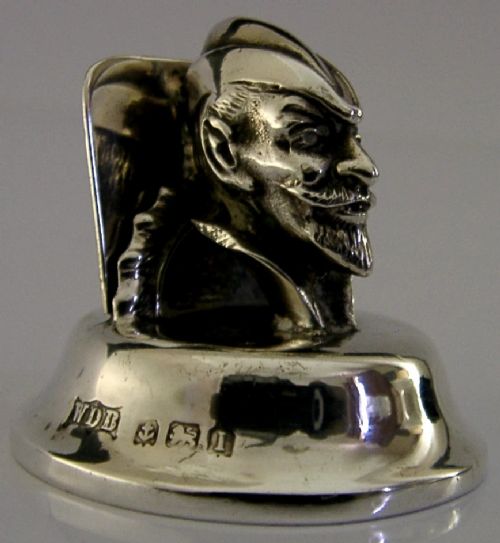
The pieces on this page take many distinct forms, including menu holders, place card holders, and combined menu and place card holders. Figural designs dominate the selection, portraying animals, birds, military subjects, and literary characters.
How they were made
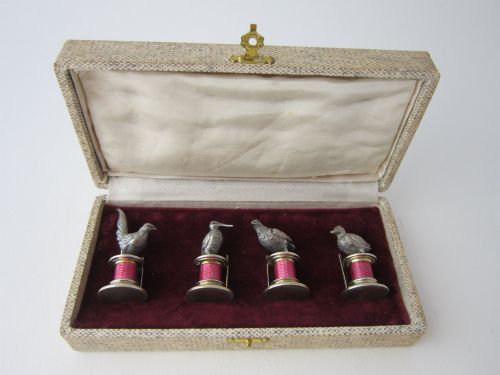
Silversmiths constructed these table accessories using sterling silver, frequently incorporating materials such as velvet, silk, glass, leather, feathers, and guilloche enamel to add colour and texture to the designs.
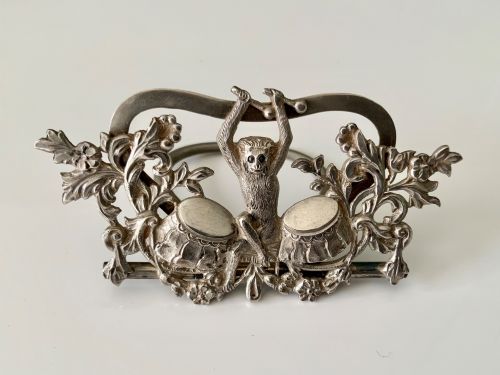
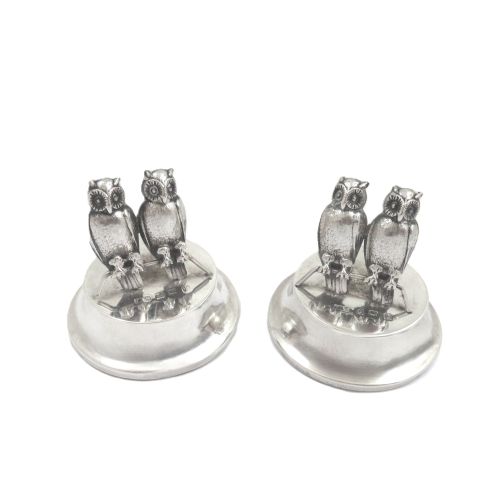
Workshop methods combined casting, stamping, and hand-chasing to render detailed figural subjects like owls, foxes, swans, and human figures, which were then mounted onto stable weighted or flat bases.
Dinners in the past apparently required silver monkeys playing drums and literary heroes to tell guests what was for supper.
What varies in quality
The standard of modelling defines the upper tier of these pieces, separating mass-produced items from finely detailed figural casts. Sharpness in feather and fur rendering, expressive faces, and crisp hallmarks elevate specific examples.
Completeness also dictates value, particularly when pieces survive as matched sets or pairs within their original fitted presentation cases, rather than as isolated single items.
Levi & Salaman·A. Wilcox·Grey & Co.·Sampson Mordan·Asprey·Liberty
The Antique Sterling Menu Stands Glossary
- Sterling silver
- A standard alloy of silver containing 925 parts pure silver per 1,000 parts, universally used for British table silver. Hallmarks stamped into the metal verify this exact fineness.
- Guilloche enamel
- Decorative enamel applied over a mechanically engraved metal background. This technique creates geometric patterns visible beneath a translucent coloured surface.
- Place card holder
- A small desk or table accessory designed to grip a small card bearing a guest's name. They share similar construction methods and makers with menu stands.
- Figural
- Art and silver shaped in the likeness of a human, animal, or character. Examples in this category depict owls, monkeys, and characters from Alice in Wonderland.
Antique Sterling Menu Stands: Frequently Asked Questions
What are antique sterling menu stands?
Antique sterling menu stands are small decorative silver items placed on dining tables during formal meals. They hold paper menus and place cards so diners can read the courses and find their seats.
Most examples date from the Edwardian era through to the mid-twentieth century. They often feature whimsical or figural designs reflecting contemporary interests and literature.
How were menu stands used?
Hosts placed these stands along dining tables to inform guests of the upcoming food and wine selections. Paired place card holders assisted with seating arrangements at large dinner parties.
Servants slid printed menus into the silver clips or slots provided on the stands. The heavy bases kept the cards upright despite bustling dining rooms.
How do I date an antique menu stand?
British silver hallmarks stamped directly onto the metal provide the most reliable dating evidence. These assay office marks indicate the year of manufacture, town, and silver standard.
Stylistic clues also help distinguish periods, such as flowing Art Nouveau lines around nineteen hundred or geometric Art Deco forms later on.
How do I care for silver menu stands?
Silver menu stands require gentle cleaning with a soft cloth and proprietary silver polish to remove tarnish. Avoid abrasive cleaners that wear away fine details on chased surfaces.
Keep pieces away from damp environments and rubber bands, which can discolour sterling silver. Storing them in lined boxes or cabinets helps protect delicate enamel and mixed media elements.