

Antique Sterling Cellar
An antique sterling cellar sits on the dining table to hold salt, offering a touch of period craftsmanship to any meal.
Antique Sterling Cellar
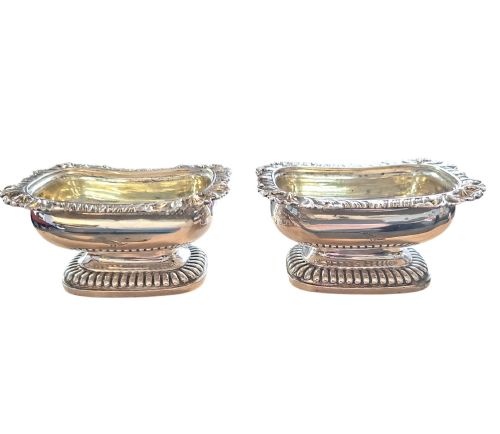
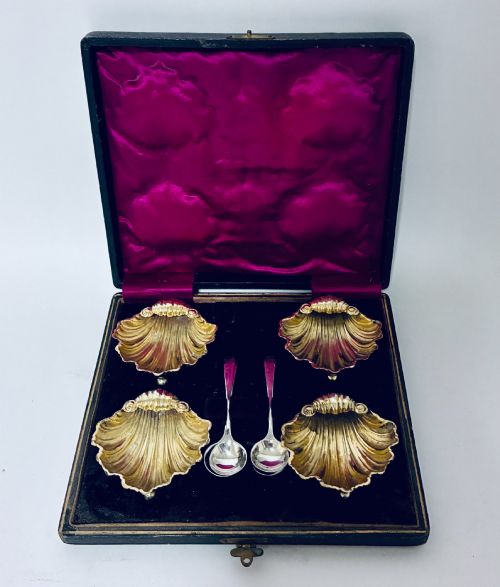
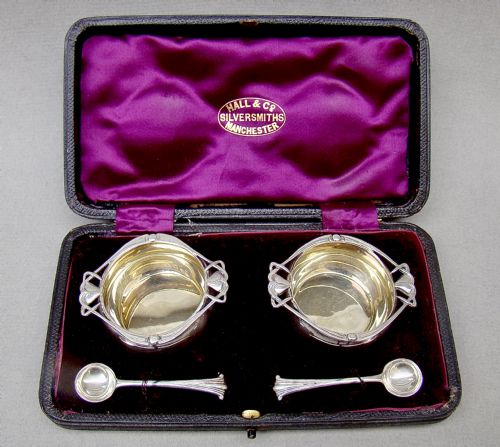
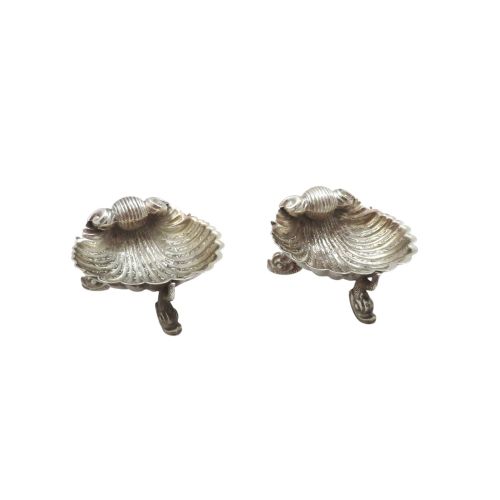
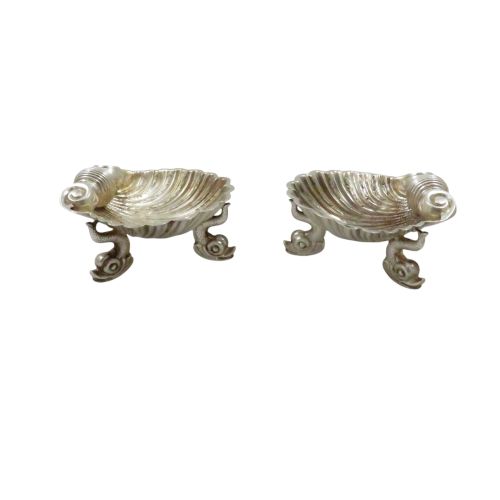
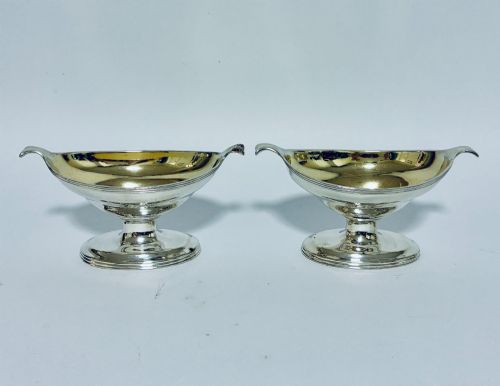
An antique sterling cellar is a small table vessel designed for salt, often appearing alongside mustard pots and condiment sets on this page. Buyers find these items in forms ranging from simple Georgian trenchers to elaborate Victorian shell designs and Edwardian wirework tubs.
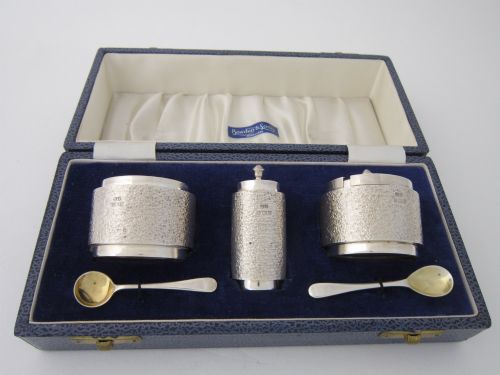
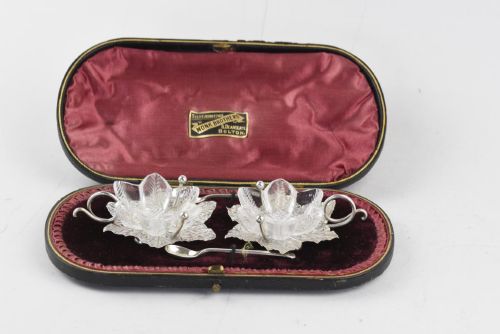
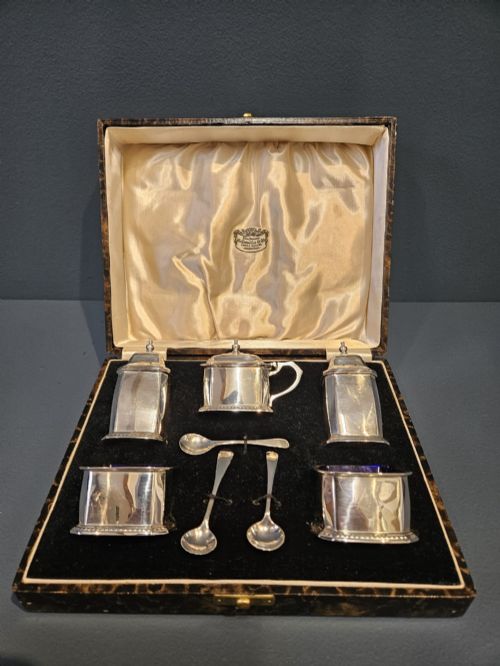
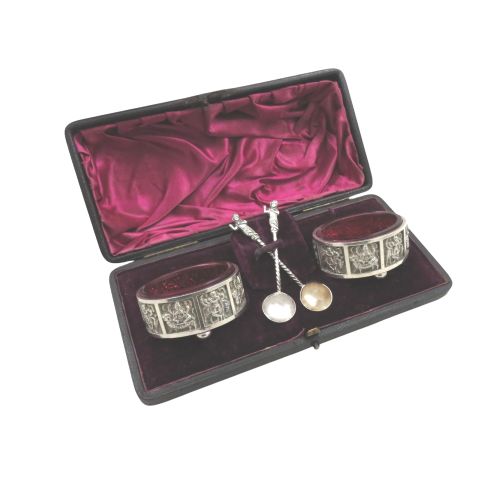
The pieces on this page span several eras, with Victorian and Georgian examples appearing frequently alongside Edwardian and Art Deco items. Collectors encounter pairs and sets complete with spoons, sometimes nestled within original fitted presentation cases.
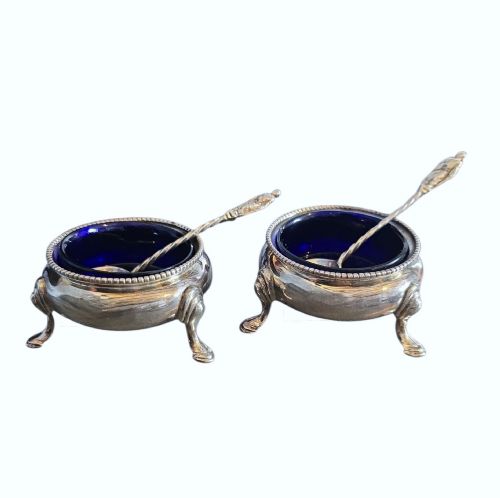
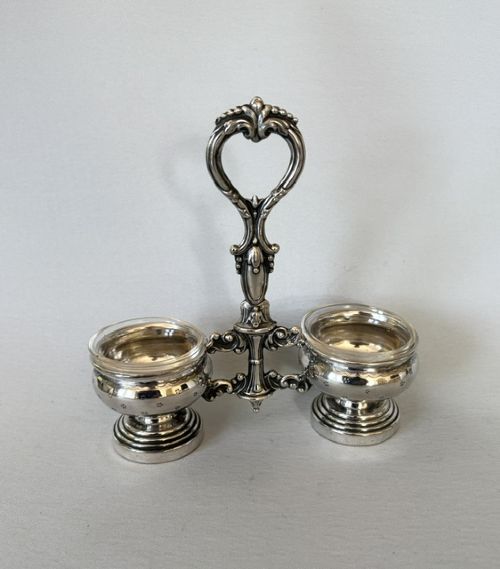
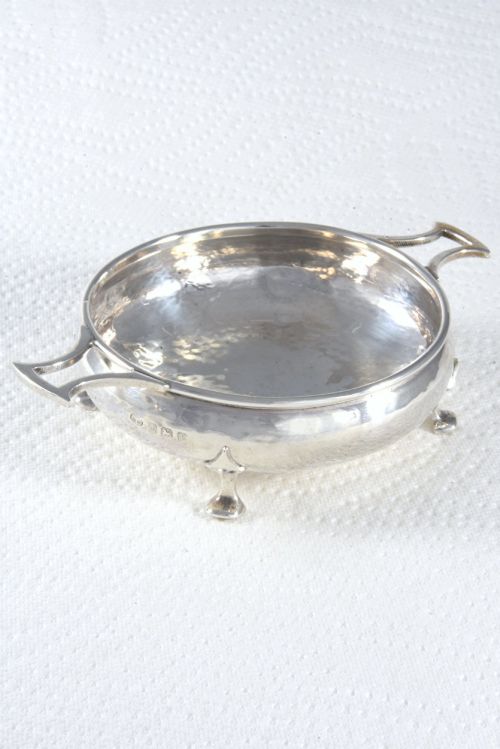
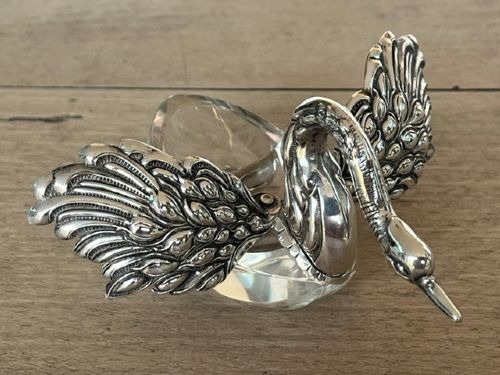
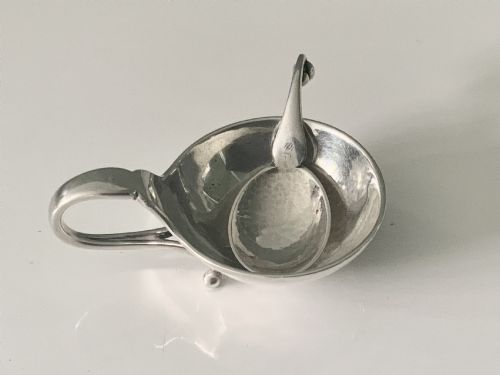
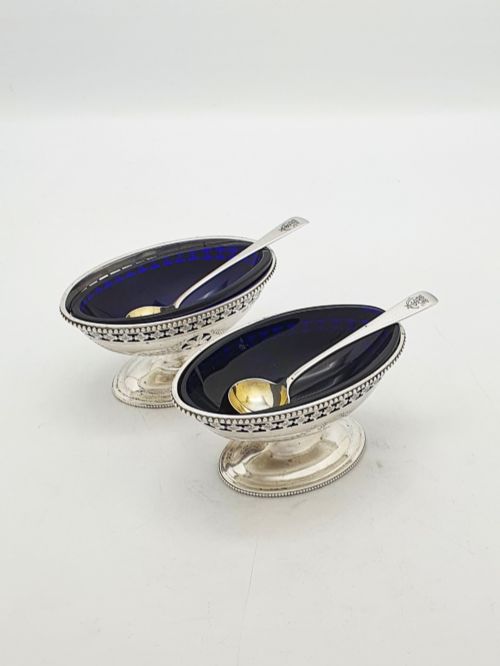
Makers utilised various traditional shapes, including cauldron salts, pedestal dishes, boat forms, and novelty models shaped like birds or swans. Cobalt glass liners and gilt interiors often accompany these sterling silver pieces to protect the metal from salt corrosion.
Materials and construction methods
Silversmiths constructed these cellars primarily from sterling silver, employing techniques such as casting, piercing, and repoussé chasing to create ornate floral or foliate patterns. Many examples rely on sturdy silver wirework or smooth sheet silver shaped into classical geometric and serpentine profiles.
Makers combined sterling silver with delicate inserts of cobalt glass, crystal, or velvet lining within fitted boxes. Interior gilding, known as silver gilt, was frequently applied to prevent the corrosive action of salt on the base metal.
Antique Sterling Cellar Retail Price Guide 2026
Typical asking prices for sterling cellar among the pieces listed under this phrase on Sellingantiques today, from the lower quarter to the upper quarter. They describe what is for sale here now, not the wider market.
Listings feature sterling silver cellar designs spanning the Georgian, Victorian, and Edwardian periods, alongside Art Deco examples.
Distinctions in quality and execution
Quality in an antique sterling cellar rests upon the crispness of the chasing, the weight of the silver, and the proportion of the design. Heavy gauge silver maintains its structural integrity and sharp detail better over centuries of use.
The presence of matching original spoons, undamaged coloured glass liners, and intact maker marks elevates a piece. Matched sets assembled later differ from pairs created together in a single workshop during the Georgian or Victorian periods.
Beare Falcke·Goldsmith & Silversmith·Georg Jensen·Barnards·William Neale·Josiah Williams & Co·David Hennell·John Edmonstone·William Bateman
The Antique Sterling Cellar Glossary
- Trencher salt
- A heavy, low-profile salt cellar popular in the eighteenth century, usually square or octagonal in shape. These sit directly on the dining surface without feet.
- Cruet set
- A collection of matching condiment containers mounted on a stand or frame for the dining table. This grouping typically holds salt, pepper, mustard, and vinegar bottles.
- Silver gilt
- Sterling silver that has been coated with a thin layer of gold on the interior surface. This technique prevents the salt from tarnishing or corroding the silver.
- Repoussé
- A metalworking technique where the silversmith hammers the design from the reverse side to form raised ornamentation. Foliate and floral motifs often appear executed in this manner.
- Cobalt glass
- Deep blue glass used as a removable liner inside open salt cellars. It provides a striking visual contrast against polished sterling silver.
Antique Sterling Cellar: Frequently Asked Questions
How do I clean an antique sterling cellar?
Clean sterling silver gently with a specialist microfibre cloth and mild silver polish to preserve raised details and hallmarks. Avoid harsh chemical dips, especially on pieces with glass liners or interior gilding.
Remove glass liners before cleaning the metal structure. Wash the glass separately in warm soapy water and dry thoroughly before replacing it.
What is the difference between an open salt and a shaker?
Open salt cellars are small bowls or dishes designed to hold loose salt, which diners pinch out using a tiny salt spoon or fingers. Shakers feature pierced tops for dispensing free-flowing salt.
Open cellars predominate in Georgian and Victorian dining, while shakers became more common in later twentieth-century table settings.
Why do some salt cellars have blue glass inserts?
Cobalt glass liners protect the sterling silver from the corrosive chemical action of salt, which pits the metal over extended periods of contact. The deep blue colour also creates a decorative contrast against pierced or openwork silver designs.
Liners lift out easily for cleaning and refilling between meals.
How can I date an antique sterling cellar?
British pieces feature hallmarks stamped directly onto the metal, indicating the assay office, standard mark, and date letter corresponding to the year of manufacture. Maker marks provide the identity of the silversmith or firm.
Stylistic cues such as Georgian neoclassical lines or Victorian floral chasing further help determine the period.