
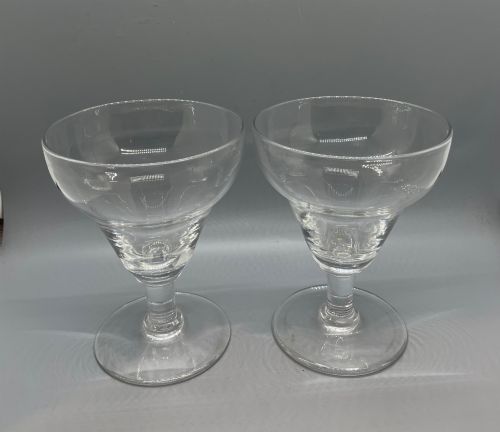
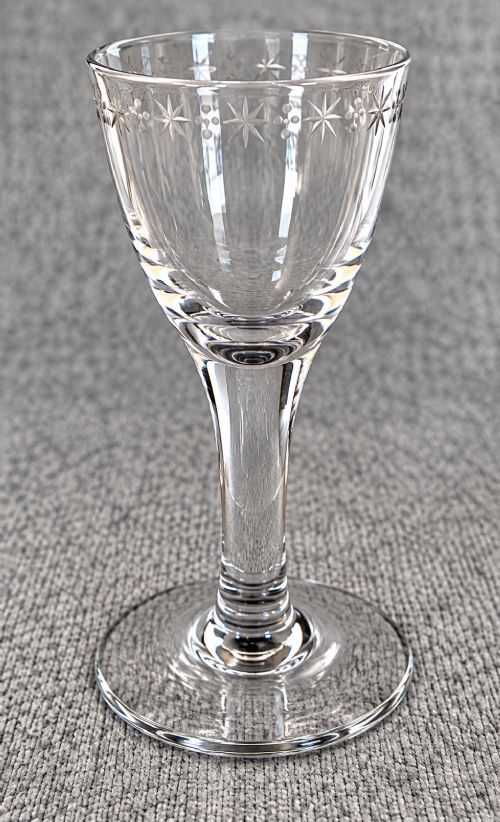
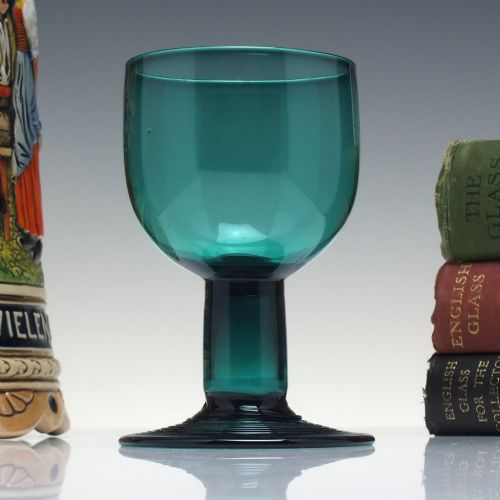
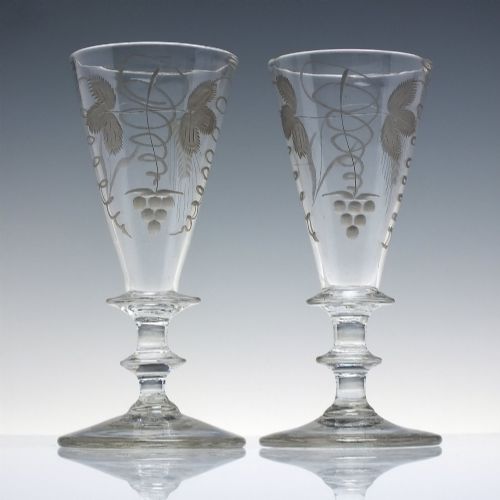
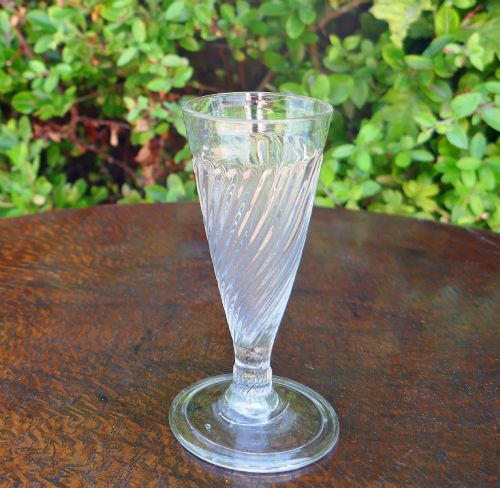
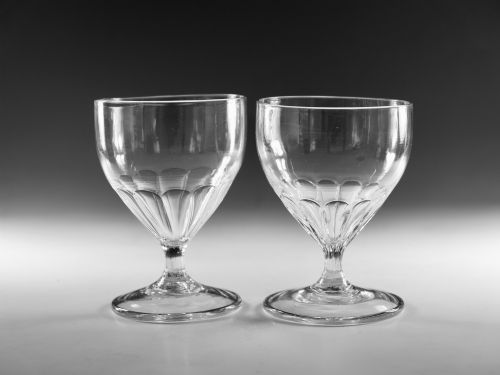
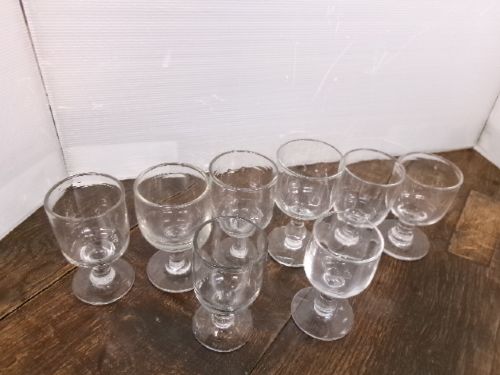
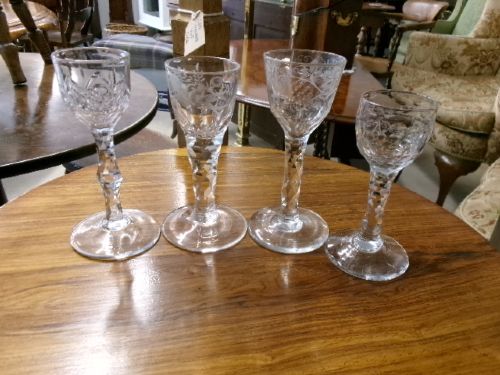
Antique Stemware Drinking Glass
These antique stemware drinking glass pieces offer a tangible connection to past centuries through blown lead glass and flint glass.
Antique Stemware Drinking Glass
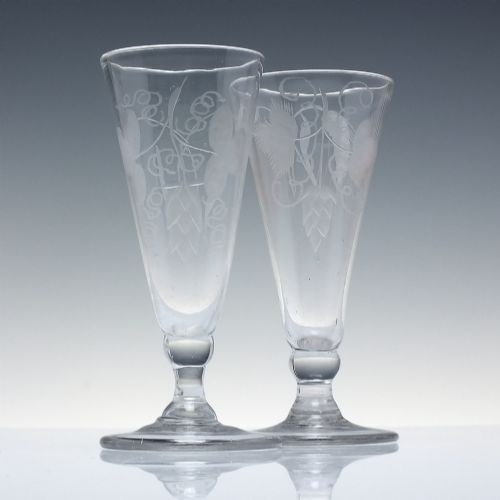
An antique stemware drinking glass serves as a functional vessel for wine, ale, rum, or drams, originating primarily from the Georgian and Victorian eras alongside later 20th-century French Art Deco examples. Buyers searching this phrase encounter drinking glasses, wine glasses, goblets, and rummers produced in various forms such as flutes, sweetmeat glasses, and dram glasses.
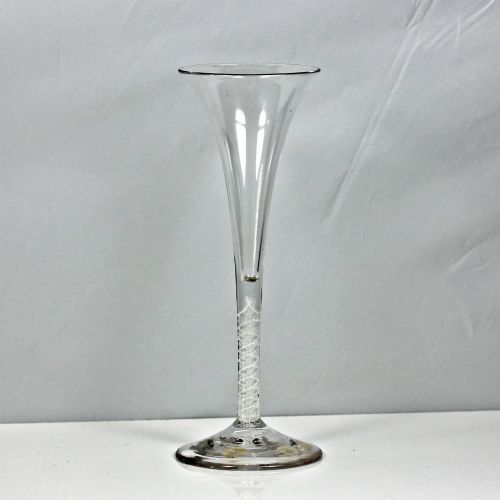
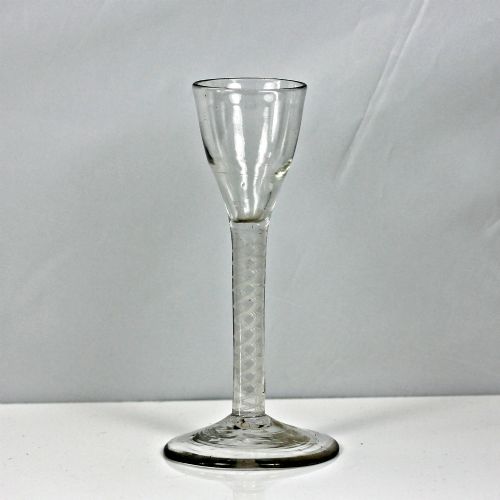
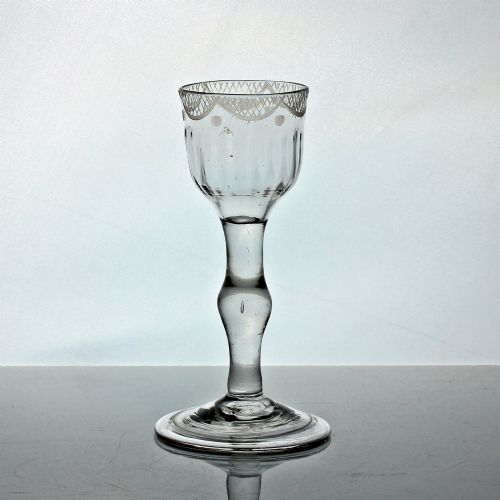
The most common forms on this page date from the eighteenth century, featuring balustroid, plain, or twisted stems supporting bowls like the pan top, ogee, trumpet, and bell shapes. These vessels reflect the social drinking habits of their period, ranging from small dram glasses to large rummers and suites of matching tableware.
How they were made
Glassmakers shaped these pieces using lead glass, clear glass, flint glass, and lead crystal, occasionally incorporating white enamel or coloured twists into the stems. Molten metal was blown, manipulated with tools, and joined to folded or domed feet to provide stability.
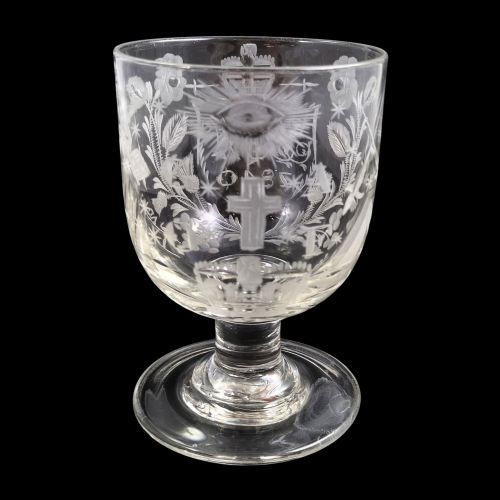
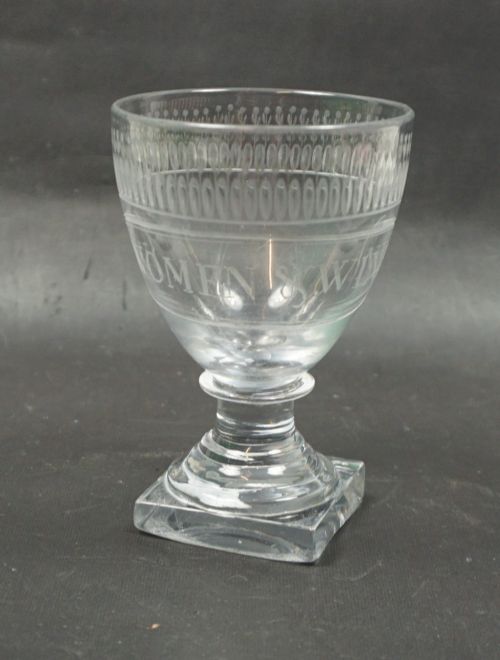
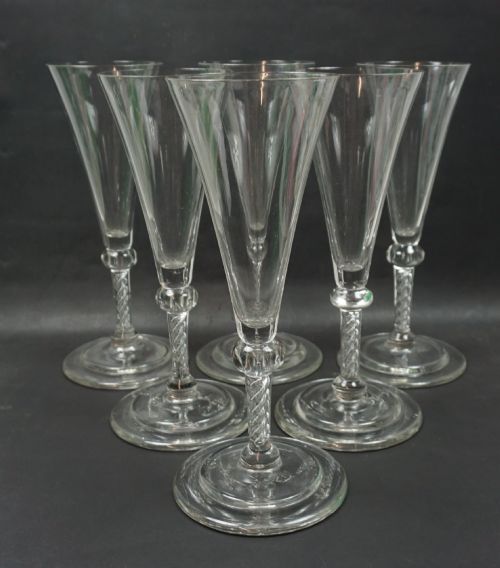
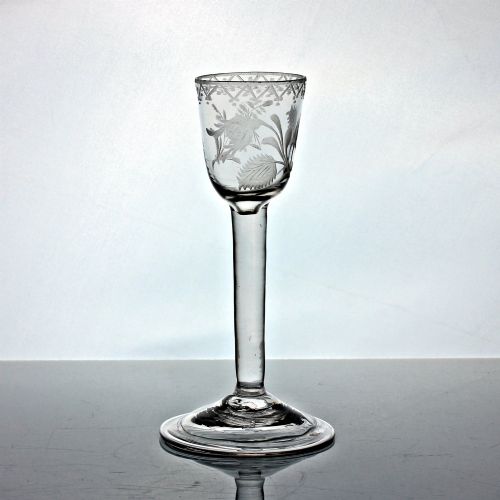
Decoration relied on hand engraving, cutting, or moulding to produce patterns such as swags and tails, Rococo motifs, or faceted bowls. Air twists and opaque twists were formed by trapping air or white enamel threads within the stem before drawing and twisting the glass.
Listings span the eighteenth century through the twentieth century, recording materials from lead crystal and flint glass to enamel and clear glass.
What varies in quality
Quality rests in the crispness of the cutting, the complexity of internal stem formations like air and opaque twists, and the refinement of hand-engraved motifs. Early baluster and balustroid forms show variation in the balance between bowl and stem, while lighter eighteenth-century vessels demonstrate superior dexterity in thin-blown walls.
The Antique Stemware Drinking Glass Glossary
- Air twist
- A stem formation created by drawing out trapped air bubbles inside the molten glass into spiral threads. This technique produces delicate internal patterns visible beneath the bowl.
- Opaque twist
- A stem containing threads of white enamel twisted through the clear glass core. These are categorized as single series or double series depending on the arrangement of the threads.
- Baluster
- A heavy, thick stem style popular in the early eighteenth century, characterised by knops resembling architectural supports. Lighter versions of this form are known as balustroids.
- Rummer
- A capacious drinking glass on a short stem, introduced during the late eighteenth century and widely used through the Georgian and Victorian periods. They often feature engraved decoration or faceted bowls.
- Folded foot
- A base edge turned under to create a smooth, rounded rim that adds strength and weight to the bottom of the glass. This feature is frequently seen on mid-eighteenth-century stemware.
Antique Stemware Drinking Glass: Frequently Asked Questions
How do I identify eighteenth-century stemware?
Eighteenth-century examples often display specific stem constructions, such as air twists, opaque twists, or baluster profiles, paired with bowls like the ogee, pan top, or trumpet. Details such as a folded foot or heavy lead glass metal help indicate this period.
Later Victorian and twentieth-century pieces shift toward pressed glass, heavier cutting, or larger matching suites, departing from the hand-formed characteristics of earlier examples.
Can I use antique stemware for drinks?
These vessels were made for functional use and remain structurally capable of holding liquids, though hand washing is necessary to protect the antique glass. Many collectors prefer to reserve them for special occasions or display.
Sudden temperature changes can crack old lead glass, so warm water should be introduced gradually when cleaning.
What are Jacobite wine glasses?
Jacobite glasses are eighteenth-century drinking vessels engraved with secret symbols supporting the exiled Stuart cause, such as roses, oak leaves, or specific portraits. They were used by sympathizers to toast the king over the water.
These pieces typically feature plain or twisted stems and represent a specialised category within Georgian drinking glass collecting.