



Antique Stationery Cupboard
An antique stationery cupboard organises letters and documents while bringing period timber and brass into a study.
Antique Stationery Cupboard
Buyers seeking an antique stationery cupboard find pieces designed to store correspondence, ledgers and office papers efficiently. The selection includes table cabinets, side cabinets, filing cabinets, and fitted cupboards.
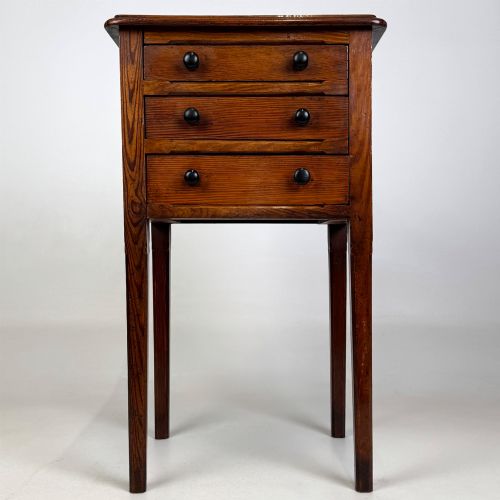
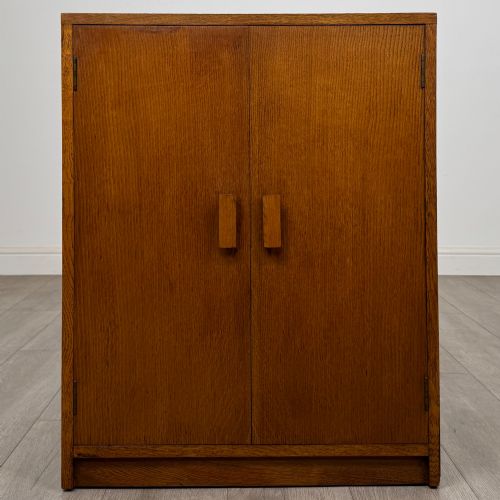
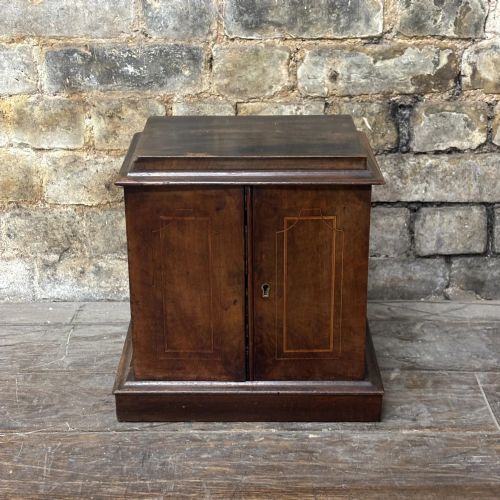
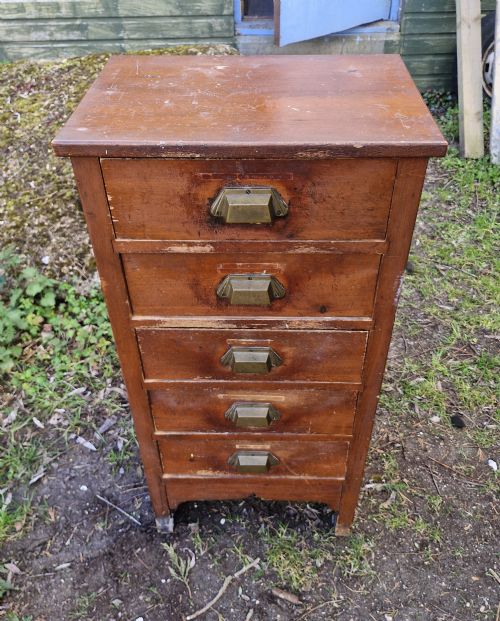
Most examples date from the Victorian and Edwardian eras, alongside 19th-century pieces and specific decades such as 1900, 1910, and 1920. Forms range from compact table-top boxes to tall six-drawer side cabinets and cabinets on stands.
Origins vary across English, Scottish, and Cotswold School workshops, with timber variants including mahogany, oak, pitch pine, and pine. Certain items double as desks, clerk's cupboards, or correspondence boxes with internal fittings.
Materials and construction
Cabinetmakers utilised hardwoods and softwoods including mahogany, oak, pitch pine, pine, boxwood, and satinwood. Veneers and solid timbers appear across the inventory, sometimes paired with leather and brass.
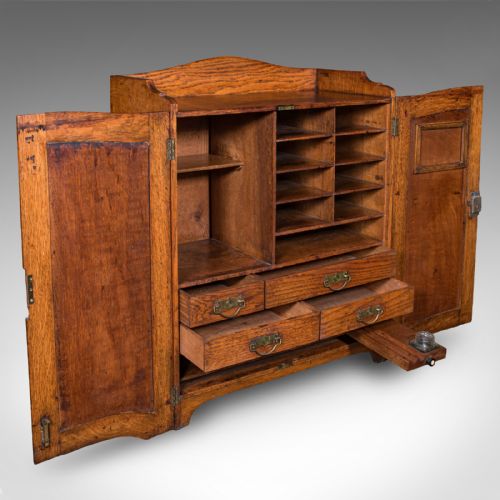
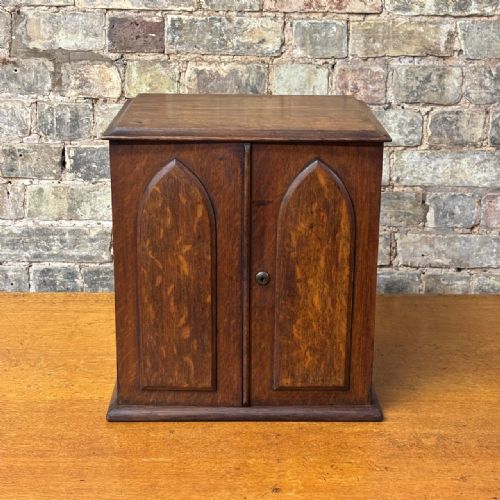
Hardware such as good of the period brass handles secures drawers and doors. Construction methods accommodate specialised functions like Gothic panel doors, fitted interiors, and multi-drawer office configurations.
Materials across the selection include mahogany, oak, pitch pine, boxwood, and satinwood, spanning Georgian to 1960s periods.
Judging quality in stationery storage
Quality rests in the precision of the internal fittings, the choice of timber figure such as golden oak or mahogany, and the integrity of the brass handles. Finer cabinets show careful joinery in drawer construction and panel alignment.
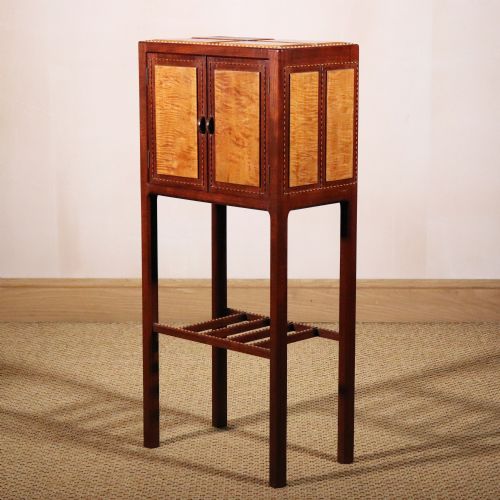
Unusual configurations, such as estate gamekeeper cabinets or Cotswold School pieces on stands, distinguish bespoke examples from standard utility office furniture. The cohesion of secondary woods and original hardware dictates the standing of each piece.
Houghton & Gunn
The Antique Stationery Cupboard Glossary
- Stationery cabinet
- A dedicated piece of furniture designed to hold writing paper, envelopes, and correspondence. These often sit on tables or desks with fitted internal compartments.
- Fitted cupboard
- An enclosed storage unit featuring internal dividers, shelves, or small drawers tailored for office use. They keep documents organised away from dust.
- Gothic Revival
- A design style drawing on medieval architectural motifs. Cabinets in this manner feature pointed arches, tracery, or Gothic panel doors.
- Cotswold School
- An Arts and Crafts-inspired movement focused on honest construction and traditional craftsmanship. Cabinets from this tradition emphasise natural timber qualities.
- Cabinet on stand
- A storage enclosure raised on a separate supporting base or frame. This elevation lightens the visual weight of heavy oak or mahogany case pieces.
Antique Stationery Cupboard: Frequently Asked Questions
What is an antique stationery cupboard?
It is a specialised storage piece built to hold writing materials, ledgers, and correspondence.
Sizes range from small table-top cabinets to tall multi-drawer office units.
How were stationery cabinets used?
Victorian and Edwardian clerks and gentlemen used them to sort daily post and important papers.
Fitted interiors kept pens, paper, and envelopes separated and ready for use.
Where do these cabinets fit at home?
They sit comfortably on top of desks, side tables, or directly on the floor as side cabinets.
Their drawers and cupboards provide practical storage for modern paperwork or collections.
How do I spot an Edwardian piece?
Edwardian stationery cabinets often feature lighter golden oak, mahogany, or pine.
Construction from this period frequently aligns with early twentieth-century office utility and simpler lines.