
Antique Wooden Office Storage
Antique wooden office storage brings purposeful utility to a room, offering robust deskside drawers and clever tambour cabinets that keep papers neatly contained.
Antique Wooden Office Storage
When you search for antique wooden office storage, you encounter functional pieces designed for workspaces from the Victorian, Edwardian, and early twentieth-century periods. The selection on this page relies heavily on practical forms created to sort paperwork, store books, and organise correspondence.
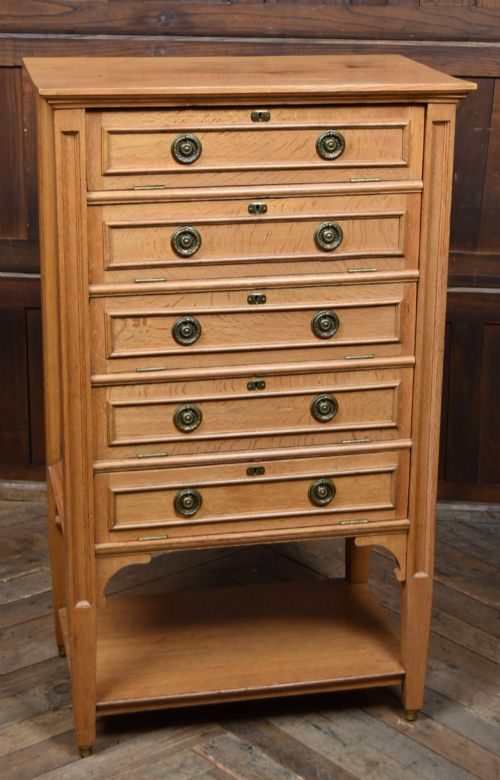
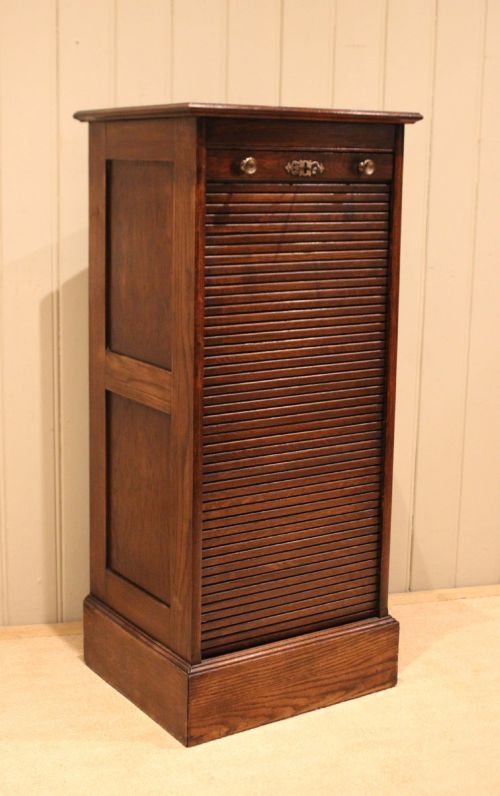
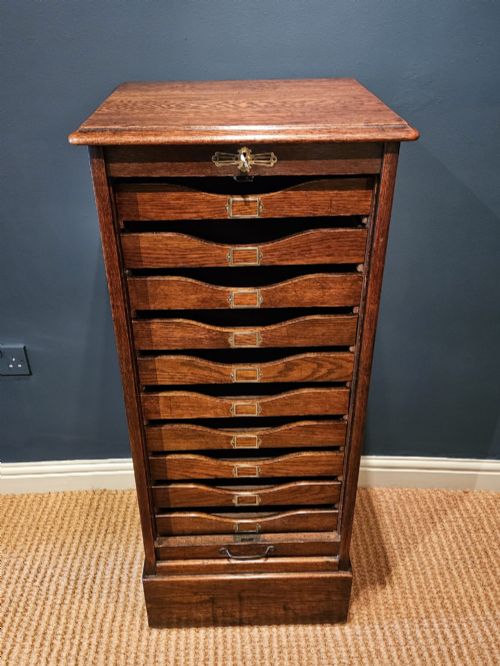
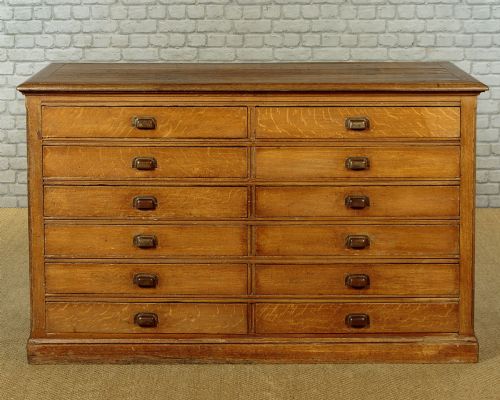
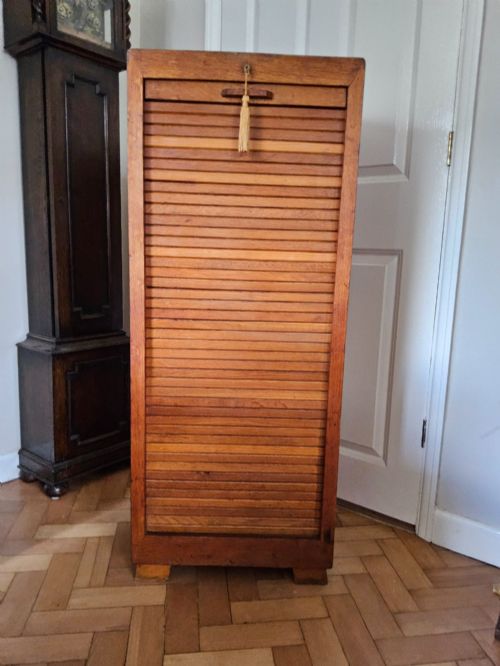
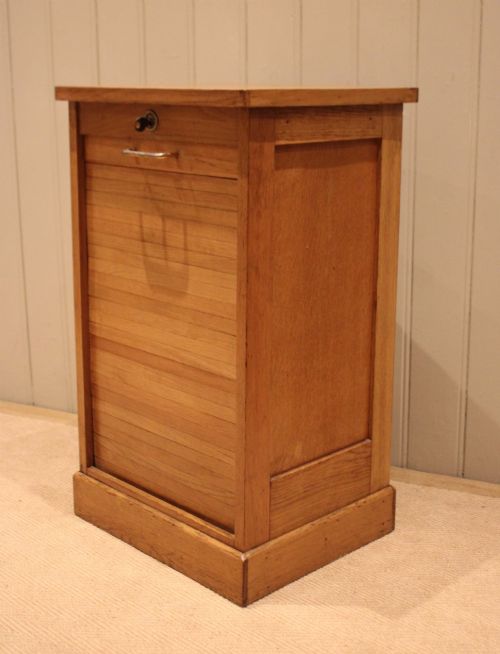
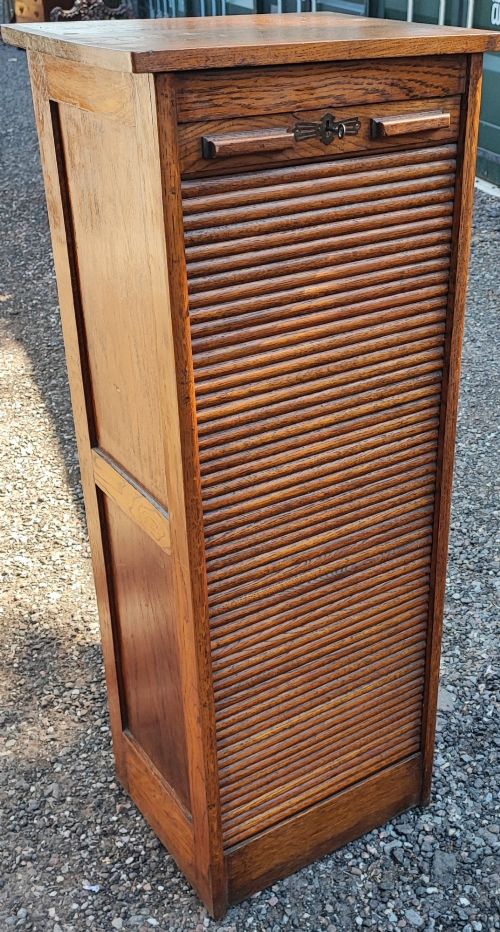
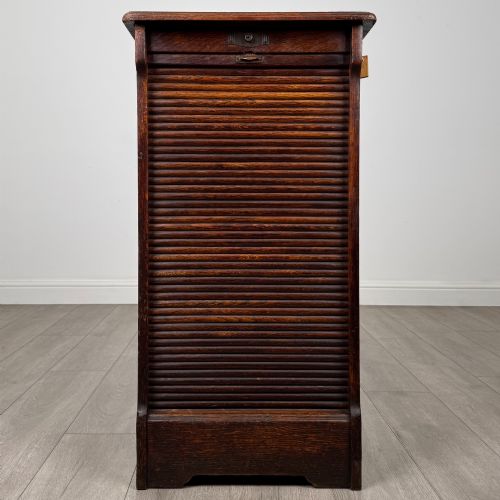
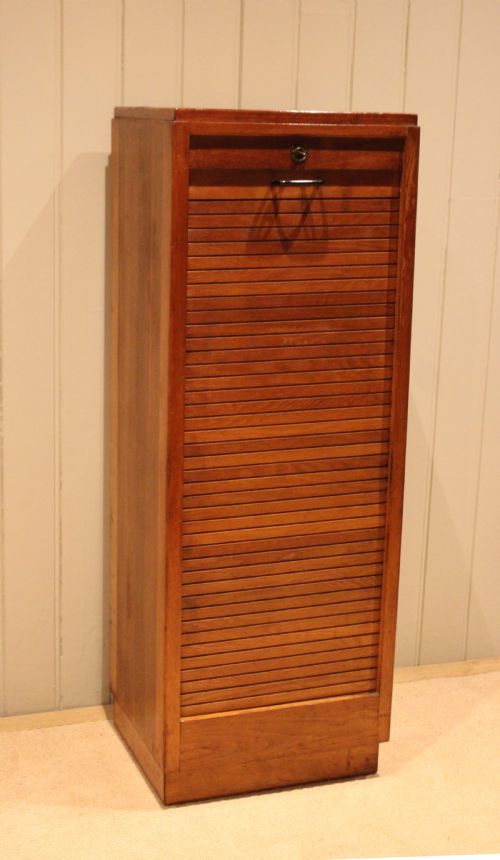
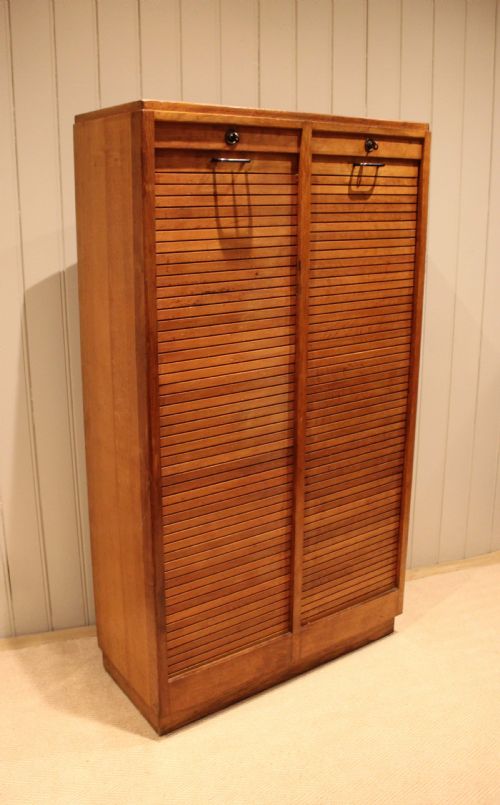
The version you are most likely to meet on this page is the oak or mahogany filing cabinet, frequently featuring a tambour front or multiple shallow drawers. These pieces reflect the administrative demands of past decades, translated into handsome furniture built from solid timber.
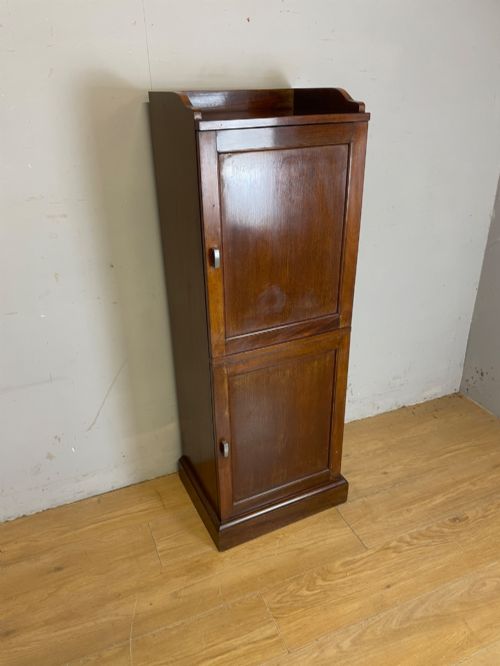
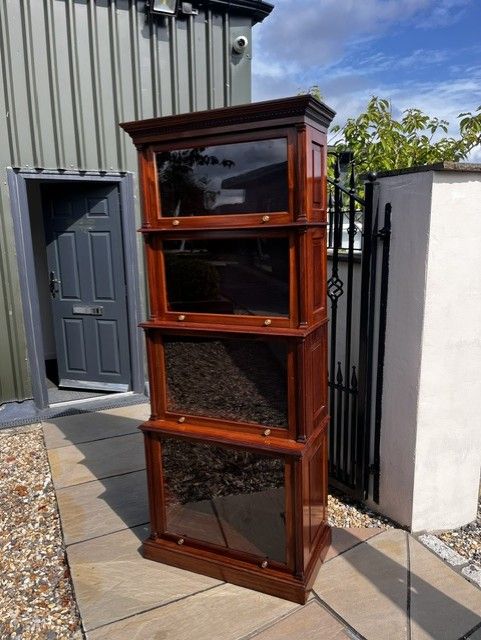
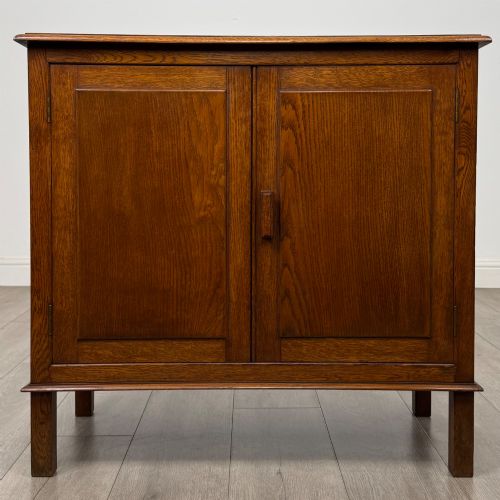
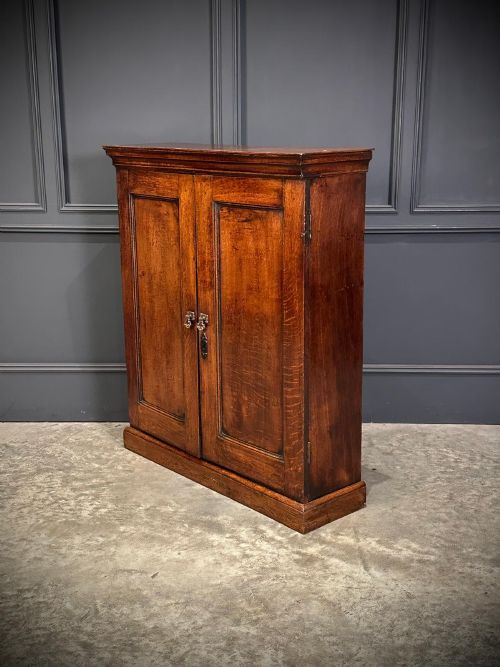
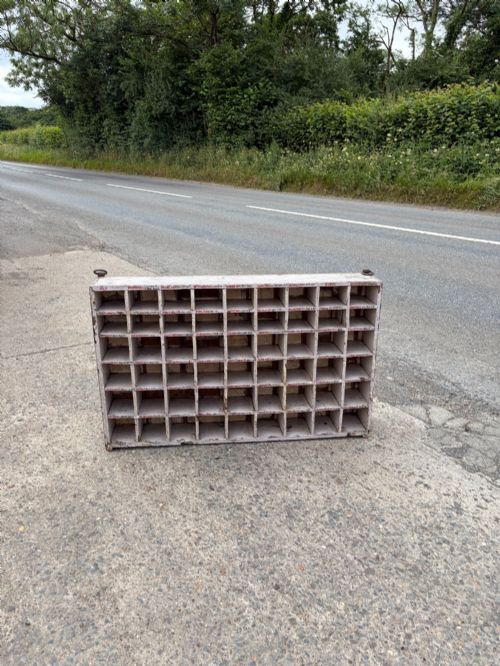
Beyond standard filing cabinets, the evidence includes banks of drawers, pigeon holes, barrister stacking bookcases, and fitted cupboards. Each object demonstrates how workspaces managed documents before the digital era, utilising durable woods to withstand daily clerical use.
Assessing quality in office storage
Quality in these storage pieces rests upon the selection of timber, such as flame mahogany or quarter-sawn oak, and the precision of the joinery. Superior examples reveal tight dovetail joints on drawer construction and smooth, binding-free movement across tambour tracks.
Hardware and mechanisms also differentiate the range. Original cast brass handles, intact patent letter files, and branded maker components elevate a utilitarian cabinet into an accomplished piece of furniture.
School cupboards and post office sorting shelves occasionally turn up, carrying the ink stains and paper dust of a century of institutional sorting.
The Antique Wooden Office Storage Glossary
- Tambour
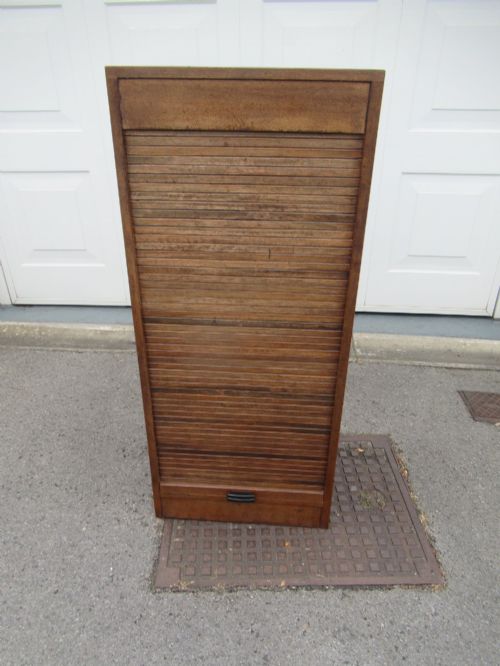
- A flexible door made of narrow strips of wood glued to canvas, allowing it to slide smoothly around a curved track. This mechanism conceals the interior shelving or filing trays of a cabinet.
- Pigeon holes
- A series of small, open compartments stacked together for sorting letters, documents, and correspondence. They commonly appear in hanging or tabletop office accessories.
- Quarter-sawn oak
- Timber cut radially to the growth rings, producing distinctive decorative ray flecks. This method yields a stable board less prone to warping in demanding office environments.
- Barrister stacking bookcase
- A modular bookcase featuring glass-fronted tiers that lift and slide inside the case. This design allowed expanding libraries and office archives to stack vertically.
- Campaign furniture
- Portable pieces designed for travel, featuring recessed brass handles and reinforced corners. Military filing cabinets utilise this robust construction style.
Antique Wooden Office Storage: Frequently Asked Questions
How do tambour doors work?
Tambour doors consist of vertical wooden slats fixed to a flexible canvas backing that runs in recessed side grooves. This lets the door slide around a tight curve and disappear into the side or base of the cabinet.
Opening the cabinet requires no clearance space in front, which made these doors exceptionally popular for compact Edwardian and twentieth-century offices.
Where were these cabinets used?
These storage pieces served in professional chambers, administrative offices, schools, and estate management rooms. They held client files, correspondence, ledgers, and reference books.
Domestic studies in country houses and town residences also utilised smaller filing drawers and music cabinets to manage household paperwork.
How do I date an oak filing cabinet?
Dating relies on combining the timber choice, hardware style, and mechanical patents. Edwardian and 1910s pieces frequently feature quarter-sawn oak with medium-brown tones and cast brass label holders.
Later 1930s and 1940s examples often display simpler lines, lighter oak shades, or utility markings reflecting shifting manufacturing constraints.
Can I use these for modern files?
Many antique filing drawers and cabinets accommodate modern paper sizes, though older drawer depths varied according to historical document formats. Tambour cabinets generally offer adjustable shelving suitable for folders, books, and boxes.
Measuring your specific storage items against the internal drawer dimensions ensures the piece matches your intended workspace requirements.