



Antique Stationary Box
An antique stationary box organises correspondence with fitted compartments and sloping lids, bringing Victorian craftsmanship to the modern desk.
Antique Stationary Box
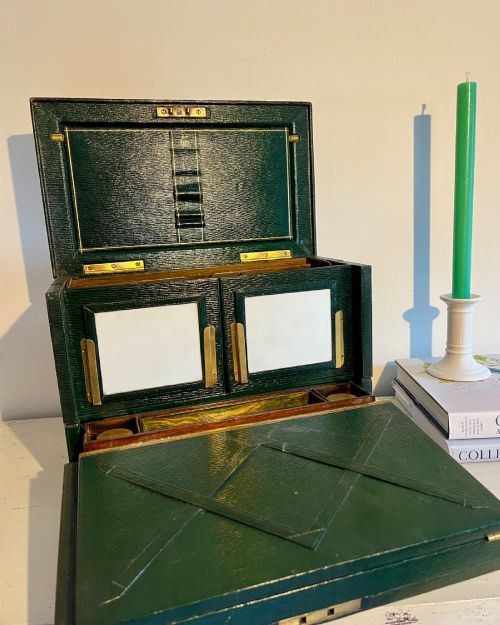
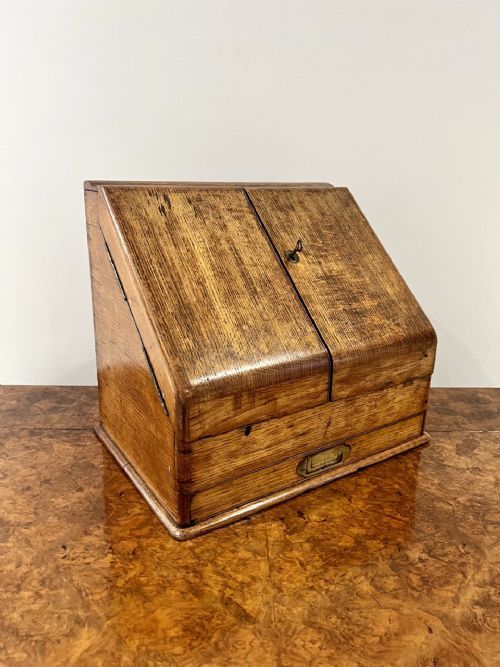
An antique stationary box serves to hold letters, paper, and envelopes on a desktop, appearing most frequently in Victorian forms across the nineteenth century. These desktop pieces range from simple lidded caskets to grand cabinets with sloping fronts, double opening doors, and fitted internal compartments.
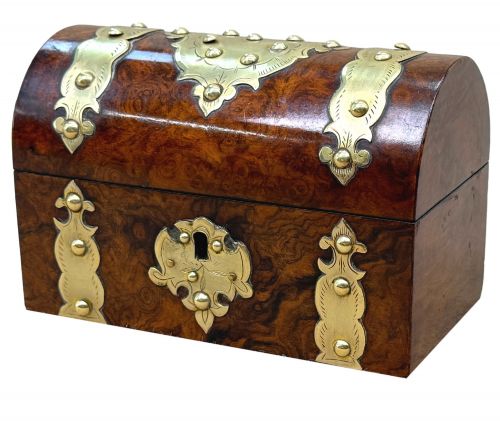
The materials span native timbers like oak, mahogany, walnut, and rosewood alongside exotic woods such as coromandel, often enhanced with brass mounts, leather, or pietra dura panels. Alongside dedicated stationery boxes, the selection includes related desk accessories like writing slopes, inkstands, and correspondence cabinets.
Materials and construction methods
Cabinetmakers constructed these pieces using solid and veneered hardwoods over robust framing, selecting figured timbers like burr walnut and pollard oak for decorative impact. Surfaces often incorporate brass straps, hinges, and lockplates to protect corners and edges during daily use on writing desks.
Internal arrangements rely on precision joinery to create stepped letter racks, pen trays, and secret drawers tailored to specific writing paraphernalia. Exterior ornamentation draws on styles spanning Sheraton influence, Gothic Revival arches, French marquetry, and Tunbridge ware mosaic detailing.
Antique Stationary Box Retail Price Guide 2026
Typical asking prices for stationary box among the pieces listed under this phrase on Sellingantiques today, from the lower quarter to the upper quarter. They describe what is for sale here now, not the wider market.
Design influences range from eighteenth-century Sheraton pieces converted later to Gothic Revival and French marquetry.
Differentiating quality across pieces
Quality depends upon the choice of timber and the precision of the cabinetwork, where dense figured veneers and heavy brass mounts signal higher ambition. Pieces by documented retailers or makers display superior internal fittings, tight joinery, and careful attention to secondary timbers.
Decoration also separates standard examples from exceptional ones, particularly where marquetry, ormolu, or inlaid pietra dura panels elevate a functional box into an ornamental centrepiece. The complexity of the internal mechanism, such as adjustable date markers or double-opening doors, further distinguishes the grade of manufacture.
Houghton and Gunn·George Austin of Dublin·F Waller·C.G. Hope Hastings
The Antique Stationary Box Glossary
- Coromandel
- A dense, heavily figured exotic timber from South Asia featuring dark brown and black stripes, prized for luxury Victorian stationery boxes and writing slopes.
- Pietra dura
- An artistic technique using cut and fitted polished coloured stones to form mosaic images, occasionally set into the lids of fine nineteenth-century boxes.
- Tunbridge ware
- Small wood mosaic work produced in Kent, creating microscopic geometric patterns or pictorial scenes on the exterior surfaces of boxes.
- Writing slope
- A portable desktop box with a hinged sloping lid that opens to reveal a slanted surface for writing, often incorporating internal storage for stationery.
- Ormolu
- Gilded bronze ornamentation applied to furniture and decorative boxes, popular in French nineteenth-century design.
Antique Stationary Box: Frequently Asked Questions
How were antique stationary boxes used?
These boxes sat upon desks in studies and drawing rooms to keep writing paper, envelopes, and unanswered correspondence tidy and private. Their fitted interiors kept different paper sizes separated for daily letter writing.
Many featured integrated letter racks and small compartments for stamps and sealing wax. Some included adjustable date markers or incorporated inkstands for complete correspondence management.
How do I date an antique stationary box?
Dating relies on combining the timber choice, decorative style, and hardware construction methods visible on the piece. Victorian examples from the mid-nineteenth century frequently employ coromandel or burr walnut with heavy brass mounts.
Later nineteenth-century pieces often show Arts and Crafts influences or simpler oak construction, while converted Georgian items retain earlier Sheraton or George III cabinet proportions.
Where should I place an antique stationary box?
These boxes suit placement on wooden desks, library tables, or sideboards where their polished timber surfaces can be appreciated. Direct sunlight should be avoided to prevent the exotic wood veneers and leather from fading over time.
Keeping them away from active heat sources protects the old polish and prevents the timber veneers from lifting or splitting in dry indoor climates.
What is the difference between a box and a cabinet?
Stationery boxes generally feature hinged lids or lifting tops that provide access from above to internal letter slots and pen trays. Stationery cabinets operate more like miniature cupboards with vertical double doors opening to reveal stepped pigeonholes and stationery shelves.