


Antique Starburst Necklace Pendant
An antique starburst necklace pendant captures celestial brilliance in gold and gemstones, offering timeless elegance that draws the eye across any room.
Antique Starburst Necklace Pendant
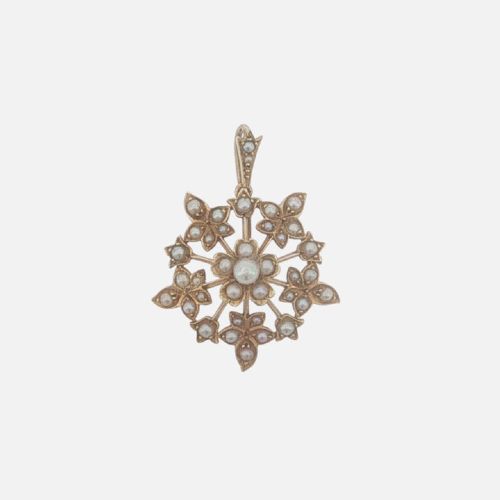
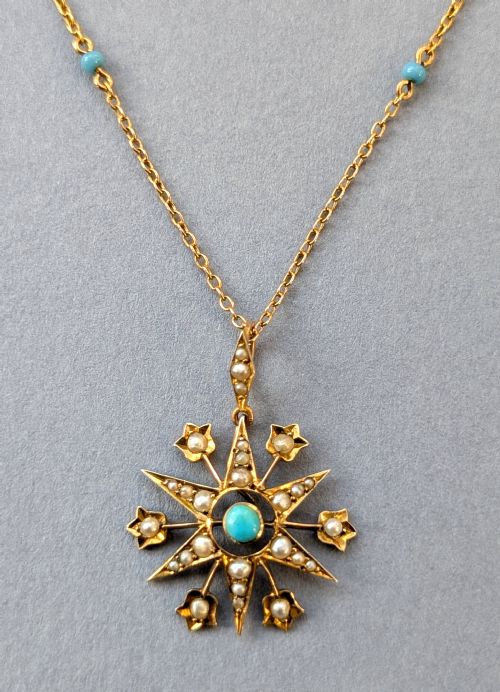
An antique starburst necklace pendant focuses upon radiant celestial motifs, taking the form of star, sunburst, and floral cluster designs that span the Victorian, Edwardian, and Art Deco eras. Buyers searching for an antique starburst necklace pendant will encounter pieces configured as standalone pendants, convertible pendant brooches, and complete necklace assemblies.
The selection ranges from delicate seed pearl and turquoise configurations to substantial diamond and multi-gemstone compositions set in various grades of gold and silver. Victorian and Edwardian examples dominate the offerings, showcasing intricate metalwork and celestial symbolism that remains highly wearable today.
Craftsmanship and materials
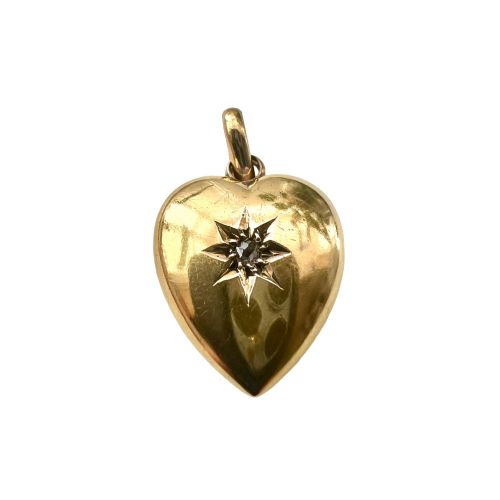
Goldsmiths utilised yellow gold in nine-carat, fifteen-carat, and eighteen-carat purities, frequently combining silver settings to enhance the brilliance of old cut and rose cut diamonds. Seed pearls, turquoise, peridot, amethyst, and opal provide contrasting colour and texture within the radiating star designs.
Traditional hand-working techniques allowed artisans to mount stones securely within delicate prong and collet settings, creating dimensionality. Many items function as both brooches and pendants, requiring robust hinged pins and suspension loops integrated into the reverse of the metalwork.
Gemstones utilised in these starburst designs include diamonds, seed pearls, turquoise, peridot, amethyst, opal, ruby, and garnet.
Evaluating quality and construction
Superior examples display precise symmetry in the arrangement of radiating points and consistent stone matching, whether utilising calibrated diamonds or uniform seed pearls. The weight and purity of the gold framework, alongside the crispness of the chasing and grain-setting, dictate the overall standard of the piece.
Originality of components heavily influences desirability, particularly regarding convertible fittings, matching chains, and untouched gemstone settings. Pieces retaining their original pin mechanisms, bale attachments, and undamaged stones represent the higher tier of surviving examples.
Hirsch & Oppenheimer
The Antique Starburst Necklace Pendant Glossary
- Starburst
- A decorative motif featuring radiating points or gems resembling a bursting star or the sun. This design became immensely popular during the nineteenth century due to widespread fascination with astronomy.
- Old Cut
- A hand-faceted diamond cut predating modern brilliant standards, characterised by a smaller table, higher crown, and open culet. These stones exhibit a distinctive soft glow under candlelight.
- Rose Cut
- A gemstone cut with a flat base and a dome-shaped crown covered in triangular facets. It resembles an unopened rosebud and imparts a subtle, shimmering lustre.
- Seed Pearl
- Very small, naturally occurring or cultured pearls often drilled and threaded or pegged onto metal. They frequently accent Victorian floral and celestial jewellery.
- Pendant Brooch
- A dual-purpose jewellery item fitted with both a folding or removable brooch pin and a suspension loop. This allows the wearer to pin the piece to clothing or suspend it from a chain.
Antique Starburst Necklace Pendant: Frequently Asked Questions
How do I wear a convertible pendant brooch?
Many starburst pendants feature a concealed pin and safety catch alongside a top loop, allowing them to function interchangeably as neck ornaments or lapel brooches. Simply thread a suitable chain through the bail for neckwear, or secure the pin firmly through fabric when wearing as a brooch.
Care should be taken with older pin mechanisms to ensure they fasten securely. Consulting a jeweller for a safety chain provides extra security when wearing the piece on garments.
How do I date a starburst pendant?
Dating relies upon examining the materials, gemstone cuts, and construction methods used by the metalsmith. Victorian pieces often incorporate rose cut diamonds and seed pearls set in yellow gold or silver-topped gold, while Edwardian and later pieces display lighter filigree or platinum elements.
Hallmarks stamped on the reverse provide definitive assay office marks and date letters where present. Comparing the overall geometry and gemstone arrangement with documented period styles further clarifies the era of manufacture.
Can I replace a missing seed pearl?
Replacing missing stones is possible through specialist antique jewellery restorers who source period-appropriate replacement gems. Matching the exact size, hue, and drill style of original seed pearls maintains the visual integrity of the starburst pattern.
Any intervention should respect the existing metalwork without altering the original bezels or prongs. Professional restoration ensures the piece remains stable for continued wear.