



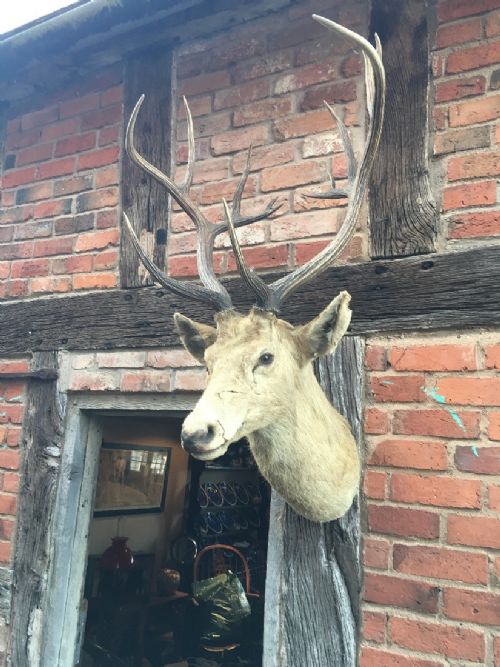
Antique Stag Head Mount
These antique stag head mount examples bring the robust presence of the nineteenth and early twentieth-century lodge directly into your interior.
Antique Stag Head Mount
An antique stag head mount encompasses taxidermy trophies and carved wooden wall sculptures that capture the aesthetic of traditional hunting lodges. These pieces span periods from the nineteenth century through the Edwardian era and into the nineteen-twenties.
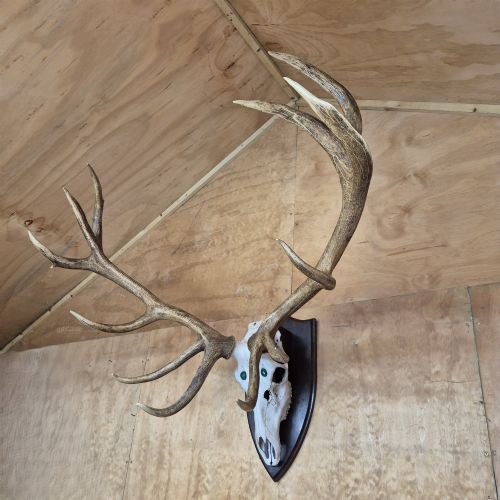
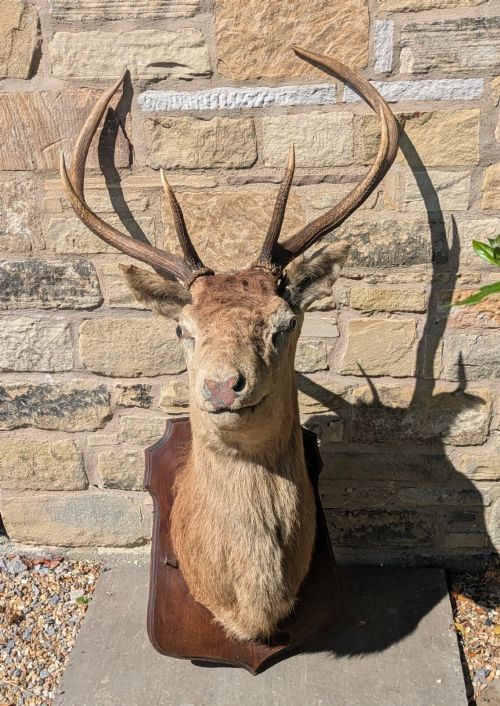
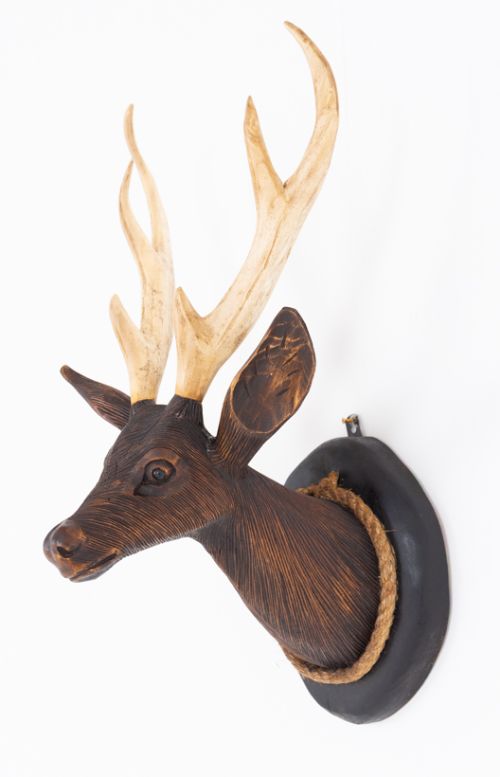
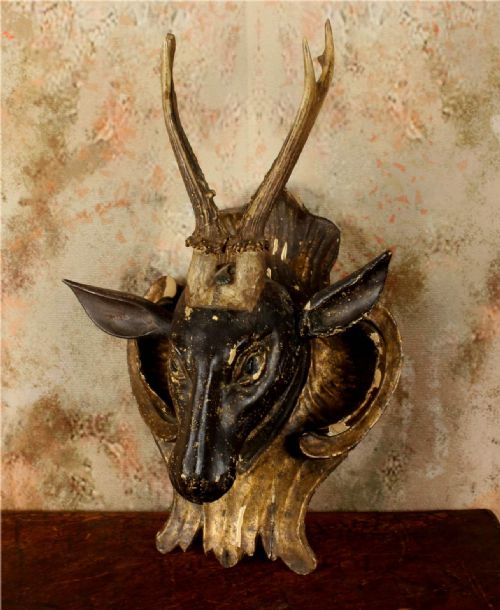
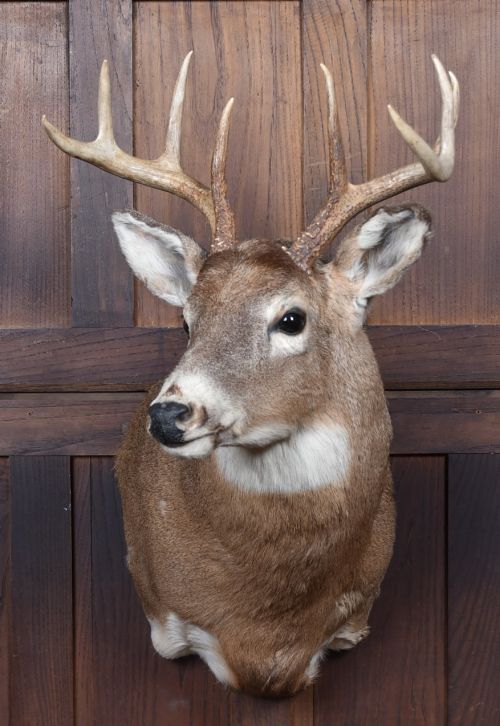
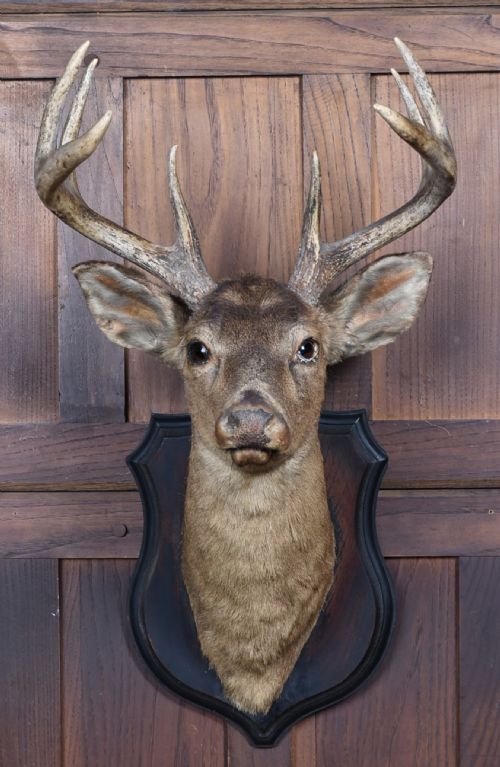
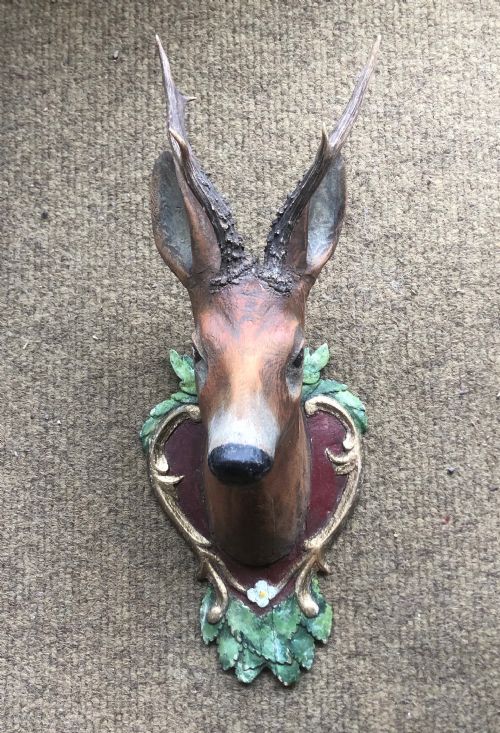
The versions most frequently met on this page include taxidermy Red Deer and roebuck specimens, alongside Black Forest style and folk art carved wood trophies. Many feature natural antlers mounted upon oak shields or carved wood backings.
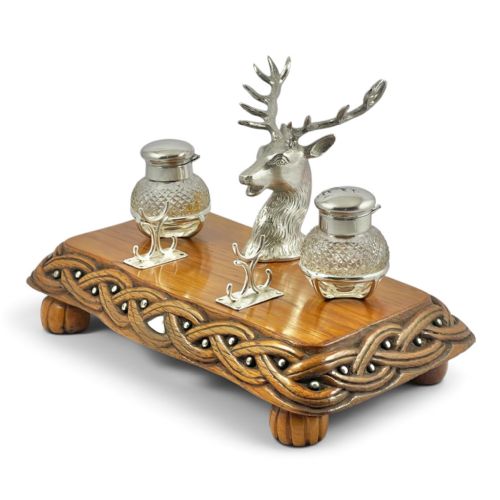
Beyond wall-mounted trophies, related desk pieces incorporate antlers and carved wood into Scottish inkstands and double inkwells. The focus remains heavily upon natural antler and taxidermy forms originating from Scottish and continental traditions.
How they were made
Taxidermy mounts utilise preserved animal hide and natural antlers secured to wooden shields, often shaped from oak or other carved timbers. Artisans shaped these supports to display the natural span and point count of the Red Deer or roebuck head.
Carved wood alternatives rely on skilled woodworking techniques to render deer heads entirely from timber, sometimes incorporating painted surfaces as seen in folk art traditions. Glass is occasionally integrated into inkstands or taxidermy eyes to achieve a lifelike finish.
Some creatures arrived on desks rather than walls, serving as inkstands equipped with glass inkwells and genuine antlers.
What varies in quality
Quality rests upon the anatomical proportion of the taxidermy work and the sculptural definition found in carved wood examples. Finer specimens display careful preservation of the hide and robust, symmetrical antlers with high point counts.
The supporting woodwork marks another clear distinction, moving from simple planks to elaborately carved oak shields and detailed Black Forest ornamentation. Greater age combined with well-preserved Scottish silver or fitted inkwells elevates the standing of desk-mounted variations.
The Antique Stag Head Mount Glossary
- Taxidermy mount
- The artful preservation and mounting of animal specimens for display. These pieces utilise natural hide and bone to present realistic wildlife forms.
- Black Forest style
- A distinctive style of wood carving originating from central Europe during the nineteenth century. It frequently depicts woodland animals and natural foliage in deep relief.
- Folk art
- Utilitarian or decorative objects created by self-taught or traditional craftsmen. These pieces often employ regional materials and straightforward carving methods.
- Inkstand
- A desk accessory designed to hold writing equipment, commonly featuring inkwells alongside pen trays. Antique versions often incorporate silver, oak, and natural antlers.
- Shield
- The wooden plaque or backing board upon which antlers or taxidermy heads are fixed for wall hanging. Oak is a frequent material for these structural supports.
Antique Stag Head Mount: Frequently Asked Questions
How do I hang a heavy mount safely?
These heavy taxidermy and carved wood pieces require secure wall fixings anchored directly into masonry or wooden studs. Utilising sturdy brackets that match the weight of the oak shield ensures stable support.
Positioning the mount at eye level allows the natural spread of the antlers to dominate the wall space effectively. Avoid placing them in areas subject to dampness or direct sunlight to protect the historic hide and wood.
What is the difference between Red Deer and roebuck mounts?
Red Deer mounts are substantially larger, often featuring expansive antlers with numerous points such as the twelve-point Royal set. They reflect the grandeur of traditional Highland hunting lodges.
Roebuck mounts are more compact, displaying smaller antlers suited to domestic interiors and smaller wall spaces. Both varieties utilise wooden shields, but their overall scale dictates their placement within a room.
What periods do these pieces date from?
The pieces available span from the early nineteenth century through the Victorian and Edwardian eras into the nineteen-twenties. Victorian examples often reflect Scottish Celtic revival or Highland hunting lodge aesthetics.
Later pieces from the twentieth century continue these traditional taxidermy and carving techniques. Each era brings distinct mounting styles and framing preferences to the selection.