




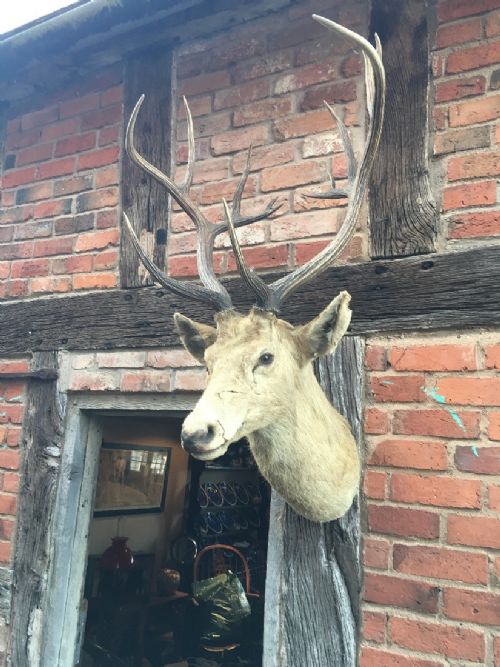
Vintage Hunting Lodge Decor
Vintage hunting lodge decor gathers the robust animal mounts, oils, and carved woods that bring rugged sporting history indoors.
Vintage Hunting Lodge Decor
Vintage hunting lodge decor encompasses robust animal mounts, oil paintings, and functional accessories derived from sporting traditions. When searching for vintage hunting lodge decor, buyers encounter pieces originating from the nineteenth century through the nineteen-thirties.
Artworks and instruments appear in the form of oil paintings on canvas and barometers. These items reflect Highland Lodge, Black Forest, and French Animalier traditions.
How they were made
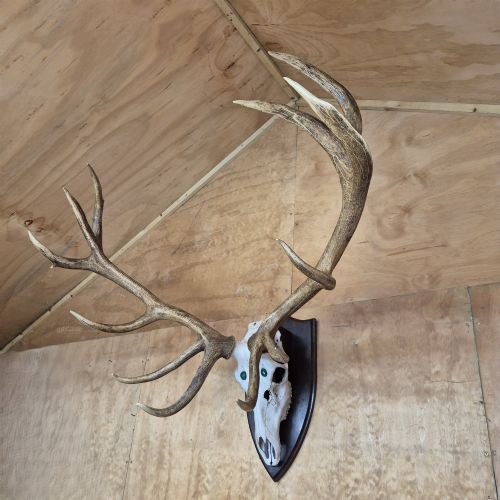
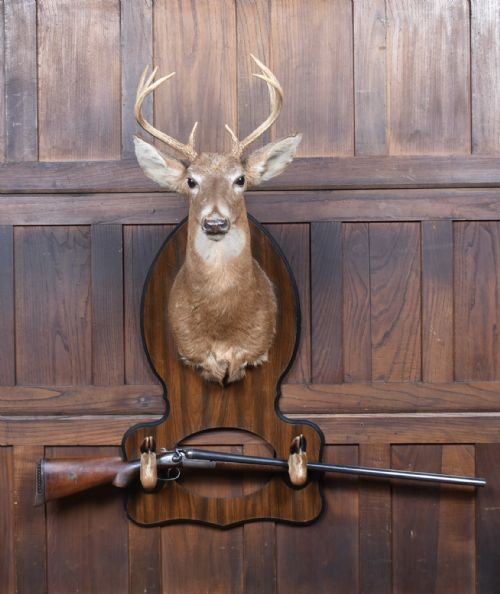
Taxidermy mounts utilise natural animal materials including antler, bone, and horn mounted upon carved wood shields. Artisans shaped these biological specimens to preserve the natural form of red deer, roe deer, and whitetail deer.
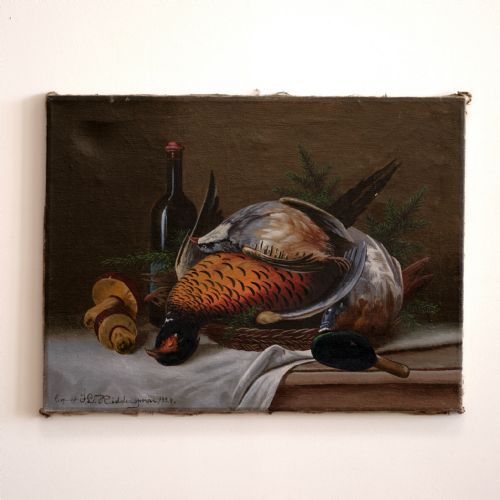
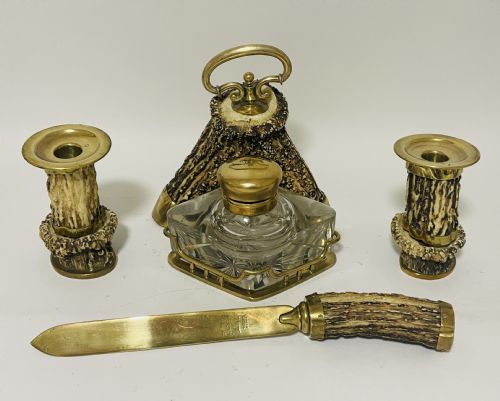
Metalwork utilises brass for mounts and desk accessories, pairing with carved wooden elements. Painters applied oil paint onto canvas to create sporting art scenes from the nineteenth and early twentieth centuries.
Materials recorded across the inventory include antler, brass, bone, oak, canvas, and oil paint.
What varies in quality
The standard of taxidermy preservation and the scale of the animal mounts dictate the upper tier of the range. Large stags heads and multi-point antler sets demonstrate superior anatomical proportion and mounting skill.
Carved wooden shields and bases display varying degrees of artisanal detail, from plain timber to intricate Black Forest carving. The fidelity of oil paintings on canvas and the operational integrity of period barometers further separate the fine examples from standard items.
The Vintage Hunting Lodge Decor Glossary
- Taxidermy
- The art of preserving and mounting animal skins and horns to represent the living form. This process creates the primary wall decor found in sporting interiors.
- Black Forest
- A nineteenth-century style of intricate wood carving originating from the German region, known for realistic animal and foliage motifs. Carved barometers and wooden mounts often reflect this tradition.
- Animalier
- A nineteenth-century artistic style focusing on the realistic portrayal of animals in sculpture and painting. French examples frequently depict hunting dogs and sporting subjects.
- Highland Lodge
- An aesthetic style rooted in rural British sporting estates, defined by red deer antlers and stags heads. This tradition values robust natural materials and rustic utility.
Vintage Hunting Lodge Decor: Frequently Asked Questions
What is Black Forest carving?
Black Forest carving is a distinct nineteenth-century woodcraft style originating in Central Europe, known for deep, naturalistic animal and forest motifs. Artisans utilised local linden and oak timber to carve barometers, furniture, and wall decor.
This style emphasises texture and anatomical realism, frequently incorporating woodland creatures and foliage. The dark, rich patina on these carved woods develops from age and handling.
How do I clean taxidermy mounts?
Taxidermy mounts require gentle dusting with a soft, dry brush to remove particulate matter without disturbing the hair or fur. Avoid using liquid cleaners or damp cloths on natural hair and bone specimens.
Keep mounted specimens away from direct sunlight and excessive moisture to preserve the condition of the hide and horn. Regular, light maintenance prevents dust accumulation in the detailed areas of the mount.
What periods do these pieces span?
The available pieces span from the nineteenth century through the Edwardian era and into the nineteen-thirties. Victorian and Edwardian examples represent the height of traditional sporting interior design.
Early twentieth-century items continue these manufacturing methods using traditional materials like brass, oak, and oil paint. Each period contributes distinct stylistic touches to the overarching lodge aesthetic.