



Carved Wooden Shield Plaque
These carved wooden shield plaques combine heraldry and woodwork, bringing historic crests and coats of arms straight to the wall.
Carved Wooden Shield Plaque
A carved wooden shield plaque displays armorial bearings, coats of arms, or heraldic symbols mounted upon a wooden support. When buyers search for a carved wooden shield plaque, they encounter wall decor that ranges from simple timber crests to complex painted panels.
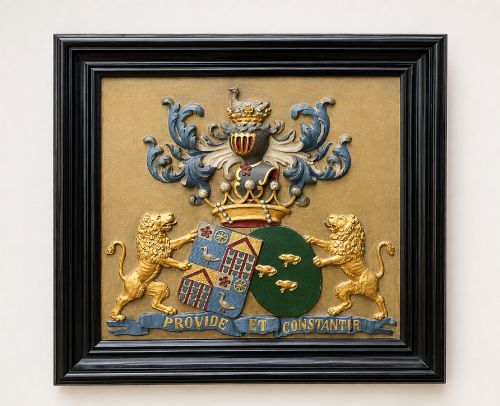
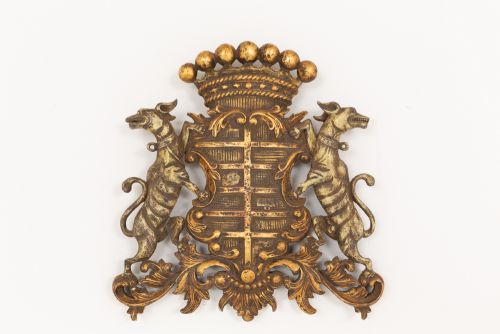
The pieces on this page span the eighteenth, nineteenth, and early twentieth centuries. Examples include nineteenth-century Dutch heraldic marriage plaques, Pugin design tiger oak lion shields, and early twentieth-century wall plaques.
Many of these objects incorporate natural materials alongside timber, including natural hide and taxidermy mounts like stags' heads and roe deer antlers. Forms vary from domestic wall plaques and sculptural cartouche emblems to large decorated heraldic panels.
How they were made
Craftsmen shaped these items from dense hardwoods, notably oak, utilising hand-carving techniques to create deep relief armorial designs and heraldic lions. Artisans built up surface detail using gesso before applying polychrome pigment and gold leaf to highlight specific coats of arms.
Some mounted examples combine carved timber shields with natural hide and taxidermy elements, securing animal heads directly onto the wooden backing boards. Other panels feature painted decoration alongside intricate gilt work to emphasise the status of the families or institutions represented.
A stag's head occasionally guards the family honour from the middle of a wooden shield.
What varies in quality
The distinction between standard and exceptional pieces rests in the depth and crispness of the wood carving. Skilled carvers rendered heraldic beasts and familial crests with anatomical precision and sharp undercut details, whereas lesser examples remain flat and formulaic.
The preservation of original surface finishes dictates the overall standard. Intact polychrome pigment, authentic gold leaf, and stable gesso layers retain the visual integrity of the heraldry far better than overpainted or stripped timber.
The Carved Wooden Shield Plaque Glossary
- Heraldic
- Relating to heraldry, coats of arms, and armorial bearings. These designs denote family lineage, alliances, or institutional status.
- Gesso
- A plaster-like mixture applied to wood as a base for paint or gilding. It provides a smooth surface for detailed decorative work.
- Polychrome
- Painted or decorated in several colours. This pigment work brought realism and heraldic accuracy to carved wooden crests.
- Cartouche
- An oval or oblong frame enclosing a design or emblem. Sculptural examples often appear on commemorative plaques and armorial shields.
- Armorial
- Consisting of or displaying a coat of arms. These symbols were historically used to identify noble families and official bodies.
Carved Wooden Shield Plaque: Frequently Asked Questions
What is a carved wooden shield plaque?
A carved wooden shield plaque is a decorative wall hanging shaped like a shield and decorated with coats of arms, heraldic symbols, or family crests. These pieces were traditionally commissioned to mark marriages, alliances, or institutional achievements.
They combine woodworking with heraldic art, often incorporating paint, gilt, or taxidermy elements such as antlers mounted directly onto the timber.
How were these plaques used historically?
Historically, these items served as displays of lineage, status, and allegiance within grand homes, clubhouses, and public buildings. They recorded marriages, institutional memberships, or royal patronage.
Today, they function purely as decorative wall art, bringing historical character and texture to domestic and commercial interiors.
How do I date a wooden shield plaque?
Dating relies upon examining the timber species, carving style, and surface finishes like gesso, paint, or gold leaf. Eighteenth-century examples often display deep hand-carving and early polychrome pigments, while Victorian and Edwardian pieces reflect revivals such as Gothic Revival or Pugin designs.
Associated elements like taxidermy mounts or metal automotive emblems also provide firm chronological clues for late nineteenth and early twentieth-century pieces.
How do I hang a heavy wooden shield plaque?
Due to the dense hardwoods and sometimes added taxidermy or metal components, these pieces require secure wall fixings. Use heavy-duty picture hooks rated for the specific weight of the timber and mount directly into wall studs where possible.
Check the stability of any integrated hanging loops or brackets on the reverse before placing the plaque on the wall.