


Antique Square Centre Table
An antique square centre table brings architectural proportion and rich timber into a room, serving as a striking focal point.
Antique Square Centre Table
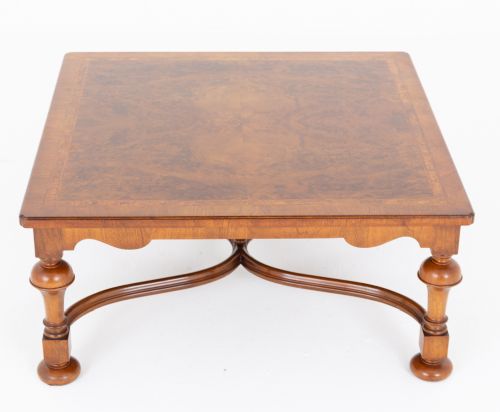
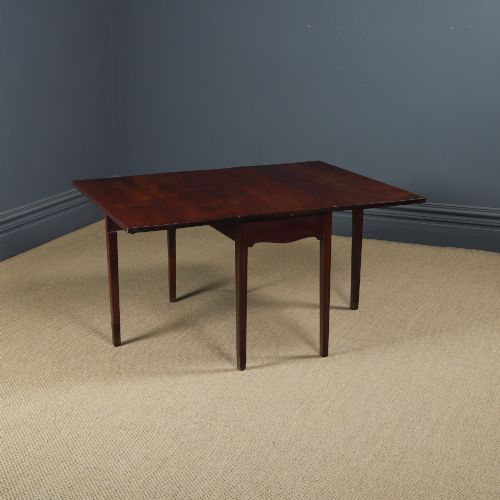
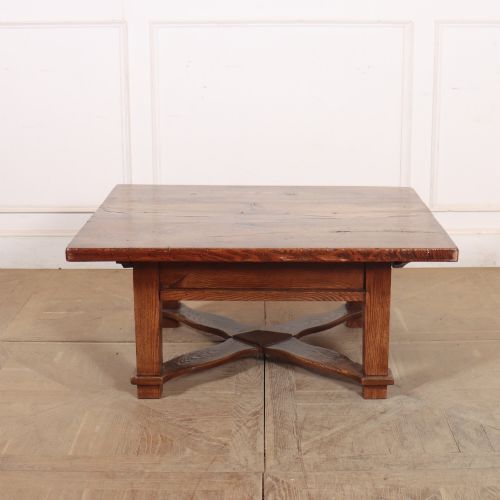
When you search for an antique square centre table, you are looking at freestanding occasional, dining, or coffee tables designed to be viewed from all sides. These pieces often feature geometric tops supported by pedestal columns, pillars, or four legs, originating from periods such as the Georgian, Regency, and Edwardian eras. The selection spans formal mahogany designs with inlaid satinwood banding to rustic elm and pine low tables.
You will encounter various interpretations, including drop-leaf folding tables, tilt-top breakfast tables, and smaller occasional or coffee tables adapted from earlier forms. Woods like burr walnut, mahogany, and elm dominate the selection, sometimes paired with marble tops or brass details. They function effectively in the middle of a room rather than pushed strictly against a wall.
How they were made
Cabinetmakers utilised dense hardwoods like mahogany and walnut, frequently applying decorative veneers or contrasting satinwood banding to the top surfaces. Timber frames were joined using traditional methods, and pieces often incorporate brass castors on the feet for manoeuvrability.
Surface ornamentation ranges from simple moulded edges to intricate inlay work and carved pedestals. Marble inserts appear on specific Victorian examples, requiring precise stone-cutting and fitted wooden frames to support the weight securely.
Some tables were built with secret tilt mechanisms so they could pretend to be wall-hugging sideboards until party time.
What varies in quality
The distinction between standard examples and the finest pieces lies in the selection of figured timbers, such as burr walnut or yew, and the precision of the cabinetwork. Superior examples exhibit crisp, well-defined carving, tightly fitted joinery, and balanced proportions that hold the eye from every angle.
Maker attribution also elevates a piece, as seen in documented workshops like Gillows of Lancaster. The subtlety of the inlay work, the preservation of the original polished surface, and the structural integrity of the base or pedestal further separate ordinary tables from exceptional ones.
Gillows of Lancaster
The Antique Square Centre Table Glossary
- Centre table
- A freestanding table finished on all sides, traditionally placed in the middle of a room rather than against a wall.
- Tilt-top table
- A table with a hinged top that can be rotated and tilted vertically when not in use to save space.
- Satinwood banding
- A decorative border of pale, fine-grained satinwood inlaid into the darker primary timber of the tabletop.
- Drop-leaf
- A table design featuring hinged flaps on the sides that can be raised and supported to expand the surface area.
- Pedestal base
- A central column support resting on feet, commonly found on round and square tables from the Regency and Victorian periods.
Antique Square Centre Table: Frequently Asked Questions
Where should I place an antique square centre table?
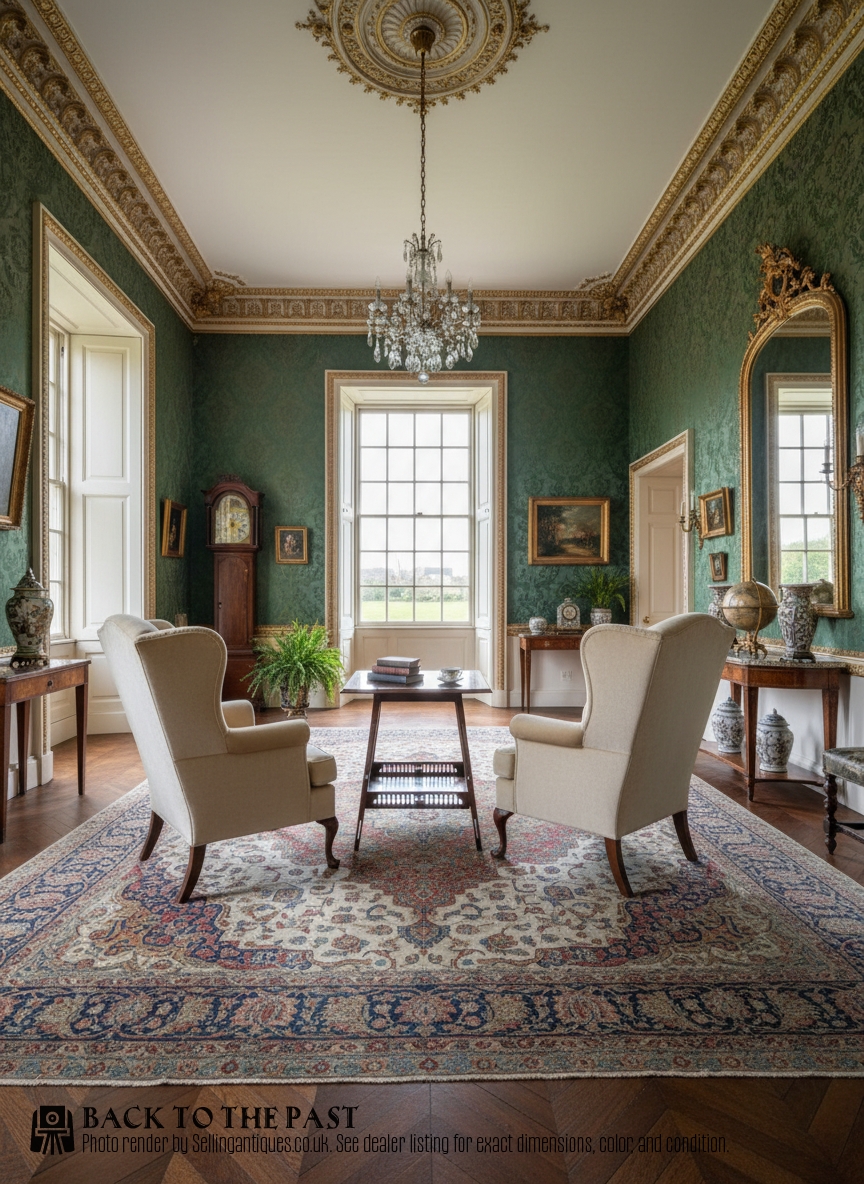
These pieces are designed to stand away from walls, making them ideal for the middle of a principal reception room or a large entrance hall.
They allow access from all sides and work well beneath a central ceiling rose or hanging chandelier.
Can I use an antique square centre table for dining?
Certain larger examples, particularly those from the Georgian and Regency periods, were built to accommodate dining or breakfast.
Check the height from the floor to the underside of the frieze to ensure adequate legroom for seating.
How do I distinguish a Regency table from a Victorian one?
Regency pieces often display neoclassical restraint with clean architectural lines, brass mounts, and rich mahogany veneers.
Victorian examples frequently introduce heavier proportions, bolder carvings, and occasionally inset marble tops.
How do I care for the timber surface?
Keep the wood away from direct heat sources and strong sunlight to prevent the timber and veneer from drying out or fading.
Apply a microcrystalline wax periodically and buff gently with a soft cloth to maintain the natural lustre.