

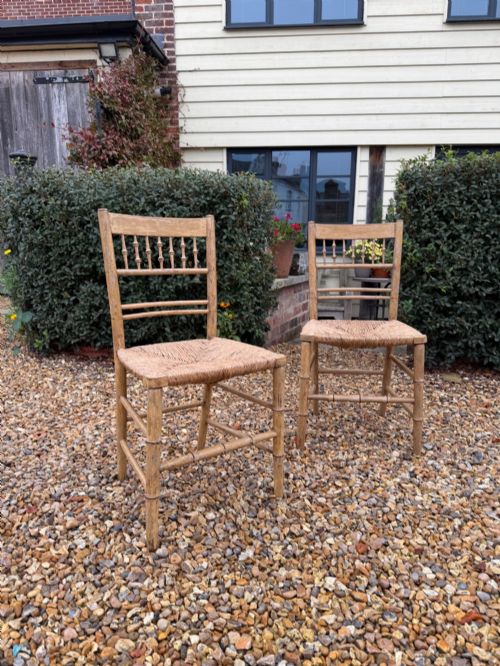
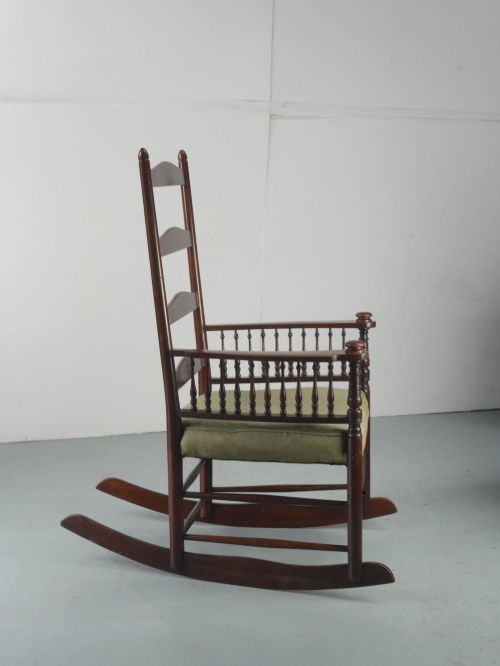
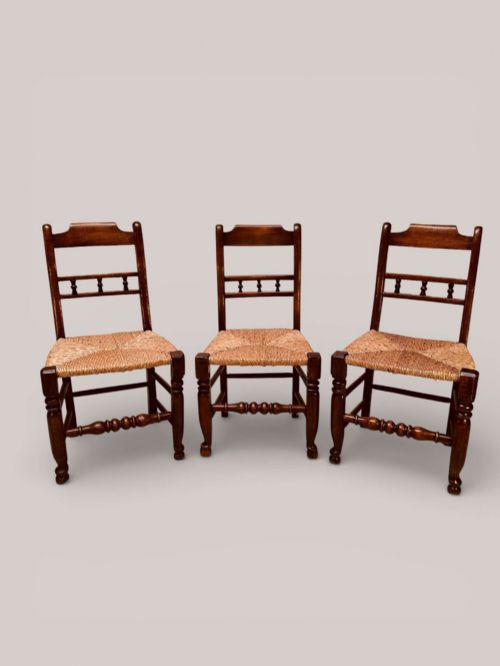
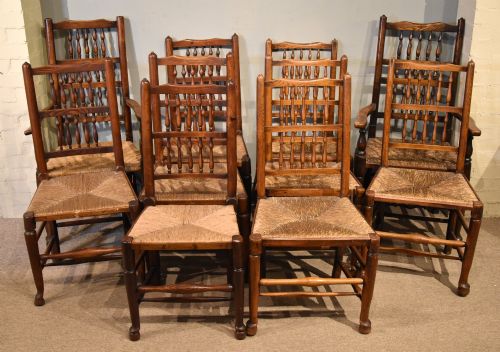
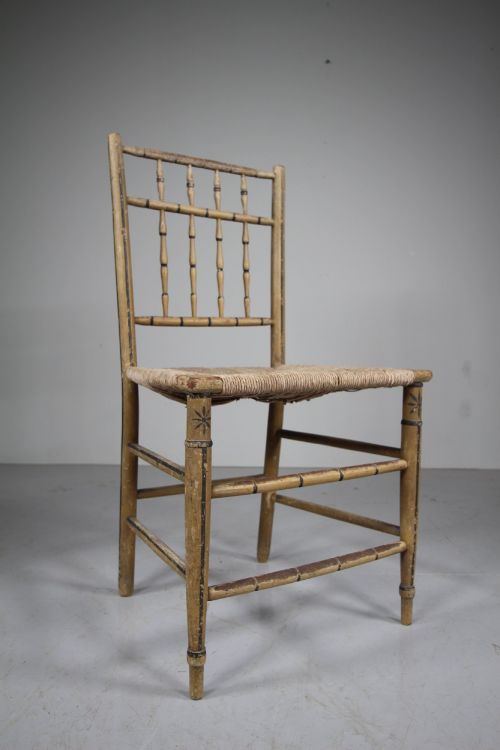
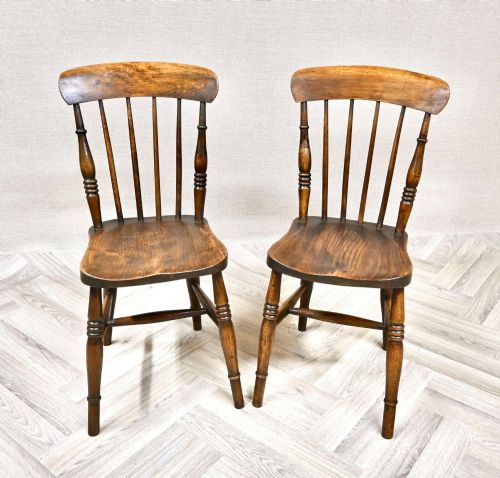
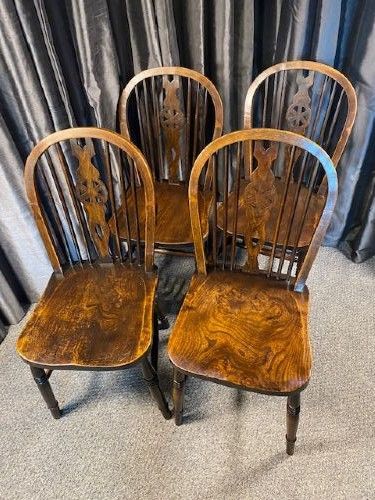
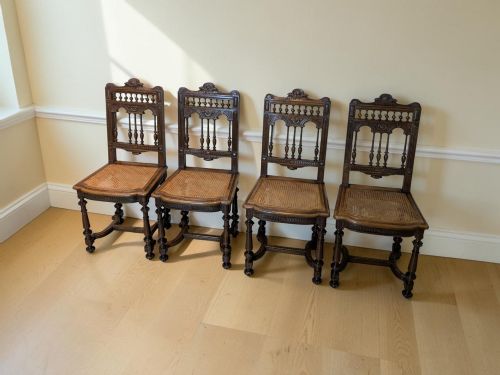
Antique Spindle Side Chair
An antique spindle side chair brings vernacular turnery and upright seating into daily domestic use, offering simple timber frames that suit modern kitchens and living spaces.
Antique Spindle Side Chair
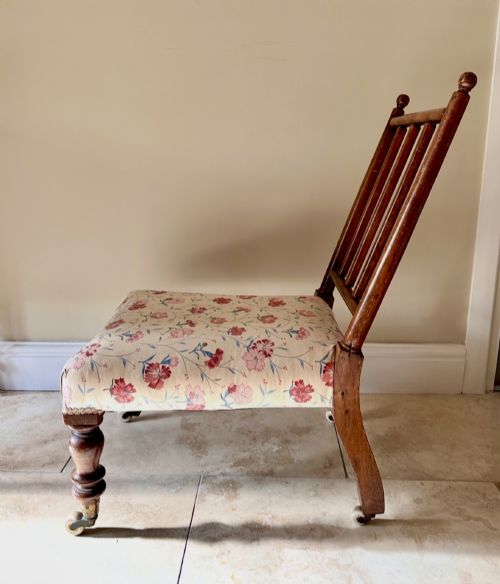
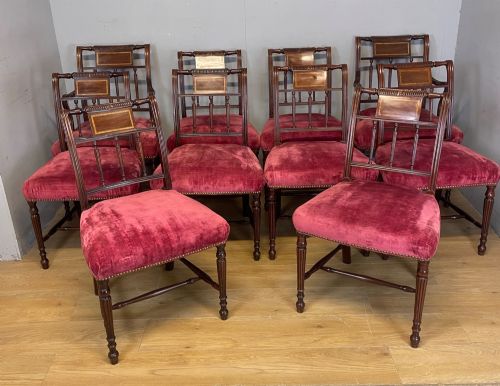
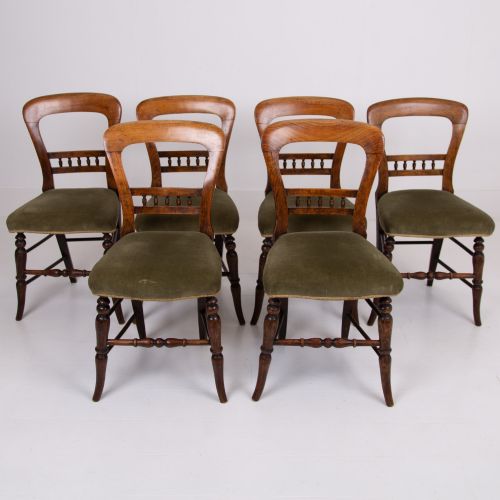
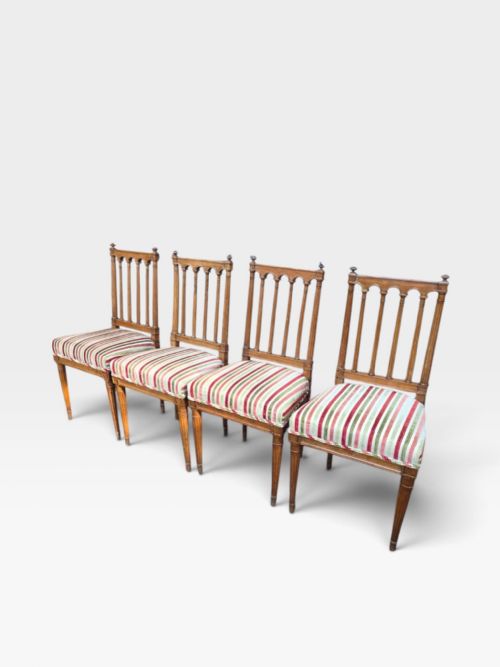
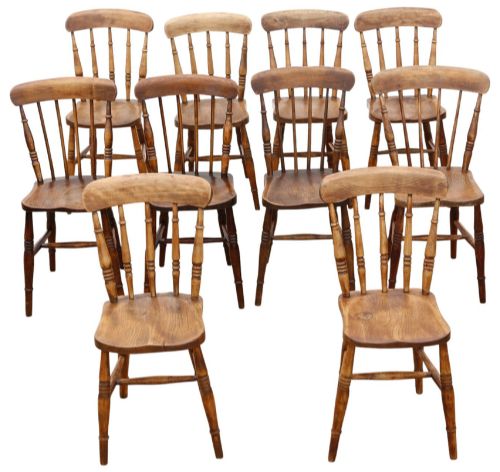
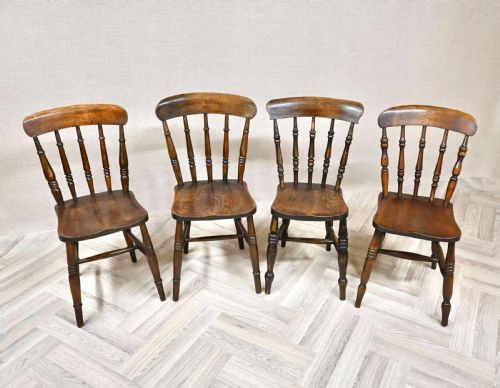
An antique spindle side chair draws on English country traditions, utilising turned spindles in the backrest and upright framing designed for functional seating. These chairs emerge from nineteenth-century vernacular workshops, Victorian farmhouse production, and Edwardian revivals, appearing most often as single pieces or matched sets intended for dining and kitchen use.
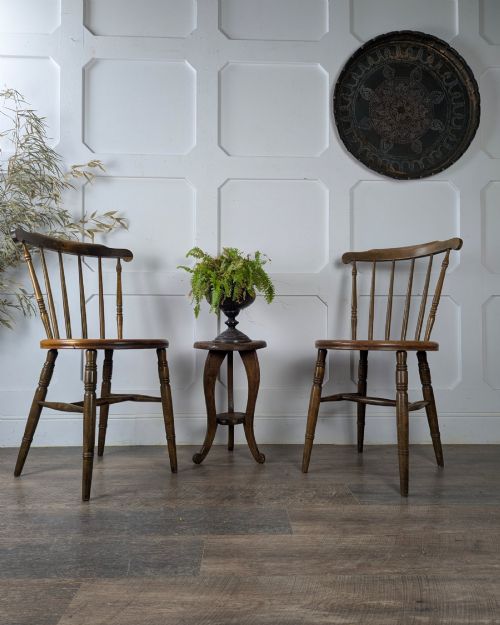
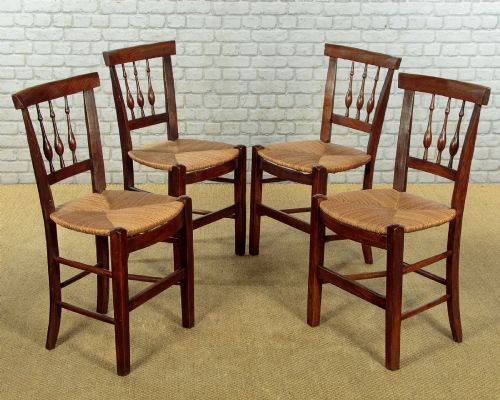
The form encompasses various regional styles, including Windsor stickbacks, rush-seated ladder backs, and aesthetic movement salon pieces. Makers utilised sturdy local timbers to construct lightweight, durable frames that remain practical for contemporary interiors.
How they were made
Cabinetmakers and bodgers built these chairs using native hardwoods such as elm, ash, beech, and oak, often combining timbers within a single frame for structural strength. Seats were shaped from solid elm or woven from rush and cane, supported by turned spindles and legs secured with traditional wedged tenon joints.
Surface treatments range from natural waxed patinas on exposed grain to black ebonisation with gilt highlights seen in later Victorian examples. Steam bending shaped components like bentwood hoops and curved back rails.
Antique Spindle Side Chair Retail Price Guide 2026
Typical asking prices for spindle side chair among the pieces listed under this phrase on Sellingantiques today, from the lower quarter to the upper quarter. They describe what is for sale here now, not the wider market.
Listings feature periods spanning the eighteenth century through to the Edwardian era, incorporating elm, ash, beech, oak, and mahogany.
What varies in quality
Quality rests in the crispness of the wood turnings, the depth of the timber's natural patina, and the structural integrity of the joints. Earlier eighteenth and nineteenth-century examples often display superior hand-turned detailing and integrated grain matching compared to later mass-produced variations.
The survival of original rush or cane seating and matching sets preserved without excessive timber replacement elevates the standing of a piece. Subtle proportions and comfortable rake in the backrests distinguish superior vernacular craftsmanship from utilitarian workshop output.
Liberty's·Codina·Dinco
The Antique Spindle Side Chair Glossary
- Spindle back
- A chair back constructed from vertical turned wooden rods fitted between a top rail and the seat. These slender elements provide flexible support and define the lightweight aesthetic of country seating.
- Rush seat
- A woven seating surface made from dried marsh grasses twisted around a core and worked across a wooden frame. This traditional technique creates a durable, textured surface common in regional vernacular chairs.
- Windsor chair
- A timber chair built with a solid sculpted seat into which the legs and back spindles are independently tenoned. This construction method yields a sturdy framework typical of farmhouse kitchens.
- Stickback
- A vernacular chair design utilising plain or steam-bent wooden rods for the backrest rather than elaborately carved splats. The simplicity of the form highlights the natural grain of ash and elm.
- Patina
- The surface sheen and colour developed by wood through age, handling, and regular waxing over decades. A deep patina indicates long-term care and original finish integrity.
- Harlequin set
- A group of chairs sharing a similar style, period, or construction method but assembled from different origins rather than manufactured together as an original set. Such collections offer matched dining solutions with subtle variations in detail.
Antique Spindle Side Chair: Frequently Asked Questions
How do I clean rush seats?
Dust rush seats regularly with a soft brush and avoid excess moisture, which causes dried marsh grass to weaken and snap over time.
Treat spills immediately by blotting with a dry cloth, keeping the natural fibres away from direct water contact.
Can I use these for dining?
These wooden side chairs function well around modern dining tables, offering sturdy construction and an upright posture suitable for meals.
Ensure table heights align with the lower seat clearances typical of nineteenth-century vernacular seating.
How to spot a harlequin set?
Harlequin dining sets combine chairs with matching spindle backs and wood types while showing slight variations in turning patterns or seat dimensions.
Inspect the underside of the seats and leg joints to identify individual workshop origins within the assembled group.
What woods were used?
English country makers relied on native hardwoods, pairing elm seats with ash spindles and beech legs to balance flexibility and strength.
Later Victorian and Edwardian examples occasionally introduced mahogany, walnut, or ebonised hardwoods for formal parlour settings.