



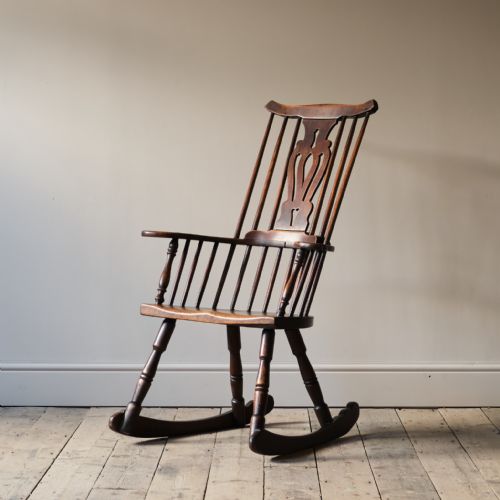

Antique English Rocking Chair
These antique English rocking chair examples bring vernacular charm and traditional seat comfort into modern interiors.
Antique English Rocking Chair
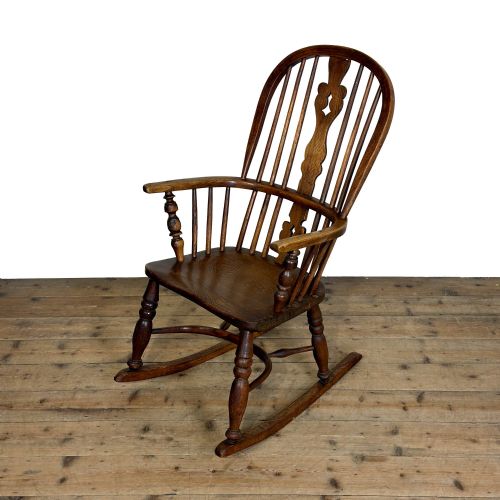
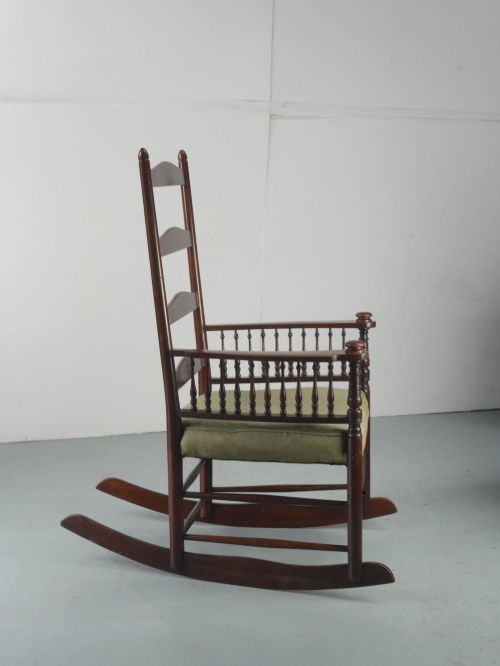
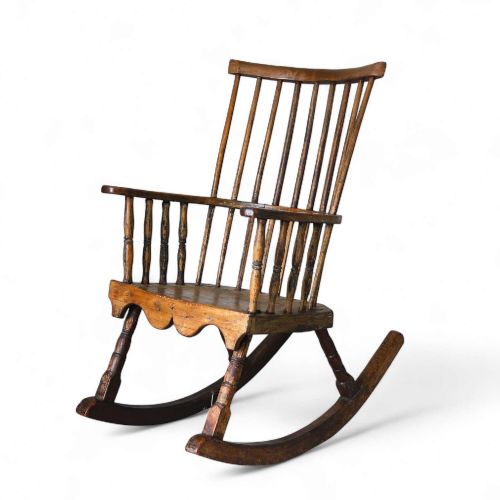
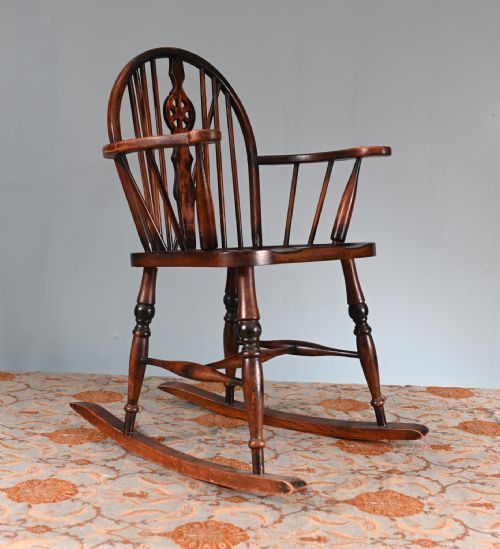
An antique English rocking chair sits firmly in the domestic vernacular tradition, designed for fireside rest and everyday comfort. You encounter rural seating forms ranging from robust Windsor styles to vernacular ladderback and spindleback formats.
The material character heavily leans towards regional British timbers like elm, ash, and beech, often shaped into comb-backs, wheelbacks, and spindle configurations. Pieces span from the late eighteenth century through the Regency and Victorian eras up to the early twentieth century.
Forms include both full-sized armchairs and smaller child's seats, reflecting domestic life across different centuries. Original paint surfaces and mellow patinated timber define the aesthetic of these vernacular survivors.
How they were made
Traditional bodgers and country joiners utilised native British hardwoods such as elm for solid seats, ash for steam-bent spindles, and beech for turned legs and arms. These woods were chosen for their toughness and flexibility under the stress of a rocking motion.
Construction methods rely on pegged mortise and tenon joints, Windsor saddle seats carved from single slabs of timber, and steam-bending techniques for curved backs and armbows. Rush is also employed for seating surfaces in certain regional ladderback traditions.
Surface treatments vary from unpolished waxed timber that highlights the natural grain to original historic paint finishes that preserve the raw character of the wood.
Antique English Rocking Chair Retail Price Guide 2026
Typical asking prices for english rocking chair among the pieces listed under this phrase on Sellingantiques today, from the lower quarter to the upper quarter. They describe what is for sale here now, not the wider market.
Makers occasionally added extra rocker length simply to stop enthusiastic family members from tipping backwards into the hearth.
What varies in quality
Quality rests upon the purity of the timber selection, the sculptural integrity of the carved saddle seat, and the elegance of the spindle turnings. A well-balanced frame retains its original rocking profile without awkward timber replacement.
The presence of an untouched surface, whether aged patina or original paint, distinguishes a piece that retains its historical honesty from one heavily restored. Proportions also matter, with finer examples displaying harmonious comb-backs and well-turned arm supports.
Liberty's
The Antique English Rocking Chair Glossary
- Comb-back
- A Windsor chair variation where the vertical spindles of the back extend upward into a headrest piece resembling the shape of a decorative comb.
- Windsor
- A traditional wooden chair featuring a solid carved saddle seat into which the legs and back spindles are directly inserted.
- Vernacular
- Objects designed by regional craftsmen for practical everyday use rather than following formal high-style metropolitan fashions.
- Saddle seat
- A wooden seat base scooped and carved into a contoured shape resembling a riding saddle to provide ergonomic comfort.
- Spindleback
- A seating form constructed with a series of slender turned wooden uprights forming the backrest.
Antique English Rocking Chair: Frequently Asked Questions
Where were these chairs used?
These chairs served primarily as fireside seating in farmhouse kitchens, cottages, and country homes throughout Britain. Their rocking action made them particularly valued for nursing children or resting after physical labour.
Over generations, they moved from utilitarian workhorses to decorative focal points in sitting rooms and studies, blending vernacular history with practical relaxation.
How do I date an antique English rocking chair?
Dating relies on observing structural construction details, timber types, and vernacular style evolution across periods like the Regency and Victorian eras. Earlier pieces often display thicker hand-carved saddle seats and simpler turned components.
Tool marks, joinery methods, and the presence of original paint or rich patination help confirm whether a piece originates from the eighteenth or nineteenth century.
Are child's rocking chairs rare?
Smaller rocking chairs were made specifically for children in domestic settings during the Regency and Victorian periods. They mirror the larger adult Windsor and spindleback designs in miniature.
While surviving in smaller numbers due to heavy use by children, they appear alongside full-sized pieces as functional examples of regional woodwork.
How do I care for antique timber?
Maintaining antique timber requires stable indoor humidity away from direct heat sources and strong sunlight, which can dry out elm and ash. Regular dusting with a soft dry cloth protects the historic surface.
Occasional application of traditional beeswax feeds the wood without building up heavy chemical layers that obscure the natural grain and patination.