
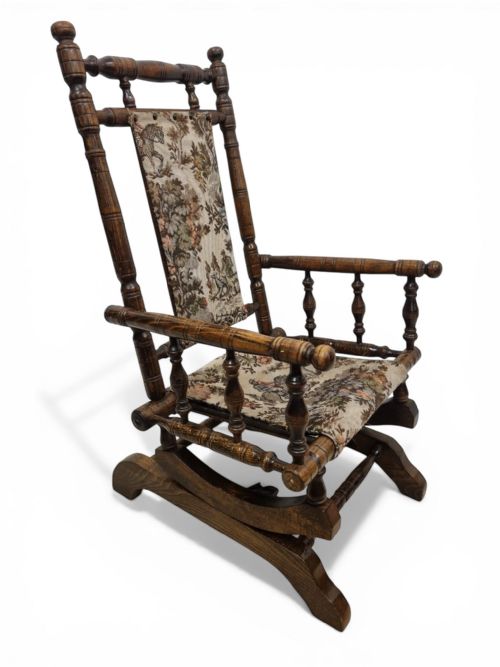


Antique Spindle Rocker
An antique spindle rocker offers a supportive, rhythmic seat designed for the fireside or nursery, shaped by centuries of regional craftsmanship.
Antique Spindle Rocker
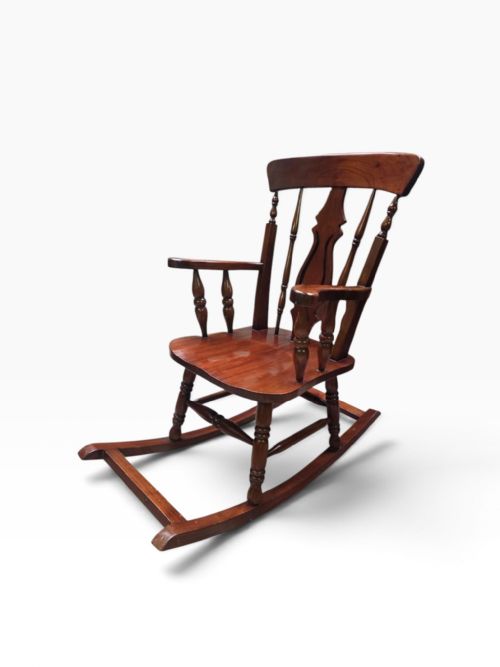
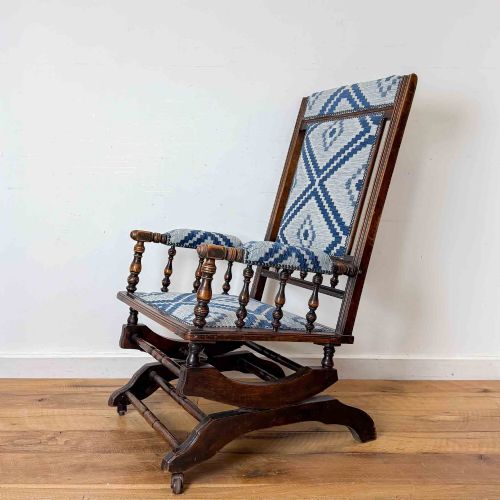
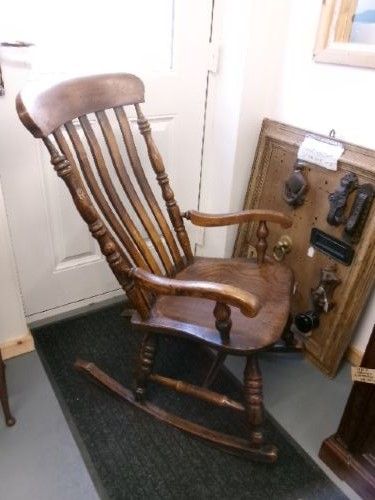
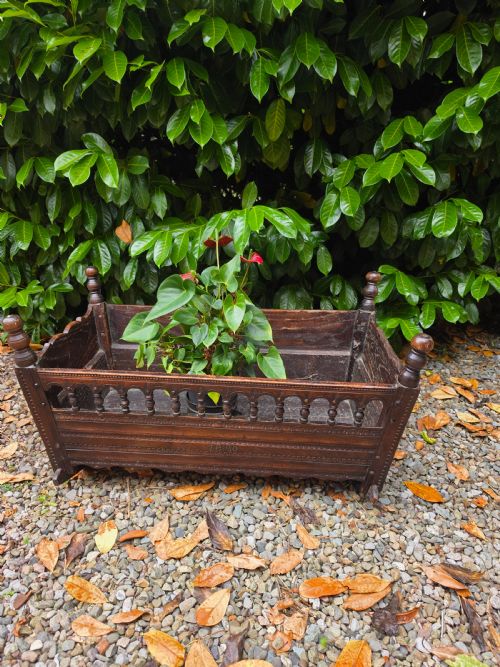
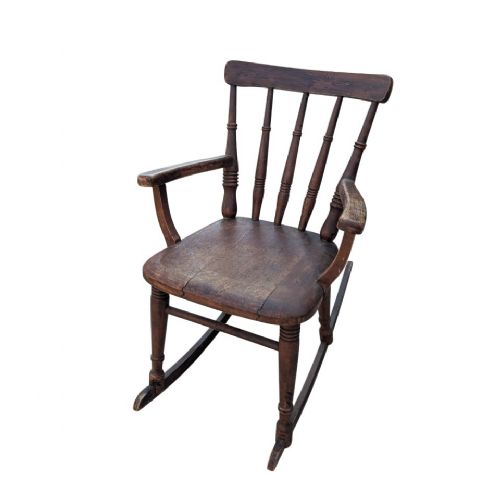
The antique spindle rocker encompasses both generous adult armchairs and smaller children's variants, including rocking cradles and nursing seats. These pieces range from vernacular English farmhouse designs to Scandinavian country styles and traditional American forms.
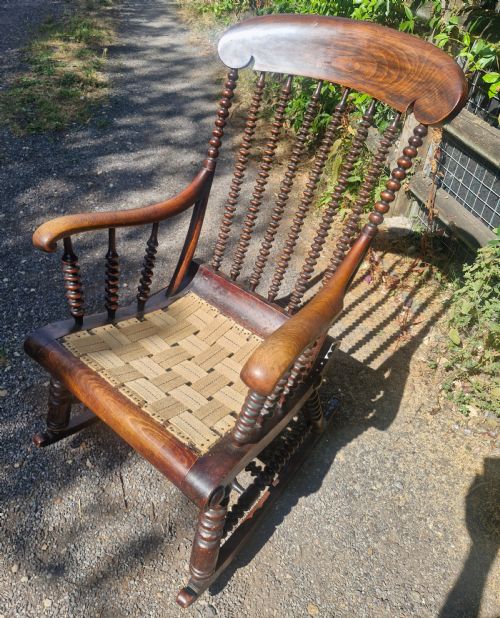
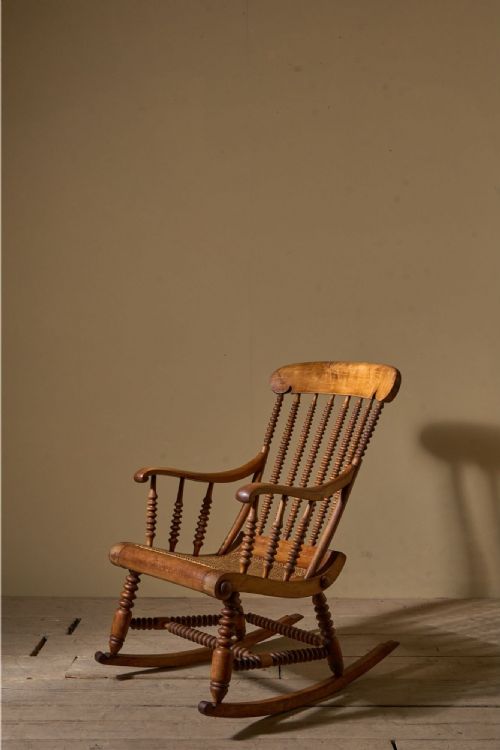
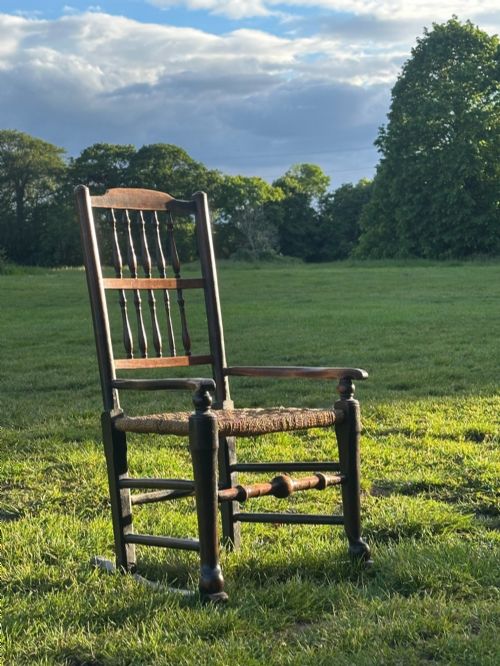
Buyers are most likely to encounter Victorian examples alongside nineteenth-century regional pieces featuring turned spindles or bobbin frames. Woods such as elm, beech, and oak dominate the offerings, frequently paired with rush, cane, or solid timber seats.
Regional variations span from Lancashire and Cheshire to Yorkshire, Scotland, and Sweden, demonstrating diverse local interpretations of the spindle-backed form. Some examples arrive in original paint or ebonised finishes, while others display the natural grain of fruitwood or mahogany.
Materials and construction
Cabinet makers and bodgers utilised native timbers like elm for seats, beech and ash for turned spindles, and oak or fruitwood for structural frames. These woods were chosen for their tensile strength and ability to be steam-bent or shaped on foot-powered lathes.
Construction techniques relied heavily on traditional joinery, including wedged tenons and bobbin or spindle turnings that formed the characteristic backrests and supports. Seats were fashioned from solid wood, moulded panels, or woven rush, cane, and sea grass.
Surface treatments ranged from clear polishing to original paintwork and ebonising, protecting the timber while defining the visual character of each country house or farmhouse chair.
Object types include both rocking chairs and rocking cradles, reflecting domestic uses from the fireside to the nursery.
Assessment of quality
Quality in an antique spindle rocker rests upon the integrity of the timber selection and the precision of the turning work. Finer examples display balanced proportions, crisp spindle details, and harmonious timber matching across the arms, seat, and rocker rails.
The survival of original surfaces, such as early paintwork or untouched patina on elm and fruitwood, distinguishes superior pieces from those stripped or heavily restored. Structural harmony between the rocking runners and the upper frame ensures the chair functions as intended without undue stress.
The Antique Spindle Rocker Glossary
- Spindle back
- A chair back constructed from vertical turned wooden rods. These slender members provide flexible support and define the lightweight visual rhythm of country seating.
- Bobbin framing
- A style of turning that creates a series of rounded, spool-like shapes along the wooden members. This decorative technique appears frequently on nineteenth-century vernacular seating.
- Windsor
- A chair built with a solid wooden saddle-shaped seat into which the legs and back spindles are inserted directly. English and American regional variations show distinct structural characteristics.
- Rush seating
- Woven marsh grass used to form a resilient and supportive seat base. It is commonly found on traditional country chairs and rocking armchairs.
- Vernacular
- Objects made by regional craftsmen for local use rather than following strict high-style metropolitan fashions. These pieces often utilise whatever native timbers are readily available.
Antique Spindle Rocker: Frequently Asked Questions
What is an antique spindle rocker?
An antique spindle rocker is a wooden chair fitted with curved rocking rails and a backrest composed of turned vertical spindles. These seats were made in various sizes for nurseries, parlours, and firesides across different regions.
They combine practical rocking movement with traditional carpentry, using native hardwoods like beech, ash, and elm.
How do I date an antique spindle rocker?
Dating relies on observing construction methods, timber choices, turning styles, and surface finishes. Nineteenth-century examples often feature bobbin turnings and ebonised paint, while earlier pieces show distinct regional vernacular traits.
Comparing the wear patterns and joinery helps place a chair within periods ranging from the seventeenth century through to the Edwardian era.
Where were these rocking chairs made?
These chairs originate from diverse locations including English counties like Yorkshire and Cheshire, Scottish workshops, Scandinavian rural communities, and America. Each region developed distinct framing styles and wood preferences.
Local tradesmen adapted traditional forms to suit the materials and domestic requirements of their specific areas.
How do I live with a spindle rocker?
Living with a spindle rocker involves placing it on level flooring to protect the curved wooden runners from uneven pressure. Regular dusting and stable indoor humidity help preserve dry timber and original paint surfaces.
They serve well as functional seating in living spaces or as decorative pieces that showcase traditional woodworking skills.