



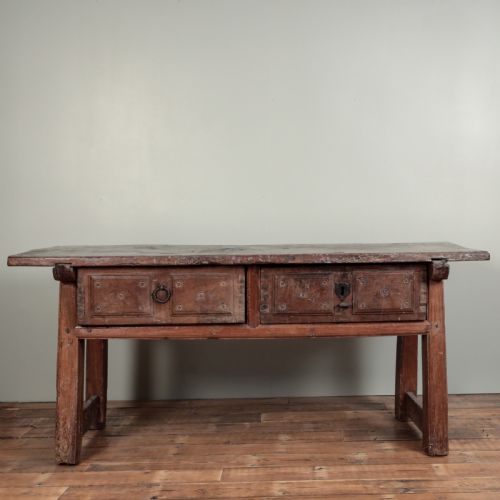


Antique Spanish Desk Table
An antique spanish desk table brings heavy timbers and ironwork straight into a room, offering deep history and honest working surfaces.
Antique Spanish Desk Table
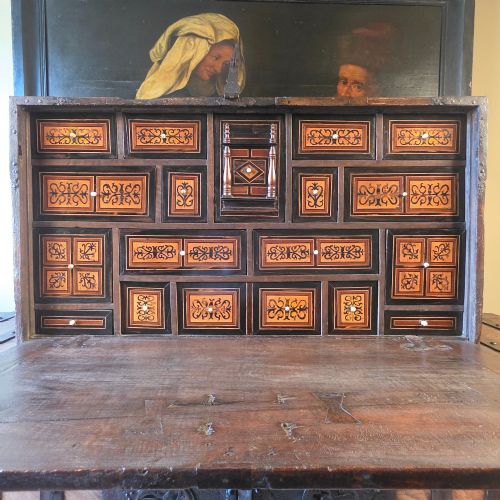
When buyers search for an antique spanish desk table, they look for substantial timber construction from centuries past. The pieces found here span the seventeenth century through to the early twentieth century, showing robust forms suited for writing and daily business.
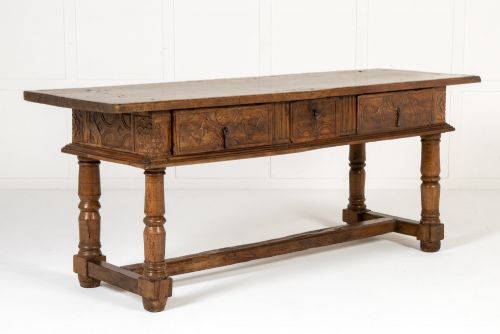
Most examples lean towards walnut and oak construction, often taking the form of side tables, trestle tables, or dedicated desks. These items reflect traditional regional aesthetics, ranging from strict baroque designs to simpler rustic farmhouse builds.
The selection ranges from early walnut surfaces with original patination to later revival pieces from the nineteen twenties. Each piece carries the distinct structural honesty of Iberian cabinet-making traditions.
Materials and construction methods
Makers relied heavily on solid walnut and oak for framing and surface tops, occasionally incorporating fruitwood and ebonised timber for contrast. These heavy woods provided the structural integrity needed for large working surfaces without excessive ornamentation.
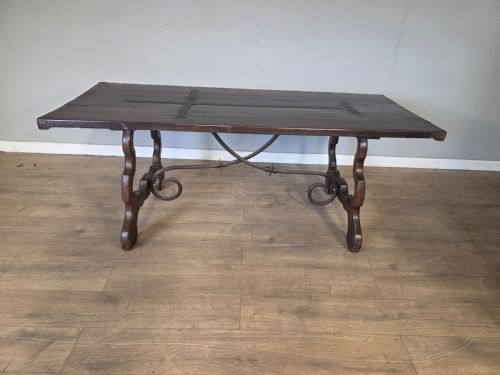
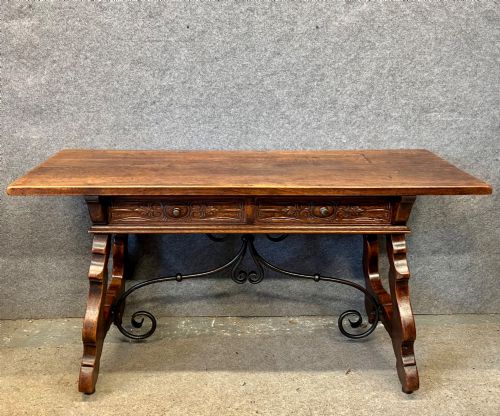
Wrought iron forms an essential component, appearing as stretcher bars, bracing brackets, and structural supports beneath the timber tops. This combination of heavy wood and hand-forged iron defines the functional resilience of the pieces.
Surface treatments range from plain waxed finishes that highlight the grain to ebonised surfaces and giltwood details on related cabinetry and lamps.
The listings span from the seventeenth century through to nineteen twenty, featuring walnut, oak, fruitwood, and wrought iron.
Markers of quality
Quality rests in the integrity of the timber and the depth of the natural patina accumulated over centuries. Untouched surfaces showing genuine age and wear separate superior examples from later, heavily sanded reproductions.
The joinery and the weight of the wrought iron work dictate the structural calibre of the item. Hand-forged metal braces and solid framing without modern replacement parts indicate a higher standard of original craftsmanship.
Proportion and restraint in decorative elements distinguish finer period furniture from simpler rustic or later revival pieces.
The Antique Spanish Desk Table Glossary
- Patina
- The surface sheen and colour developed by wood and metal through age, handling, and regular polishing. This is a primary indicator of authenticity.
- Refectory table
- A long, narrow dining or working table traditionally built with heavy timber legs and stretcher rails for stability.
- Ebonised
- Wood treated with a chemical stain or finish to imitate the dark, dense appearance of genuine ebony.
- Trestle table
- A table structure featuring two or more heavy support feet connected by a central horizontal beam.
- Baroque
- A decorative style characterised by grand scale, dramatic movement, and rich surface detailing, prominent in seventeenth-century furniture.
Antique Spanish Desk Table: Frequently Asked Questions
How do I clean an antique spanish desk table?
Dust the timber regularly with a dry, soft cloth to prevent grit build-up in the grain. Apply a traditional beeswax sparingly to nourish the wood without softening the existing patina.
Avoid modern liquid polishes containing silicone, as these penetrate the pores and damage historical finishes over time.
Can I use an antique spanish desk table daily?
These tables were built for heavy domestic and administrative use, making them sturdy enough for contemporary writing tasks. Use leather blotters or felt pads to protect older timber surfaces from scratches and ink stains.
Keep the furniture away from direct heat sources and drastic humidity changes to prevent the solid wood boards from splitting.
How can I tell a seventeenth-century table from a later revival piece?
Examine the underside and joints for hand-cut joinery marks, peg construction, and uneven tool scoring. Seventeenth-century examples show natural wear patterns and hand-forged ironwork that differ from machine-tooled twentieth-century revival items.
The density and colour of the walnut or oak timber also provide clues regarding the period of origin.
What is wrought iron used for on these tables?
Wrought iron typically appears as stretcher bars running beneath the tabletop to brace the legs against lateral movement. These metal supports add significant structural rigidity to heavy timber frames.
The blacksmith made scrolls and brackets also contribute to the decorative profile of the base.