




Antique Sovereign Case
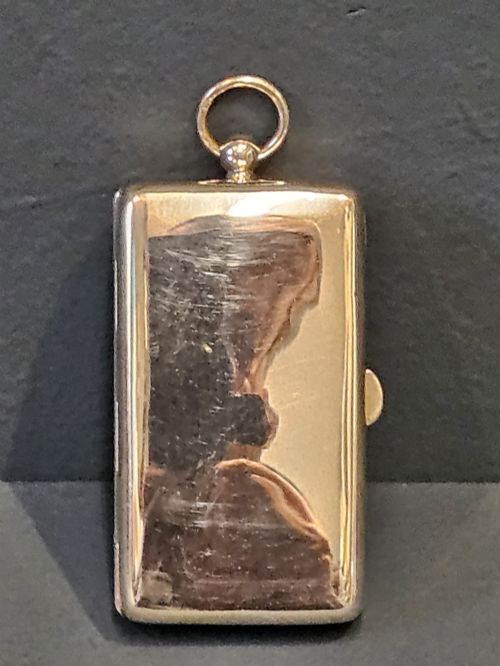
An antique sovereign case is a pocket-sized container designed to hold gold coins securely, bridging late Victorian and George V craftsmanship.
Antique Sovereign Case
When someone searches for an antique sovereign case, they are looking at pocket hardware designed to hold gold coins before paper currency took over daily circulation. The pieces met on this page belong predominantly to the Victorian, Edwardian, and George V periods, spanning the late nineteenth and early twentieth centuries.
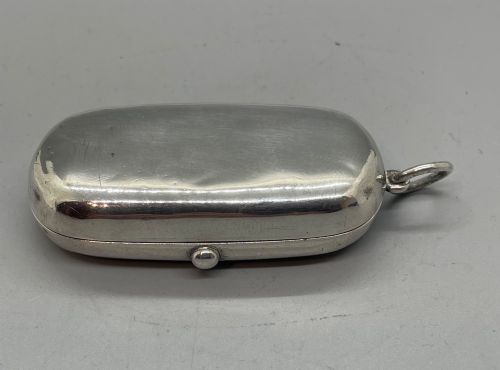
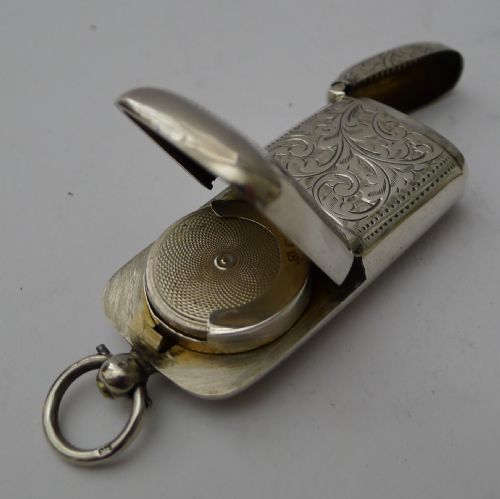
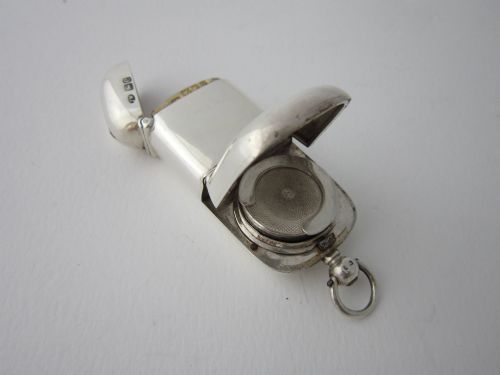
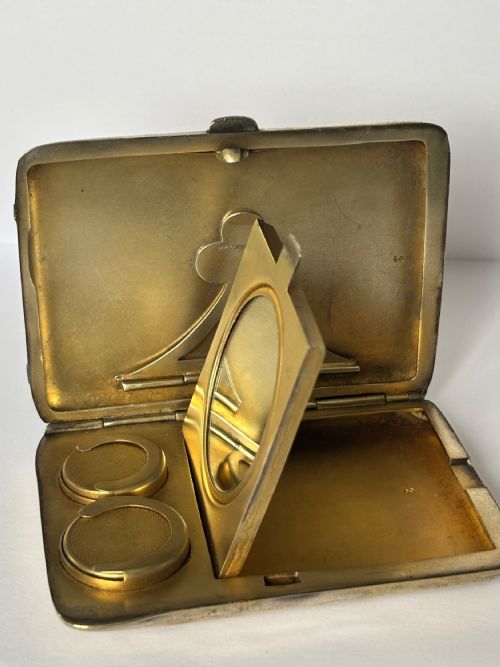
The standard form is a round, hinged metal box scaled precisely to fit a gold sovereign or half-sovereign, often equipped with an internal spring to keep the coin from rattling. Many examples take the form of double cases to hold two coins side by side or stacked, while others incorporate compartments for matches, stamps, or toothpicks.
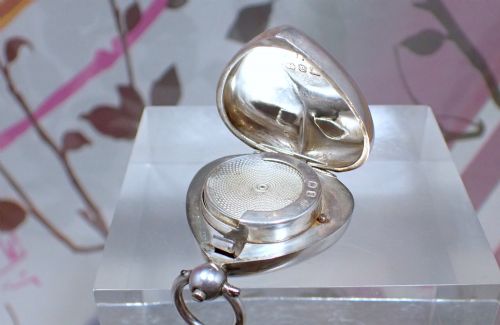
Beyond the standard circular container, the selection includes heart-shaped holders and combination pieces that double as vesta cases or purses. These items originate largely from Birmingham and London silversmiths working in styles ranging from plain utility to Art Nouveau and Art Deco.
Assessing the Pieces
The quality of an antique sovereign case rests on the crispness of its chasing or engraving and the tightness of the spring mechanism. A well-preserved hinge holds the two halves in alignment without play when closed.
Maker marks separate standard commercial production from workshop pieces associated with known silversmiths. Heavy-gauge metal resists the dents and rim wear common in items carried daily in waistcoat pockets.
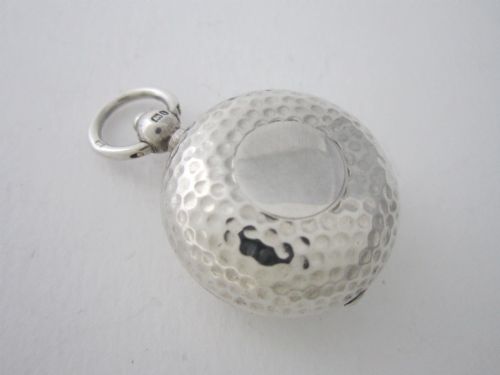
One unusual survivor is shaped like a golf ball, proving that Edwardian gentlemen liked to keep their gold coins in sporting disguise.
Aaron Lufkin Dennison·Henry Charles Freeman·Wright and Davies·Samuel Levi·Stephen Houghton and Son
The Antique Sovereign Case Glossary
- Sovereign case
- A small container made to hold British gold sovereign coins. They were carried in pockets or attached to watch chains.
- Vesta case
- A pocket box for matches with a striking surface on the base. Many combination examples joined this function with coin storage.
- Hallmark
- A series of official marks stamped on precious metals. They indicate the purity, maker, and year of assay.
- Silver gilt
- Silver covered with a thin layer of gold. This treatment gave the metal a warm tone and protected it from tarnishing.
- Assay office
- An organisation that tested precious metals for purity. Cities like Birmingham and London stamped their own town marks.
Antique Sovereign Case: Frequently Asked Questions
What fits inside a sovereign case?
These containers were made specifically for British gold sovereign coins, which measure just over twenty-two millimetres in diameter. Half-sovereigns also fit many models, though single holders lack the depth required for multiple coins.
Some examples include internal clips or springs to prevent the coin from sliding about. Combination pieces might also hold stamps, matches, or business cards alongside the coin.
How do I date an antique sovereign case?
Dating relies primarily on the silver hallmarks stamped into the metal by official assay offices. A specific letter punch indicates the exact year of testing, while other marks show the city and the silversmith.
Stylistic cues such as Art Nouveau curves or Edwardian proportions offer a secondary guide when hallmarks are rubbed. Comparing the hinge construction and catch design also helps narrow down the decade.
Were these cases worn or carried?
Owners typically carried them in waistcoat pockets or attached them to watch chains via a small loop on the top rim. Gentlemen relied on them for daily cash transactions before banknotes became universal.
Heart-shaped and decorative variants were sometimes kept in handbags or vanity cases. The spring-loaded lid ensured the gold coin remained secure during movement.
What is a combination sovereign case?
A combination case combines coin storage with other everyday pocket functions in a single hinged housing. The most frequent pairing is with a vesta case for matches, featuring a striking serration on the bottom edge.
More elaborate versions incorporate stamp compartments, toothpicks, or tiny pencils. These multi-purpose items tend to be slightly bulkier than standard single-coin holders.