



Antique Soldier Picture
An antique soldier picture captures the military spirit in paint, watercolour, glass or charcoal, offering a direct link to historical campaigns and regiments.
Antique Soldier Picture
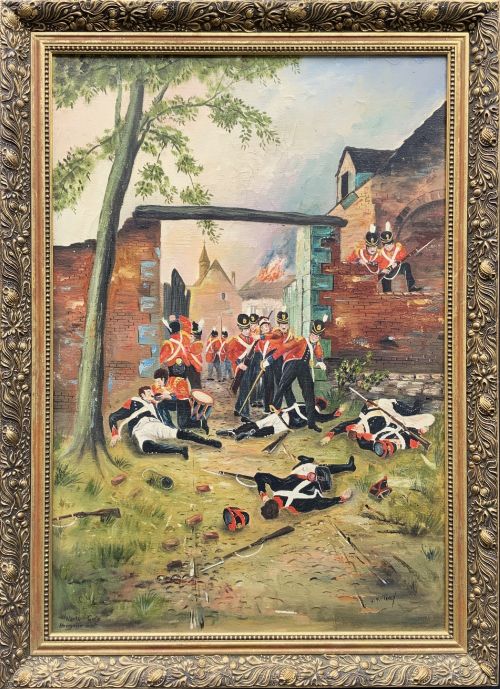
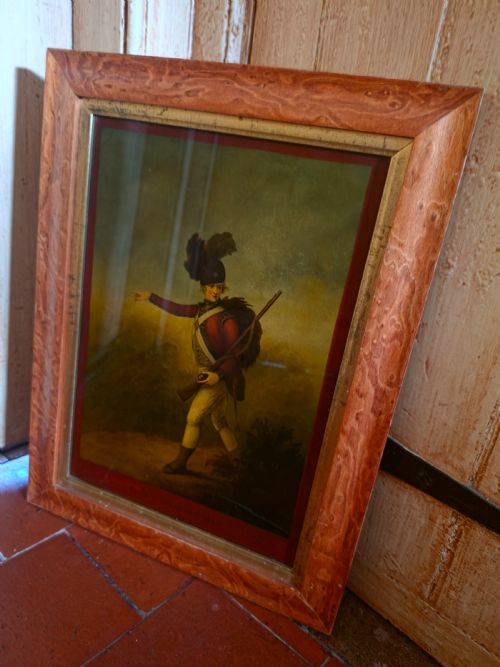
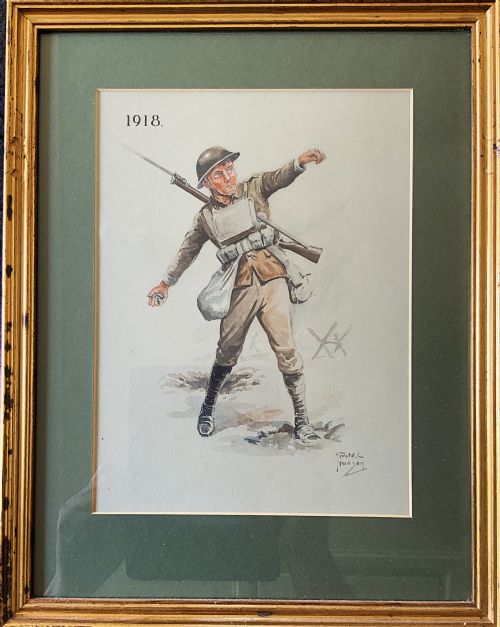
When you search for an antique soldier picture, you encounter framed watercolours, oil paintings, and reverse glass portraits spanning several centuries. These artworks depict individual soldiers, cavalrymen, and officers from the Napoleonic Wars up to the First World War.
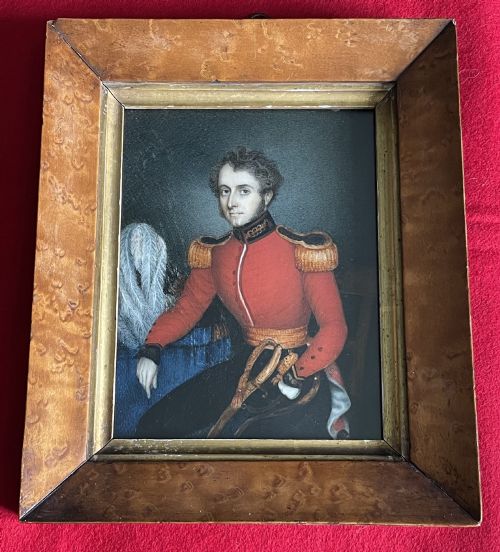
The pieces on this page range from intimate portrait miniatures and charcoal trench art drawings to larger framed paintings and porcelain wall plaques. Many capture specific historical forces like the British infantry or Belgian troops, alongside broader military genre scenes.
Earlier examples stretch back to eighteenth-century Dutch depictions of cavaliers, while nineteenth and early twentieth-century works record contemporary uniforms and battlefield scenes. Buyers often find watercolours and painted panels that preserve the exact tones of regimental dress.
How they were made
Artists deployed watercolour, wash, and oil paint upon paper, canvas, and wood panels to render the intricate details of military uniforms and equipment. Reverse glass painting required applying pigments directly to the rear of a glass plate, creating a glossy and durable finished surface.
Many works incorporate gilt wood frames, gold leaf accents, and protective glass layers to preserve the delicate pigments underneath. Trench art drawings utilise charcoal and paper sourced in the field, sometimes framed simply to protect the fragile medium.
Porcelain wall plaques involve firing painted mineral colours onto a ceramic base, fixing the military portrait permanently beneath a glazed finish.
Antique Soldier Picture Retail Price Guide 2026
Typical asking prices for soldier picture among the pieces listed under this phrase on Sellingantiques today, from the lower quarter to the upper quarter. They describe what is for sale here now, not the wider market.
Listings feature works executed in watercolour, oil, charcoal, and paint across the nineteenth and early twentieth centuries.
What varies in quality
The skill of the hand dictates the artistic merit, separating hasty camp sketches from masterworks by named painters who captured precise anatomical proportions and uniform accuracy. The handling of light in oil and watercolour creates depth and atmosphere that lesser works lack.
Original framing enhances the integrity of a piece, particularly when period gilt wood or matched surrounds complement the artwork. The stability of the underlying paper or glass surface also influences the overall preservation of the image.
Gilbert Scott Wright·Frank Dadd·Leopold Halvoet·Snaffles
The Antique Soldier Picture Glossary
- Reverse glass
- A technique where the painting is executed on the back of a glass sheet and viewed from the front. This method yields vibrant colours and a polished surface.
- Watercolour
- A paint consisting of pigment suspended in a water-soluble vehicle, commonly applied to paper. It allows for translucent washes and fine detail.
- Trench art
- Objects made by soldiers, prisoners of war, or civilians from war-zone material debris. These items often document immediate frontline experiences.
- Portrait miniature
- A small-scale painting on ivory, vellum, or paper, capturing a likeness with intense detail. They were frequently commissioned to commemorate officers and family members.
- Gilt wood
- Wood carved and coated with a thin layer of gold leaf or metallic powder. It provides traditional decorative framing for historical artworks.
Antique Soldier Picture: Frequently Asked Questions
What is an antique soldier picture?
An antique soldier picture is a painted, drawn, or printed depiction of military personnel created during past centuries. These works record the uniforms, equipment, and experiences of soldiers across various global conflicts.
They appear in media such as watercolour, oil, and reverse glass, often housed in period wooden frames. Collectors acquire them to preserve military history and visual art simultaneously.
How do I date a military picture?
Dating relies heavily on the style of the uniform, headgear, and weaponry depicted within the artwork. Regimental historians often match buttons and lapels to specific military regulations of the eighteenth, nineteenth, or early twentieth centuries.
Signatures, framing materials, and artist biographies provide further chronological clues. Examining the paper or canvas backing can also reveal clues about the age of the materials.
How do I care for framed watercolours?
Framed watercolours require protection from direct sunlight to prevent the pigments from fading over time. Maintaining a stable indoor humidity level prevents mould growth and paper degradation.
Displaying them away from direct heat sources helps preserve both the paper and the wooden frames. Professional framing with UV-filtering glass ensures long-term preservation of delicate works on paper.