


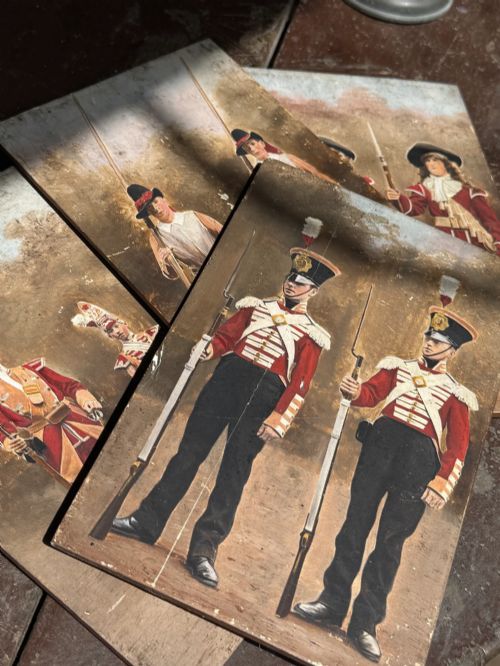


Antique Soldier Figure
An antique soldier figure stands ready in bronze, wood, or earthenware, capturing centuries of military history for your cabinet or mantelpiece.
Antique Soldier Figure
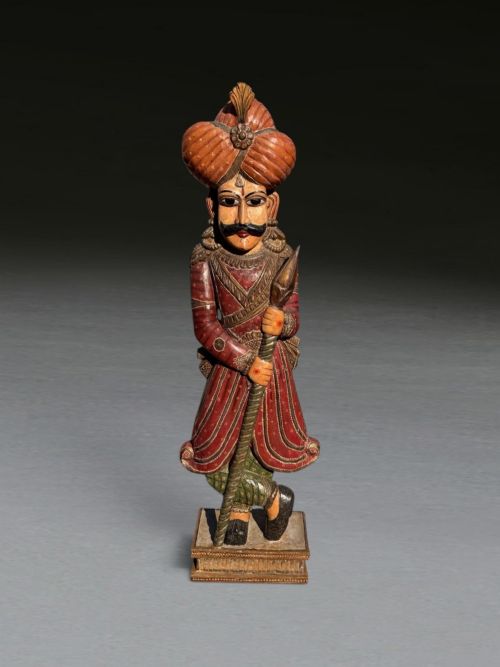
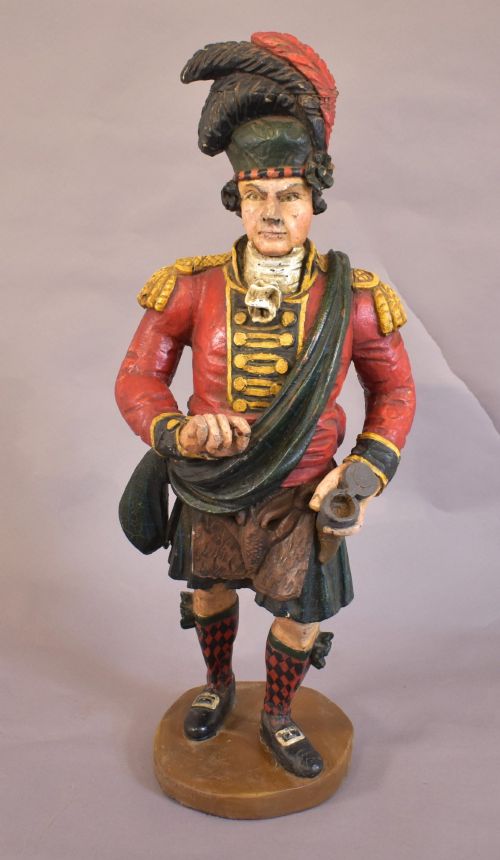
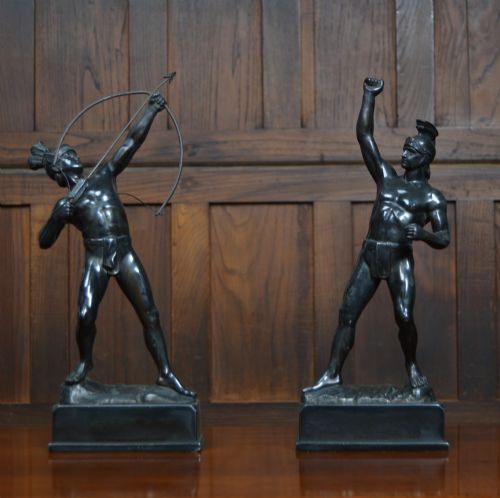
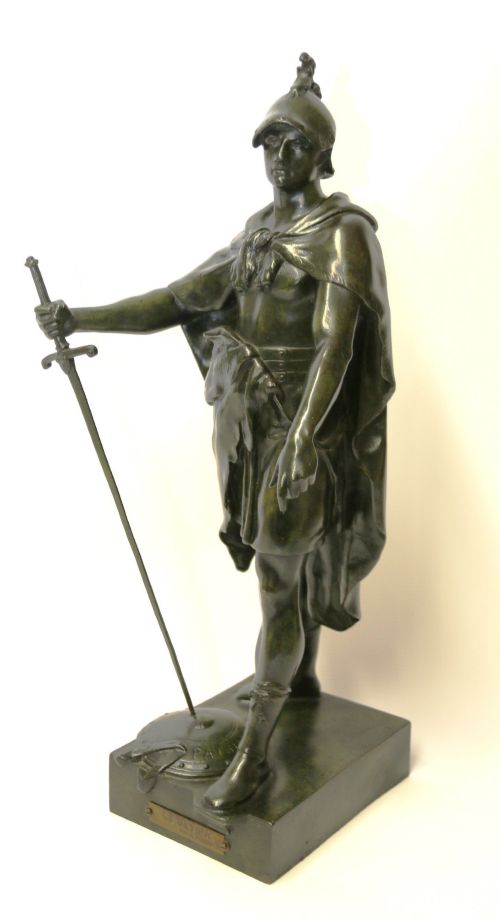
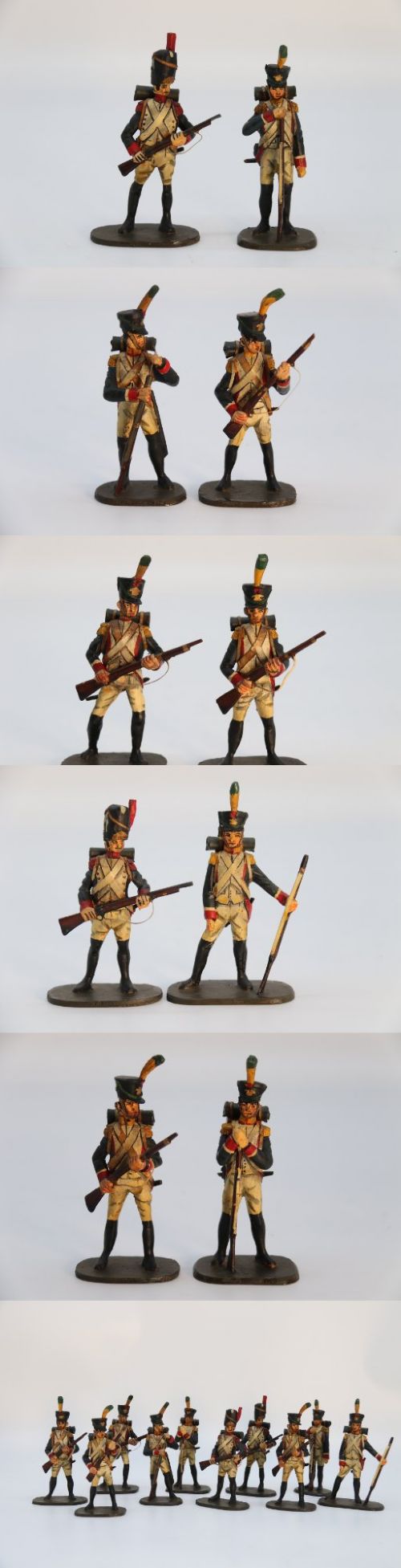
An antique soldier figure encompasses sculptural representations of military personnel cast in metal, carved from wood, or shaped in pottery. These pieces draw on various epochs, stretching from Roman combatants and Renaissance knights to Napoleonic troops and Victorian regulars.
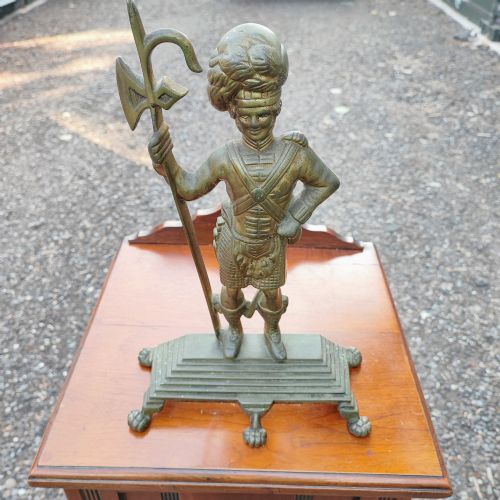
The selections on this page lean heavily towards nineteenth-century productions, with Victorian interpretations forming a significant portion of the grouping. Alongside freestanding statues, buyers encounter functional objects like doorstops, candlesticks, and decorative panels depicting soldiers.
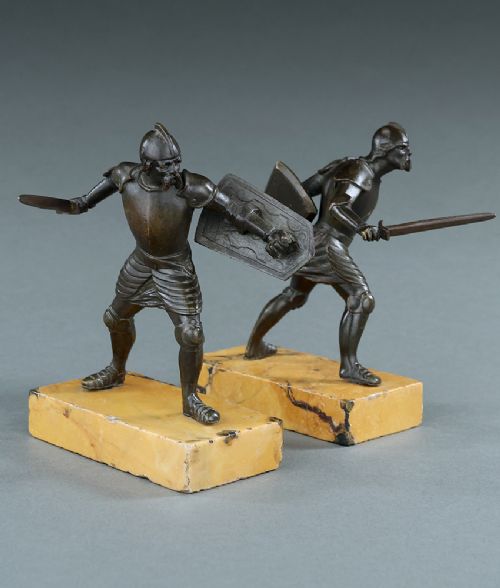
Origins vary across British, French, and Austrian workshops, reflecting both academic foundry work and folk art traditions. Figures range from individual commanders and mythological representations of Mars to paired cavaliers and sets of marching troops.
How they were made
Foundries utilised traditional bronze casting methods to produce detailed metallic figures, often applying patination to achieve deep brown or dark surface tones. Spelter also served as a cost-effective metallic alternative, frequently finished with paint or bronze-like coatings to mimic heavier metals.
Antique Soldier Figure Retail Price Guide 2026
Typical asking prices for soldier figure among the pieces listed under this phrase on Sellingantiques today, from the lower quarter to the upper quarter. They describe what is for sale here now, not the wider market.
Represented periods include the eighteenth century, nineteenth century, Victorian era, and early twentieth century up to the 1930s.
What varies in quality
The crispness of detail in facial expressions, uniform braiding, and weapon accessories separates standard production pieces from master foundry castings or skilled hand-carvings. Cast metal figures show superior quality where the chasing work after casting retains sharp contours rather than softened edges.
Paint application and patination depth dictate visual success, with layered hand-painting on wooden and ceramic figures providing greater character than flat industrial coverage. The integrity of the material, whether heavy cast bronze, dense carved timber, or fine earthenware, anchors the overall standing of the piece.
Émile Louis Picault·E.H. Dumaige·Salmson·Richard Aurili·C. Anfrie
The Antique Soldier Figure Glossary
- Spelter
- A zinc-based alloy used as an alternative to bronze in nineteenth-century decorative figures. It is lighter than bronze and often painted or electroplated.
- Patinated Bronze
- Bronze metal treated with chemical solutions to produce a specific surface colour or aged tone. This process protects the metal while enhancing visual depth.
- Polychrome
- Decorated in multiple colours. The term is applied to carved wooden or ceramic figures retaining their original painted uniform details.
- Doorstop
- A heavy utilitarian object designed to hold doors open, frequently modelled as a cast iron or brass soldier in full uniform.
- Cavalier
- A seventeenth-century royalist soldier style popular with Victorian makers who favoured romanticised costume and theatrical posture.
Antique Soldier Figure: Frequently Asked Questions
What metals are used for these figures?
Makers utilised bronze, brass, cast iron, and spelter for metallic soldier sculptures. Each metal offers a different weight and surface finish.
Heavier bronzes allow for sharper detail, whilst spelter provides a lighter alternative that was frequently painted or given a bronze coating.
How do I identify the period?
Period identification relies on costume details, material composition, and base construction. Victorian pieces often display historicism styles like Renaissance Revival.
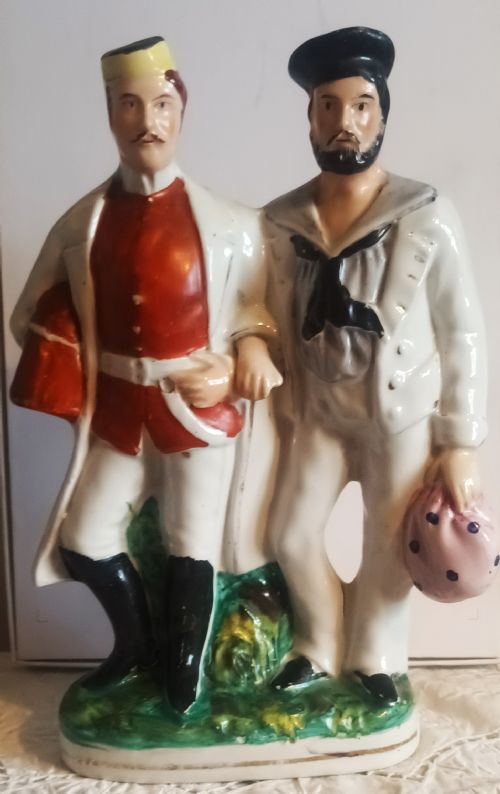
Nineteenth-century French bronzes typically carry foundry marks or artist signatures, whilst earlier earthenware items show characteristic Staffordshire glazing techniques.
Were these figures purely decorative?
Many examples served a purely ornamental function as mantel sculptures, portrait busts, or cabinet figurines. Other pieces fulfilled practical household roles.
Foundry castings frequently doubled as candlesticks, and sturdy brass or iron castings served as functional doorstops in domestic hallways.
How should I display them?
Figures require stable surfaces away from direct heat sources and moisture to protect painted wooden finishes and ceramic glazes. Bronze and metal pieces benefit from occasional dusting.
Pairing matching candelabra or placing individual statues on side tables allows the detailing of the uniforms and weaponry to be viewed clearly.