





Antique Small Vanity Mirrors
Antique small vanity mirrors bring compact elegance to a dressing surface, offering practical reflection framed in period timber and metal.
Antique Small Vanity Mirrors
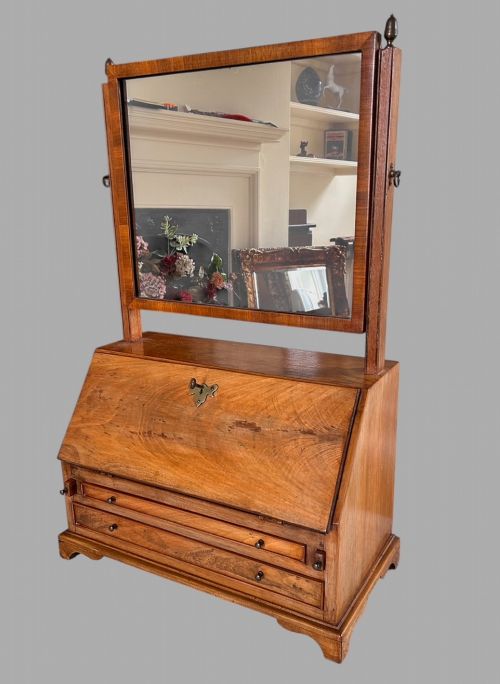
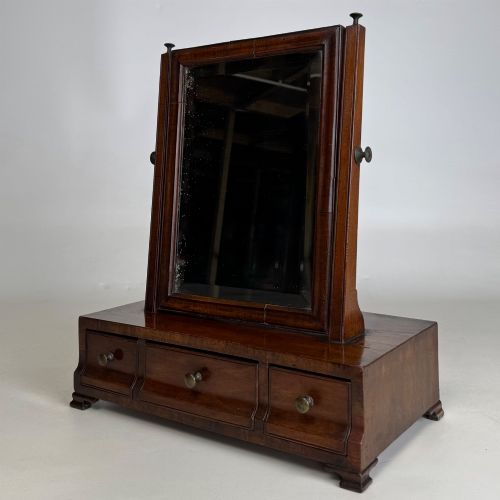
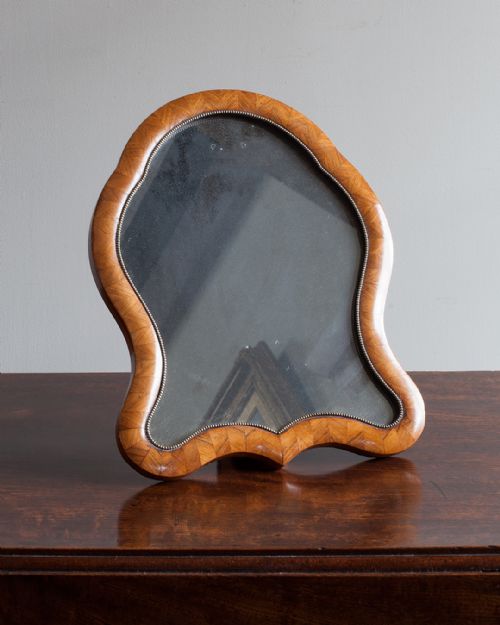
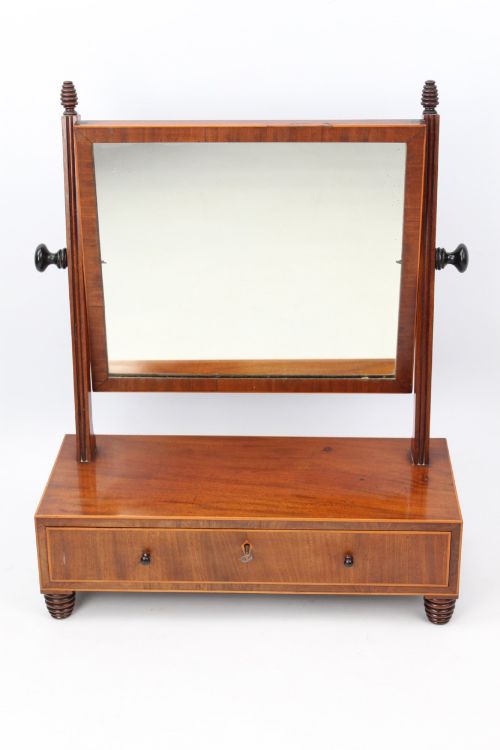
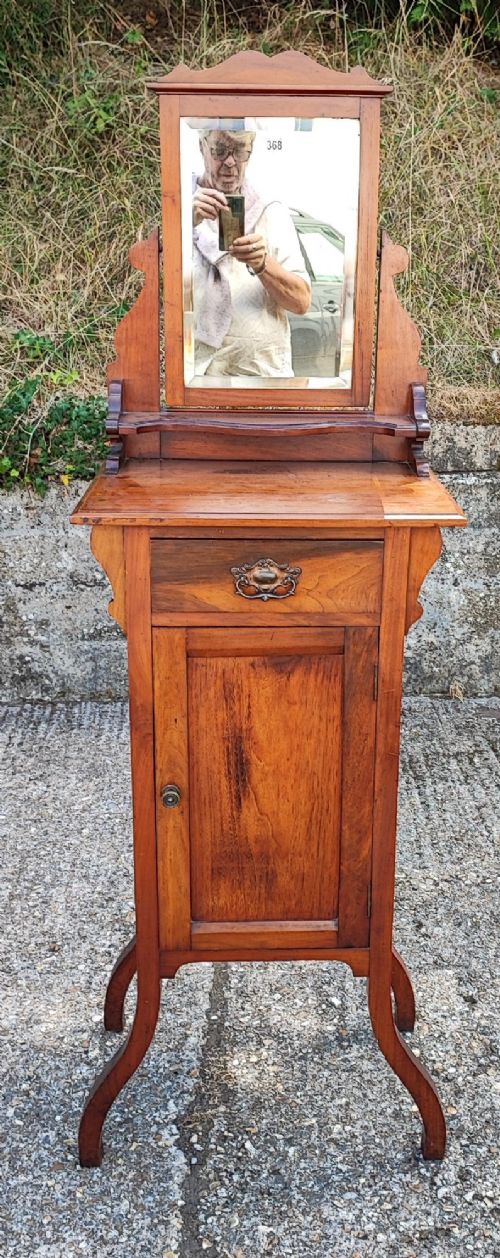
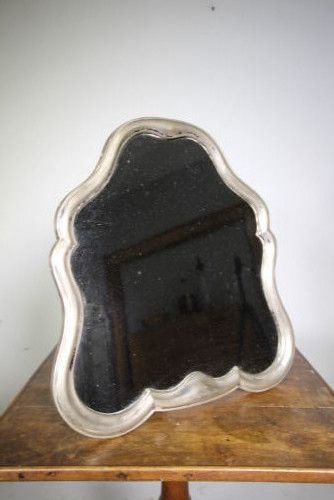
When you search for antique small vanity mirrors, you encounter compact dressing glasses designed for table or desktop use. These pieces surface primarily from the Georgian, Victorian, and Edwardian periods, manifesting in forms such as toilet mirrors, miniature dressing glasses, and table-top bureau combinations.
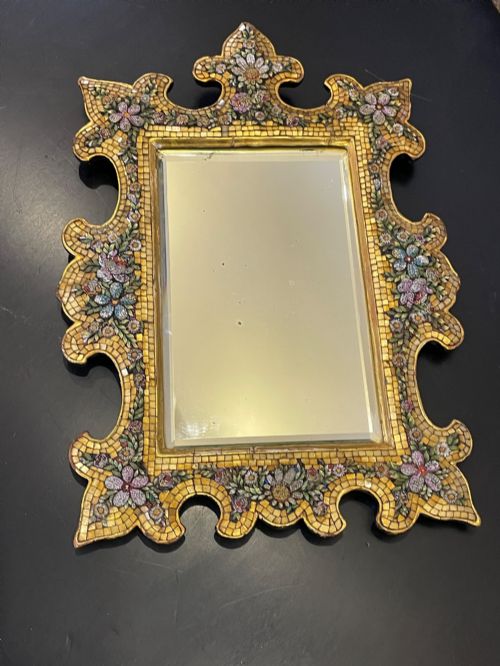
The assortment includes portable campaign pieces, revolving double-sided designs, and static table mirrors fitted with small drawers. Woods like mahogany, walnut, and satinwood dominate the construction, often accompanied by brass or gilt gesso frames.
How they were made
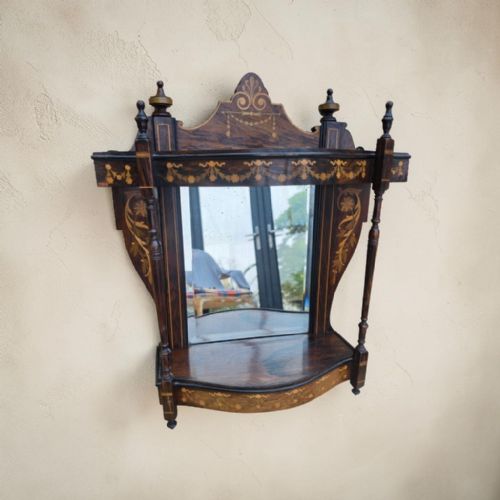
Cabinetmakers constructed the wooden frames and stands of antique small vanity mirrors using traditional joinery, selecting timbers such as mahogany, satinwood, walnut, and beech. Veneering and delicate inlay work frequently embellished the surfaces of Georgian and Victorian examples.
Metal frames relied on brass casting and repoussé techniques, where artisans hammered designs into sheet metal or cast ornate crests. Gesso was applied to wooden substrates and gilded to create decorative wall and table mirrors with rich surface textures.
Some Victorian brass mirrors feature fierce lion mask crests watching over your morning routine.
What varies in quality
The calibre of an antique small vanity mirror rests largely on the crispness of its timber carving, the precision of its inlay, and the integrity of its original glass. Superior examples display refined proportions, balanced wood grain, and robust brass fittings that secure the pivoting glass without slipping.
Lesser pieces may exhibit replacement plates, mismatched hardware, or heavy-handed modern repairs to the pivoting arms. The distinction between standard utility items and finer pieces lies in the subtlety of the decorative details, such as hand-chased brass mounts or finely dovetailed drawer boxes.
The Antique Small Vanity Mirrors Glossary
- Toilet mirror
- A small dressing mirror designed to sit on a table, chest of drawers, or dressing stand. These pieces usually feature a pivoting glass mounted within an upright frame.
- Bonheur du jour
- A light lady's writing desk featuring a small set of drawers, shelves, or a cabinet on the surface, frequently incorporating an integrated mirror.
- Repoussé
- A metalworking technique where the artisan hammers a design from the reverse side to form a raised relief on the front. This method appears on brass frames and wall mirrors.
- Gesso
- A plaster-like material applied to wood and carved or moulded before gilding. It provides the decorative base for many gilt mirrors.
- Campaign mirror
- A portable mirror designed for travel, often fitted with folding stands or protective wooden cases. These items date predominantly from the Georgian period.
Antique Small Vanity Mirrors: Frequently Asked Questions
How were antique vanity mirrors used?
These mirrors served primarily for personal grooming, hair styling, and applying cosmetics in bedrooms and dressing rooms. Placed upon chests of drawers or dedicated tables, they provided a movable reflection before fixed wall mirrors became standard.
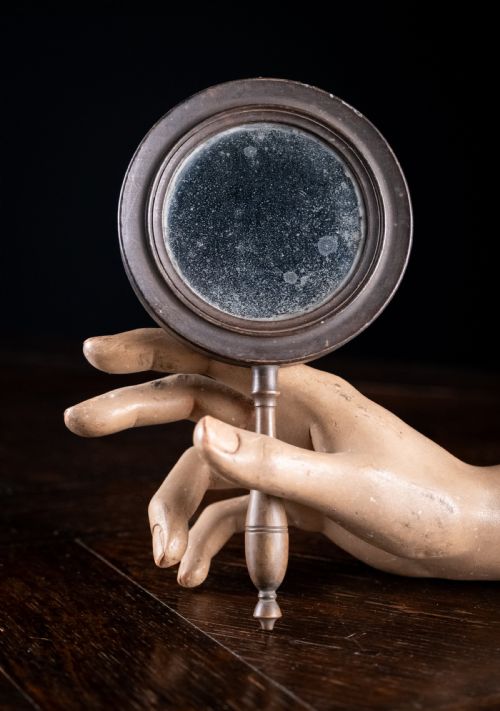
Smaller portable versions also allowed travellers to maintain their grooming routines away from home. The incorporation of small drawers or compartments provided secure storage for pins, trinkets, and small personal items.
Where should I place a small vanity mirror?
A small vanity mirror sits comfortably on a dressing table, chest of drawers, or console in a bedroom or hallway. Their compact footprints allow them to function effectively in tighter spaces where a full-sized dressing table is impractical.
Ensure the surface is stable and level to support the weight of the pivoting frame. Positioning the piece near natural light enhances its reflective utility while showcasing the timber or brass frame.
How do I date a small vanity mirror?
Dating relies on observing the timber species, construction methods, and stylistic cues present in the frame and stand. Georgian examples often feature slender mahogany frames with delicate boxwood stringing and shaped drawer fronts.
Victorian and Edwardian pieces frequently display heavier cast brass mounts, walnut veneers, or elaborate gesso ornamentation. Examining the screws, hinge mechanisms, and backing boards provides further clues to the period of manufacture.
Are vanity mirrors and toilet mirrors the same?
The terms are frequently used interchangeably to describe small mirrors designed for tabletop use during grooming. Historically, toilet mirrors referred specifically to the table-standing dressing glasses popular through the Georgian and Victorian eras.
Modern terminology often groups these under vanity mirrors alongside related desk forms like the bonheur du jour. Both types fulfil the same core function of providing a movable, surface-mounted reflection.