






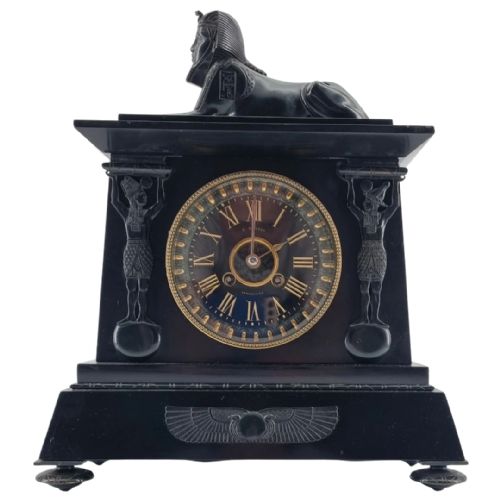


Antique Slate Desk Clock
These antique slate desk clock examples are heavy Victorian mantel pieces in black slate and marble, prized for their imposing architectural presence and reliable mechanical movements.
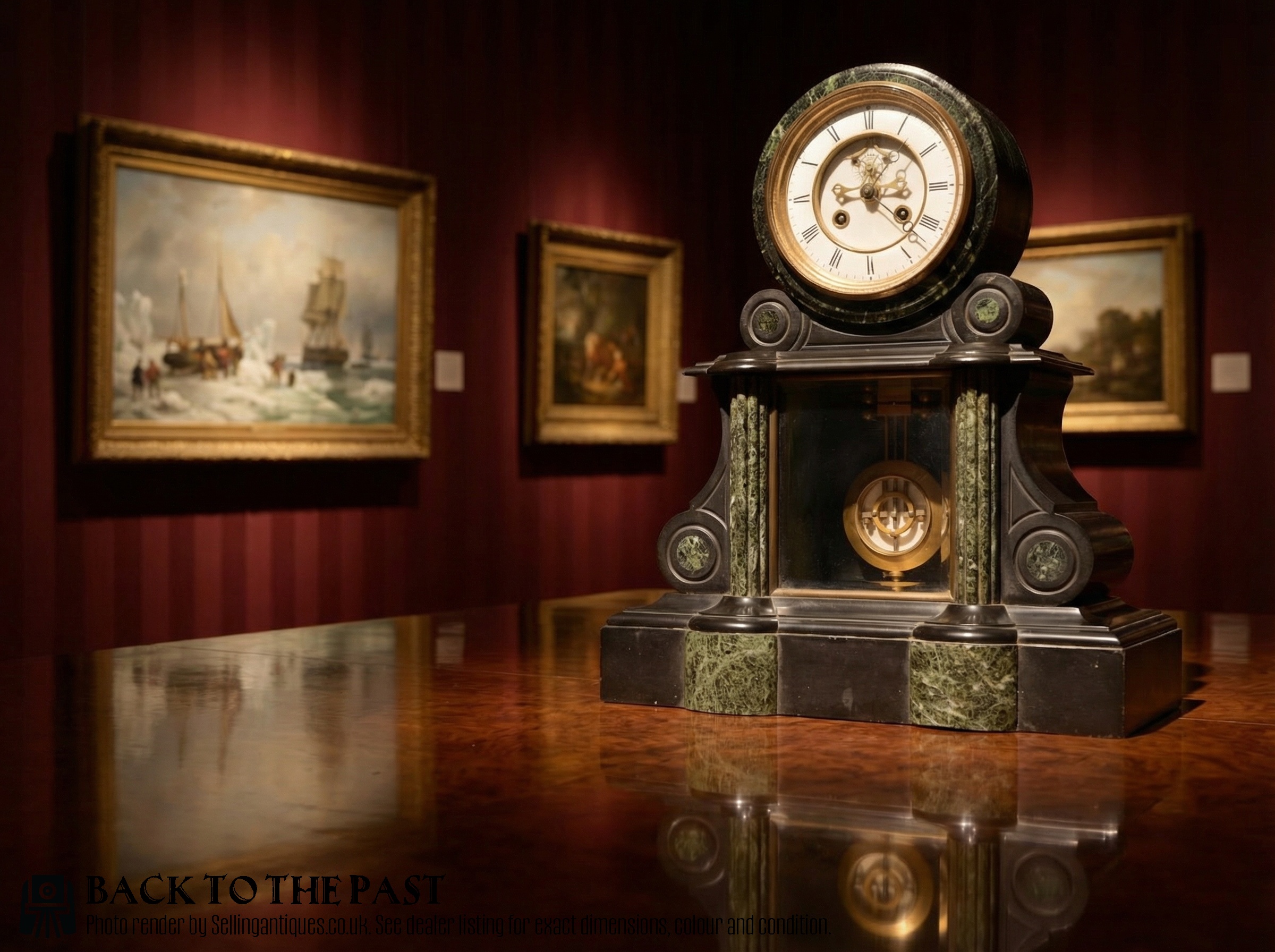
Antique Slate Desk Clock
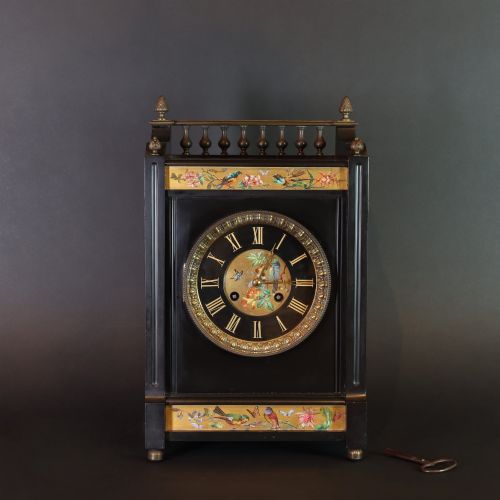
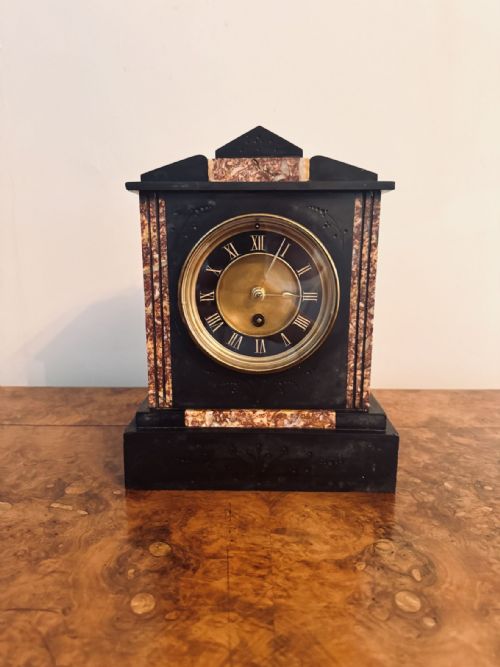
When looking for an antique slate desk clock, buyers encounter robust nineteenth century mantel pieces built from dark stone. Most examples originate from the Victorian period, spanning the decades from eighteen sixty to eighteen ninety, often accompanied by matching garnitures or urns.
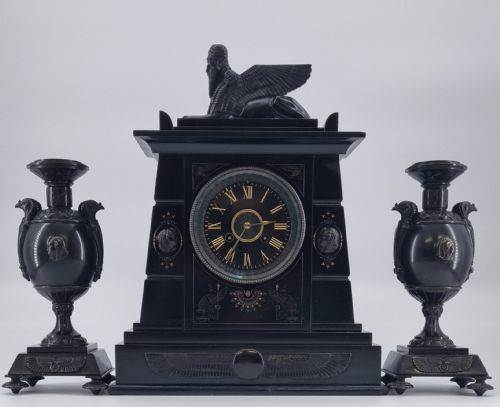
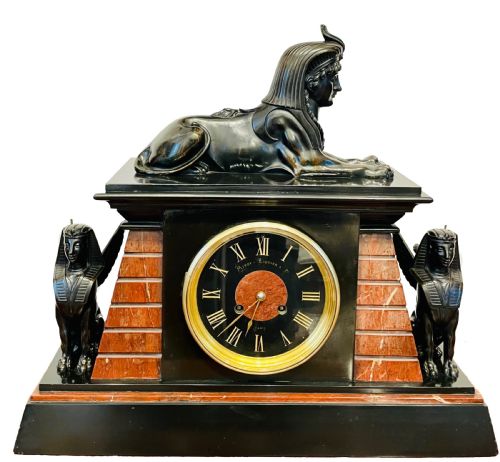
Forms range from simple drumhead clocks to large architectural cases and Egyptian Revival designs incorporating bronze mounts. These heavy timepieces served as substantial centrepieces in period rooms, utilising durable materials designed to command attention on a mantel or desk.
Origin points across the listings include French workshops and Belgian quarries, reflecting a European market for dependable mechanical clocks. Buyers frequently find pieces featuring inlaid marble, enamel dials, and occasionally perpetual calendars or equation of time complications.
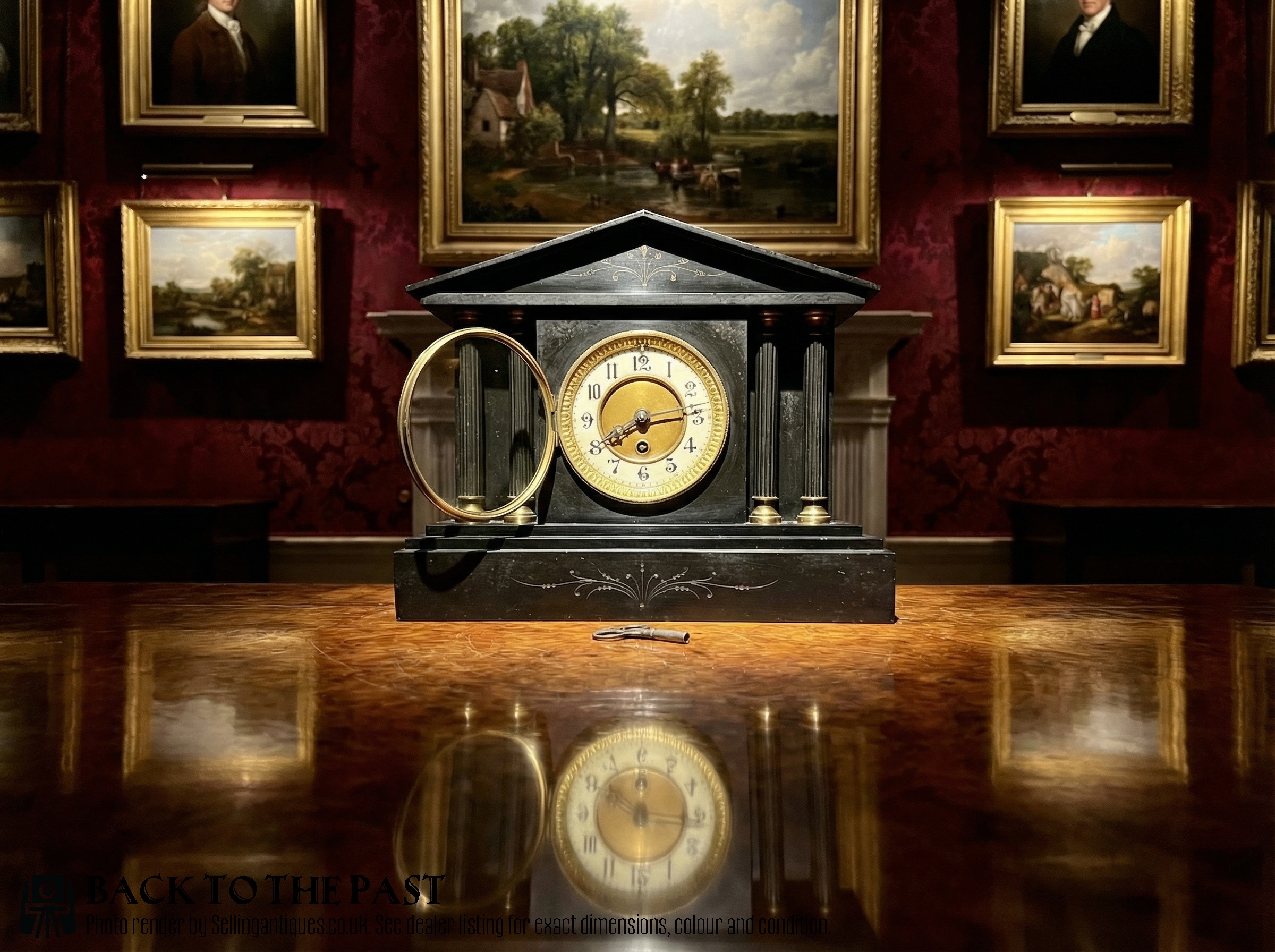
Materials and construction
Makers built these heavy cases using dense black slate and contrasting marble, often combining the dark stone with bronze mounts or brass bezels. Enamel dials protected by glass display the hours, driven by mechanical eight day movements housed within the stone body.
The construction relies on precision stonework to achieve architectural forms, ranging from classical temple shapes to Egyptian Revival motifs. Surface details often include incised lines, inlaid marble accents, and patinated bronze figures fixed securely to the slate base.
Antique Slate Desk Clock Retail Price Guide 2026
Typical asking prices for slate desk clock among the pieces listed under this phrase on Sellingantiques today, from the lower quarter to the upper quarter. They describe what is for sale here now, not the wider market.
Listings feature nineteenth century Victorian pieces in black slate, marble, brass, and bronze, originating from French and Belgian makers.
Evaluating quality in stone timepieces
Quality in an antique slate desk clock rests upon the crispness of the stonework, the depth of any marble inlay, and the sophistication of the movement. Superior pieces feature detailed bronze mounts and complex mechanisms such as perpetual calendars or garniture sets.
Lesser examples display plain slate cases with minimal decoration and standard time-only movements. The presence of named makers and architectural refinements separates exceptional showroom pieces from standard domestic timepieces.
Sacre·Baby and Jannings·D. Munsey of Cambridge·Achille Brocot·Pinchon Fils Paris·Brocot
The Antique Slate Desk Clock Glossary
- Slate
- A fine-grained metamorphic rock used to form the heavy, dark bodies of these Victorian clocks.
- Garniture
- A set consisting of a central clock flanked by matching decorative ornaments such as urns or vases.
- Drumhead clock
- A timepiece featuring a circular clock head mounted upon a supporting stone plinth or base.
- Perpetual calendar
- A complex clock mechanism that automatically adjusts for the varying lengths of months and leap years.
- Egyptian Revival
- A nineteenth century decorative style drawing on motifs from ancient Egyptian architecture and art.
Antique Slate Desk Clock: Frequently Asked Questions
How heavy is a typical slate clock?
These clocks are remarkably heavy due to the solid black slate and marble used in their construction. Buyers must ensure the supporting shelf or mantel can bear significant weight.
Moving them requires care to avoid damaging the stone edges or straining the internal mechanical movement during relocation.
Do these clocks require professional winding?
Most pieces operate on traditional eight day mechanical movements that require manual winding with a matching key. Regular servicing by a clockmaker keeps the gear train functioning properly.
Placing the clock on a completely level surface ensures the pendulum swings evenly and the movement keeps accurate time.
What is an architectural slate clock?
Architectural models imitate classical buildings, temples, or Egyptian monuments using cut stone, columns, and pediments. Makers constructed these to dominate a room with imposing geometric lines.
They often feature bronze mounts and contrasting marble pillars that highlight the period fascination with classical antiquity.
What are clock garnitures used for?
Garnitures are matching sets where side ornaments, such as urns or vases, accompany the central clock to create a balanced mantel display. They share the same slate and marble materials as the clock body.
This arrangement was popular in Victorian interiors to provide a symmetrical focal point above a fireplace.