


Edwardian Black Clock
An edwardian black clock brings architectural presence to a room, cast in heavy stone or dark wood to anchor the mantelpiece.
Edwardian Black Clock
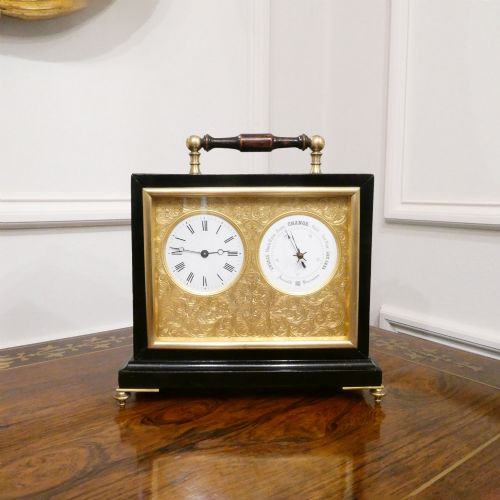
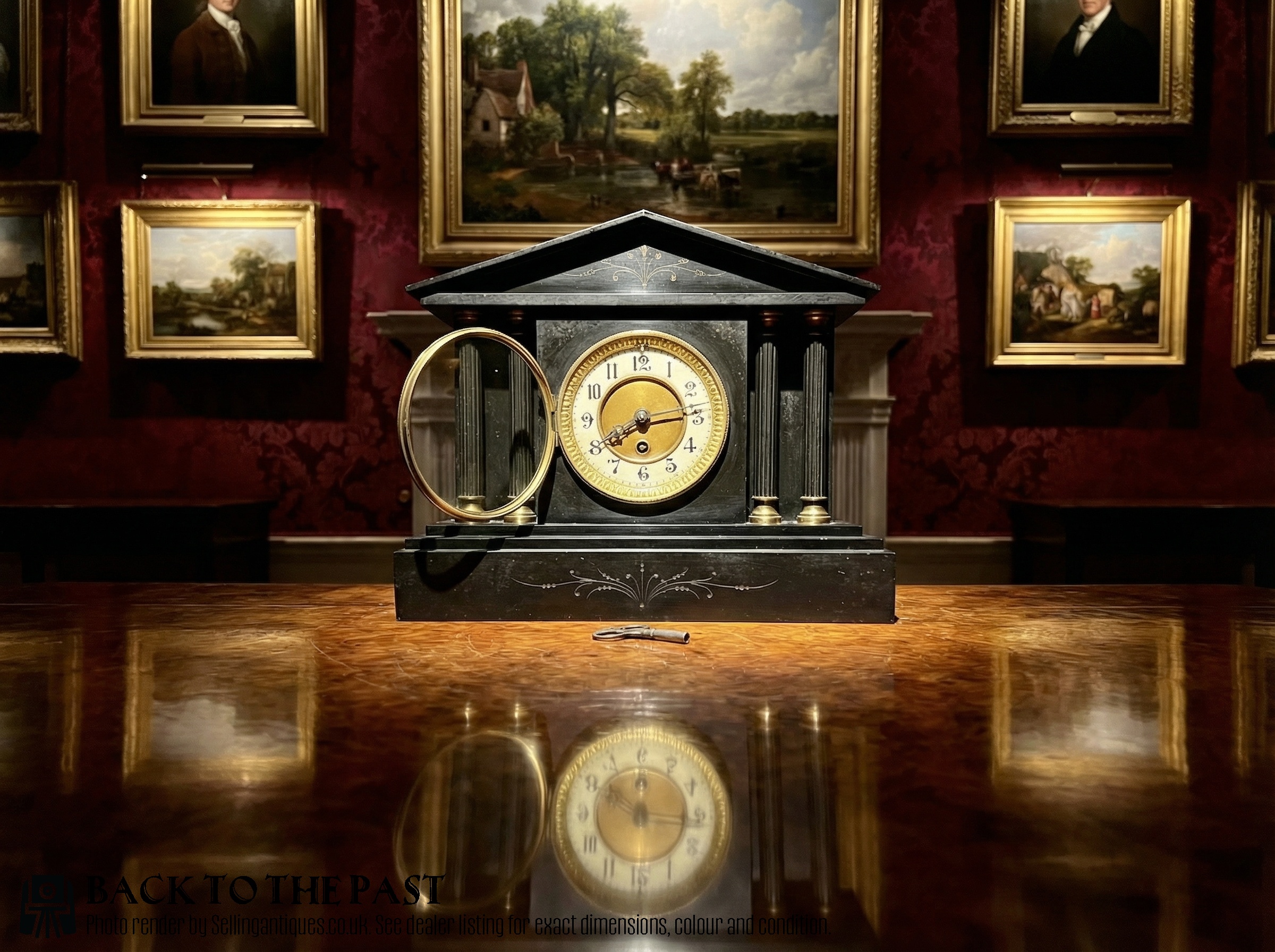
The edwardian black clock encompasses dark-toned mantelpieces and bracket pieces, often executed in slate, ebonised wood or marble. These heavy timepieces sit solidly on bracket feet or decorative bases, designed to command attention in a formal reception room or study.
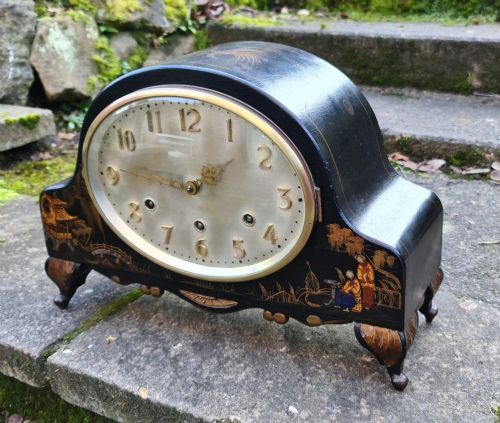
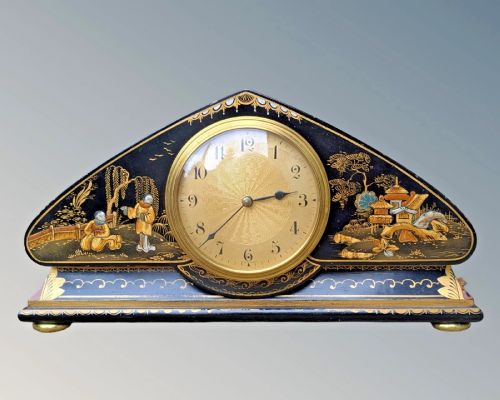
Most examples encountered here date from the Edwardian era or the broader nineteenth century, featuring contrasting dial surrounds in brass or white enamel. Forms range from classical architectural temple shapes to decorative Chinoiserie lacquered cases and carved timber designs.
Buyers seeking an edwardian black clock will find substantial stone cases alongside timber variations that reflect changing tastes from high Victorian revivalism into the twentieth century. The selection balances sturdy utilitarian timekeeping with decorative domestic elegance.
Indicators of distinction
Quality in these timepieces rests upon the crispness of the stone cutting, the depth of the polish on the slate or marble, and the proportion of the architectural case. Superior examples display finely cast brass bezels, intricate dial numerals, and well-executed decorative inlays or carvings rather than plain mass-produced housings.
The sophistication of the internal movement further separates standard domestic pieces from finer workshop productions, particularly where chiming mechanisms or perpetual calendars are integrated. A well-preserved dial face free from hairline cracks and a clean, functioning movement indicate careful maintenance and superior original manufacture.
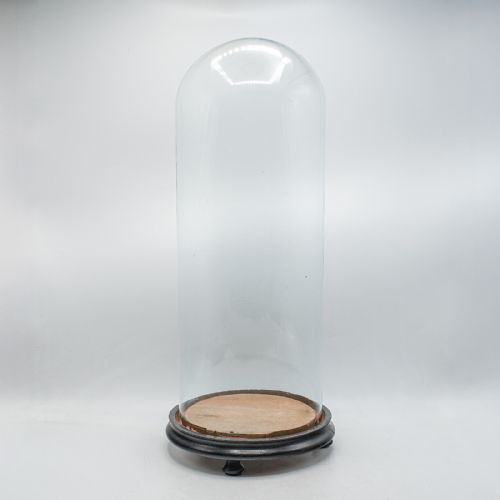
Mantel clocks dominate the selection, accompanied by occasional display domes and Chinoiserie bracket clocks.
The Edwardian Black Clock Glossary
- Slate
- A fine-grained metamorphic rock that splits into smooth plates, widely utilised for dark mantel clock cases during the nineteenth and early twentieth centuries. It takes a high polish and imitates marble effectively.
- Ebonised wood
- Timber treated with a chemical stain or black finish to simulate genuine ebony. This technique allowed makers to achieve a sleek dark appearance using more accessible woods.
- Chinoiserie
- European artistic style reflecting Chinese motifs and decorative techniques. It appears on lacquered clock cases featuring painted landscapes and gilded figures.
- Bezel
- The metal ring that holds the glass protecting the clock face in place. Brass bezels are common on these dark mantel pieces.
- Enamel dial
- A metal clock face coated in fused glass powder to create a smooth, white background for painted numerals. These dials provide high contrast against dark stone cases.
Edwardian Black Clock: Frequently Asked Questions
How do I wind an edwardian black clock?
Most mechanical pieces utilise a key inserted into winding holes on the dial face to tension the internal springs. Care must be taken not to overwind the mechanism.
Consult the specific movement type before adjusting the hands, moving them slowly in the correct direction to avoid damaging the gear train.
Where should I place a slate mantel clock?
These pieces require a sturdy, level surface due to their considerable weight, making a solid mantelpiece or sideboard ideal. Avoid placing them in damp areas or direct sunlight to protect the dial enamel and wood components.
Ensure the room temperature remains relatively stable to keep the mechanical movement running accurately without excessive contraction or expansion.
How do I distinguish Edwardian from Victorian models?
Edwardian examples often display lighter decorative touches and simpler geometric lines compared to the heavily ornate high Victorian classical revival styles. Makers in the later period favoured understated elegance over dense carving and faux marble finishes.
Examining the style of the dial numerals and the overall silhouette helps determine whether a piece belongs to the nineteenth-century tradition or the early twentieth century.
What maintenance do these movements require?
Mechanical clocks benefit from professional cleaning and lubrication every few years to prevent wear on the brass pivots and gears. Dust should be kept away from the movement using a soft brush.
Keeping the glass bezel closed protects the delicate enamel dial from accidental scratching during routine cleaning of the surrounding stone case.