
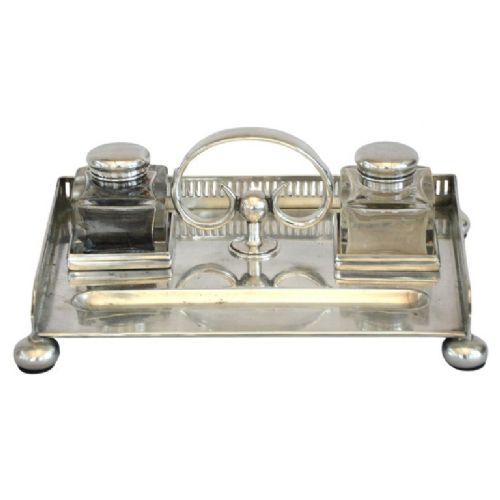


Antique Silvered Desk Set
An antique silvered desk set unites writing accessories and smoking items in matching metals, glass and stone for the writing table.
Antique Silvered Desk Set
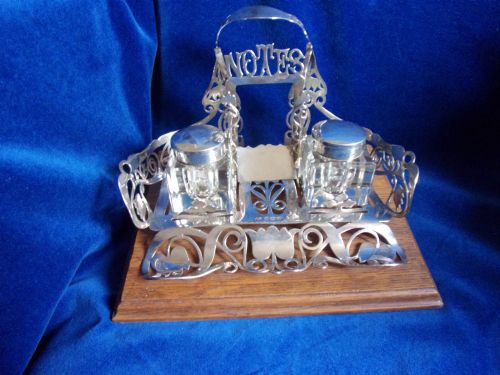
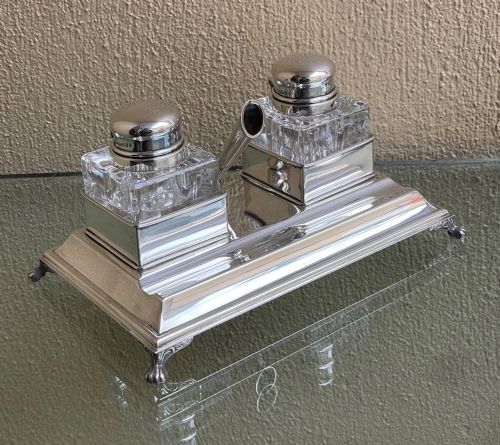
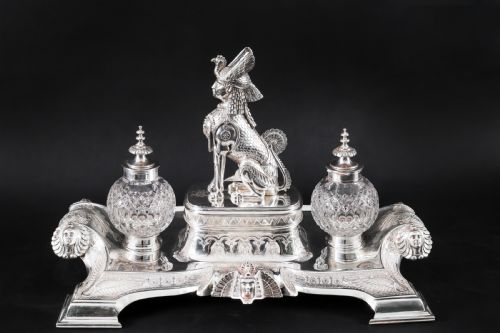
When you search for an antique silvered desk set, you encounter pieces that span the Georgian, Victorian and Edwardian periods, stretching from the early nineteenth century into the twentieth. These objects take the form of inkstands, inkwells, desk accessories and smoking accessories, often combining multiple functions on a single tray or stand.
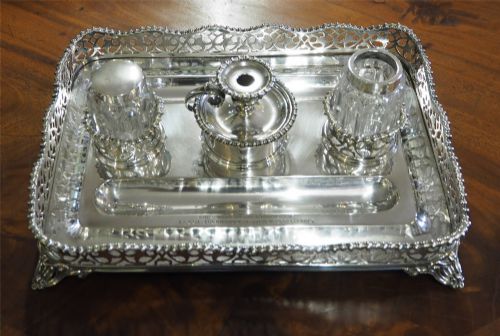
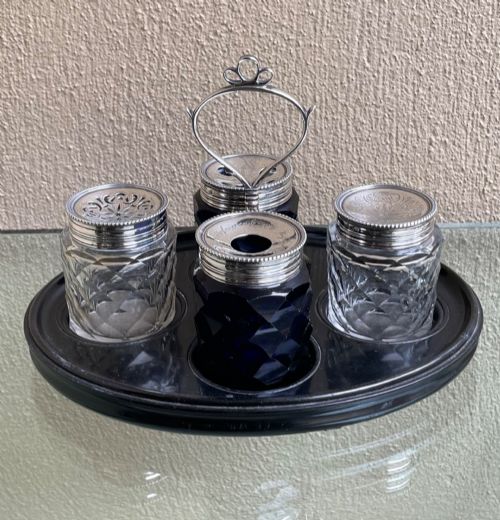
The most common versions on this page are inkstands and desk stands equipped with cut glass inkwells, pen trays and matching accessories like chambersticks or vesta cases. Alongside these writing pieces, you find desk compendiums and smoking sets in materials ranging from sterling silver and silver plate to brass, pewter and cut glass.
Materials and construction
Metals form the structural basis of these items, utilising sterling silver, silver plate, Sheffield plate, German silver, pewter and brass to create frames, trays and mounts. Smiths shaped these metals through casting, hammering and plating, often applying silver gilt highlights or engraving detailed patterns across the surface.
Many pieces incorporate contrasting organic materials such as leather, tortoiseshell, onyx, lapis lazuli, shagreen, coromandel, satinwood, oak, horn and glass. These secondary elements are fitted into metal mounts or combined with cut glass inkwells to provide variety in colour and texture.
Listings feature periods spanning from Georgian and Regency eras through Victorian, Edwardian and Art Deco up to the 1960s.
Standard and execution
The distinction between ordinary and superior pieces rests on the weight of the metal, the precision of the maker's hallmarks, and the complexity of the design. Heavier solid silver castings and detailed hand-engraving indicate higher workshop standards than light silver plating over base metal.
Integration of materials also dictates quality, with items featuring seamlessly fitted exotic woods, inlaid stones like lapis lazuli, or bespoke cut glass inkwells representing finer craftsmanship than plain wooden trays or standard moulded glass.
Conrad Eduard Mappe·Elkington·Henry Matthews·Wilkinson and Co·Walker And Hall·Marson and Jones·Robert Garrard·Robert Hennell·Rupert Favell·Daniel Holy
The Antique Silvered Desk Set Glossary
- Inkstand
- A tray or stand holding one or more inkwells, usually accompanied by pen rests and sometimes a pounce pot or bell. These pieces formed the centrepiece of the nineteenth-century writing table.
- Vesta case
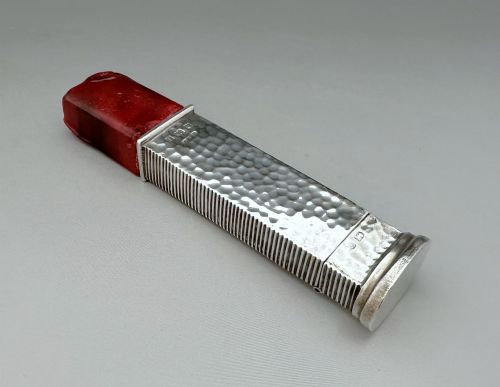
- A small pocket box designed to hold matches, fitted with a striking surface on the exterior. Many antique examples incorporate sealing wax holders for correspondence.
- Capstan inkwell
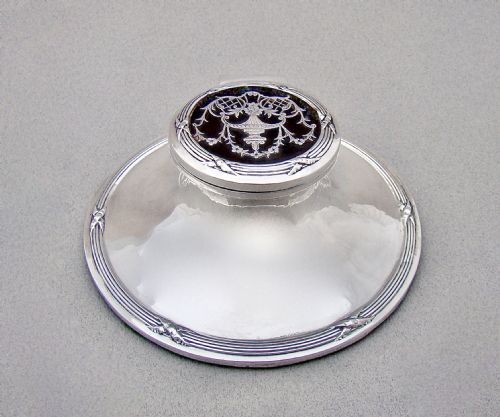
- An inkwell shaped like a ship's capstan, featuring a wide circular base tapering upwards to a hinged lid. This form proved popular during the Edwardian era.
- Sheffield plate
- A composite material made by fusing a thin sheet of sterling silver to a thicker copper base. It predates modern electroplating and is identified by subtle copper seams along edges.
Antique Silvered Desk Set: Frequently Asked Questions
What is a desk compendium?
A desk compendium is a large desk accessory that combines multiple functions, such as inkwells, calendars, stamp boxes and writing implements, into a single unified object.
These pieces were designed for executive desks and country house libraries, offering a complete writing and administrative station in one portable or fitted container.
How are smoking accessories found in desk sets?
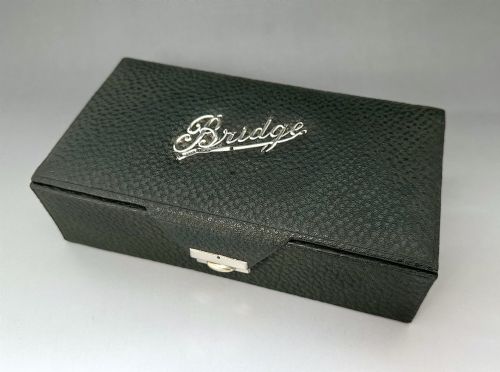
Smoking accessories like vesta cases, cigarette boxes, ash trays and table lighters frequently appear alongside writing instruments because nineteenth-century studies and libraries served multiple leisure purposes.
Gentlemen often smoked while attending to correspondence, leading makers to coordinate the metal mounts and decorative styles of inkstands and smoking compendiums.
What is the difference between silver plate and sterling silver?
Sterling silver contains a guaranteed high proportion of pure silver throughout its entire mass, marked by official assay office hallmarks such as the lion passant in British pieces.
Silver plate consists of a thin layer of silver bonded to a base metal like copper, brass or white metal, which may show base metal underneath where the plating wears thin.