


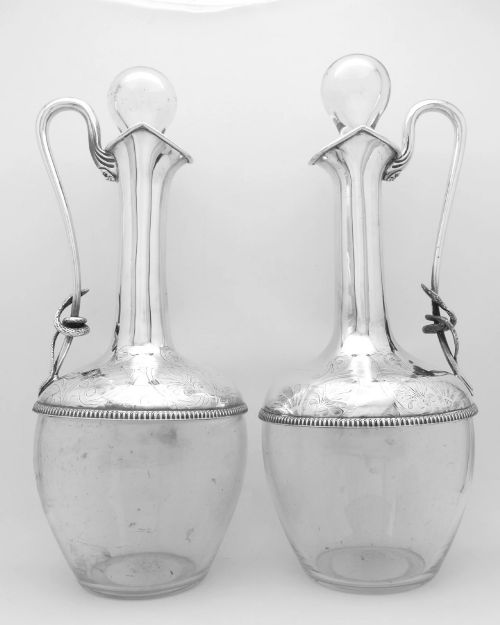


Antique Silver Wine Pitcher
These antique silver wine pitcher pieces bring fine Victorian and Art Deco design to the dining table.
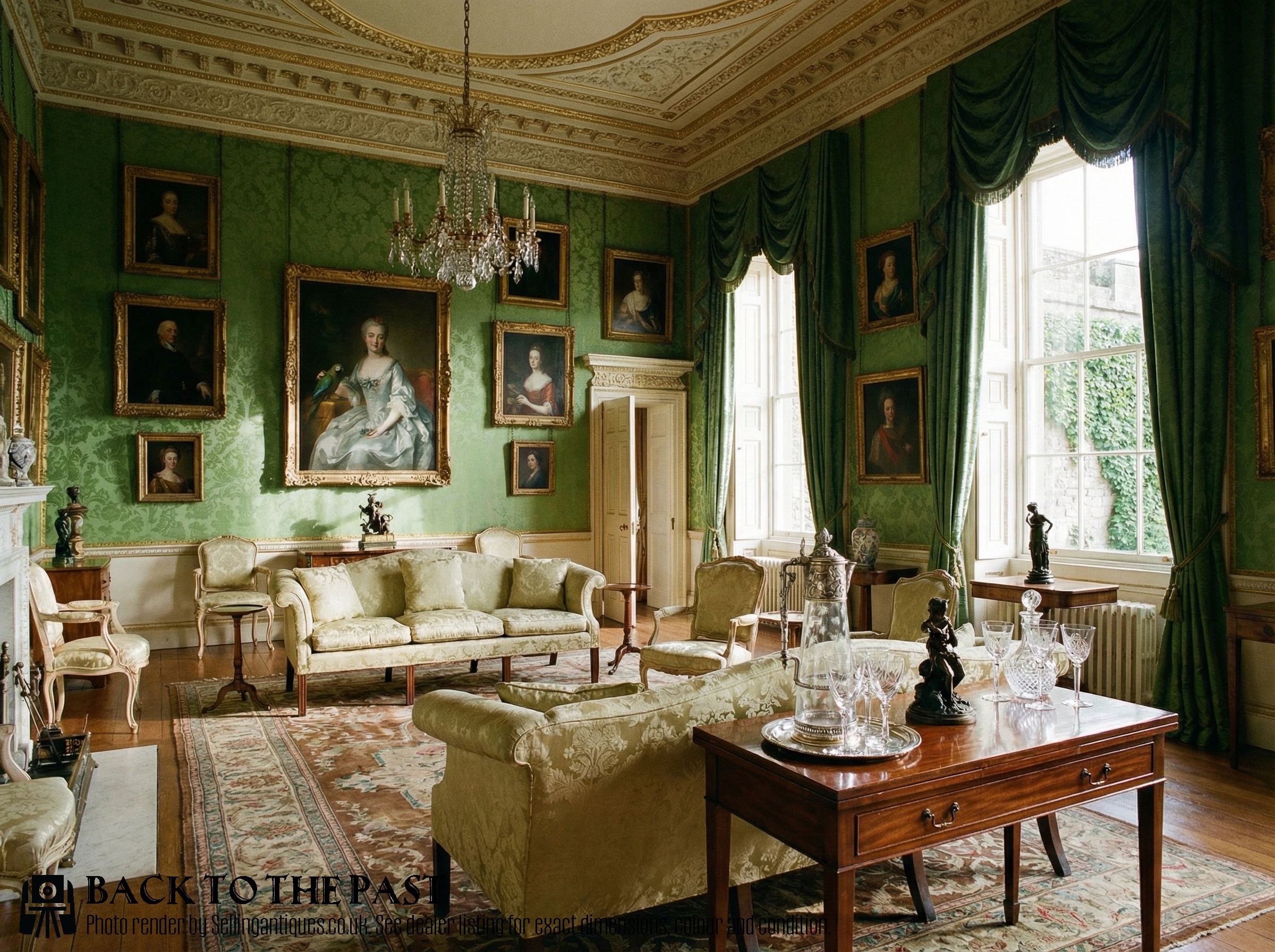
Understanding antique silver wine pitcher forms
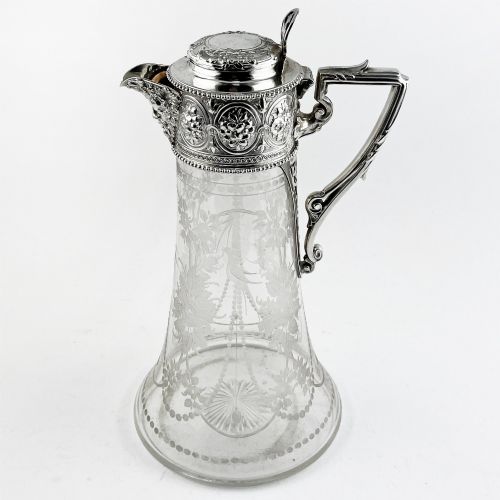
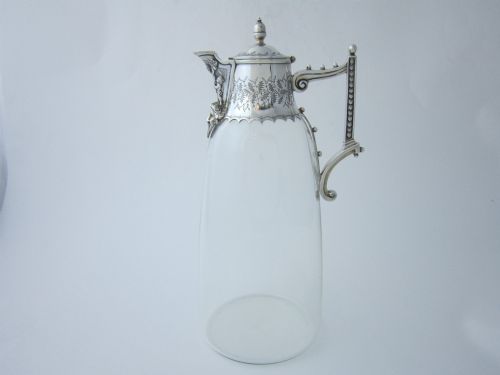
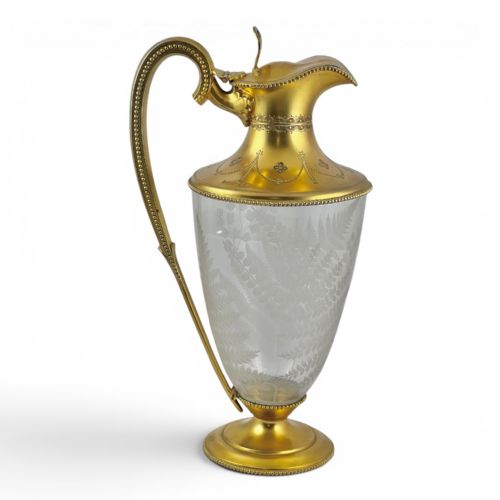
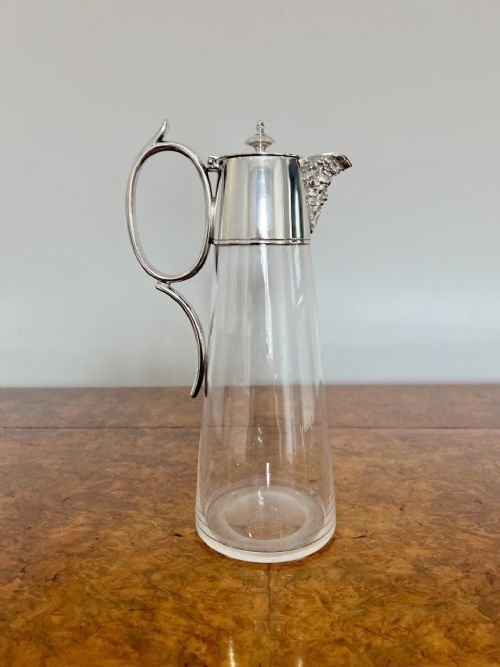
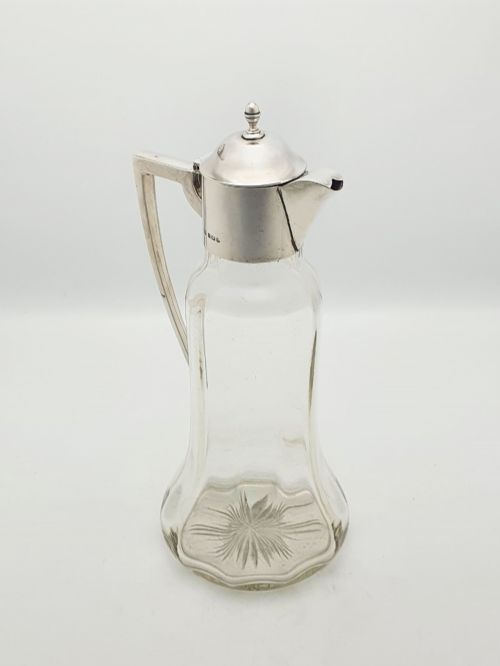
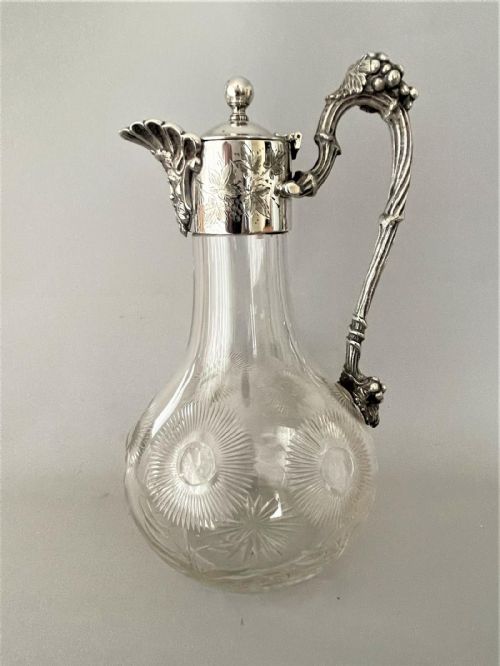
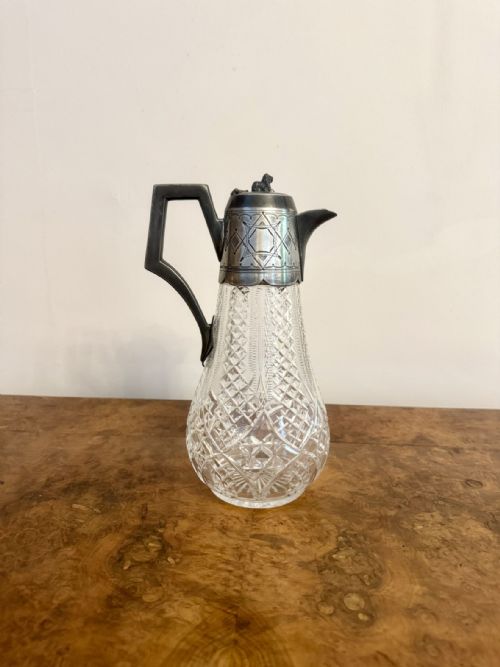
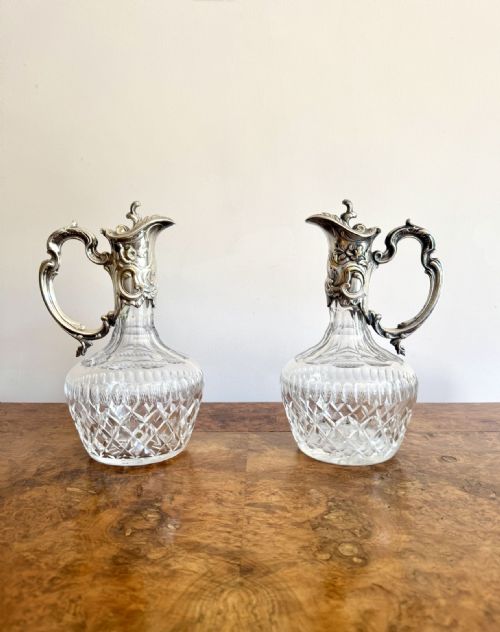
The antique silver wine pitcher category comprises claret jugs and decanters spanning the Victorian, Late Victorian, Edwardian, and Art Deco eras. Buyers searching this phrase typically encounter tall vessels designed for serving wine, combining metal mounts with glass bodies.
Most examples found on this page date from the nineteenth and early twentieth centuries, specifically from the eighteen-sixties through to nineteen-thirty. These pieces reflect the dining customs of their respective periods, moving from ornate floral engravings to streamlined modern lines.
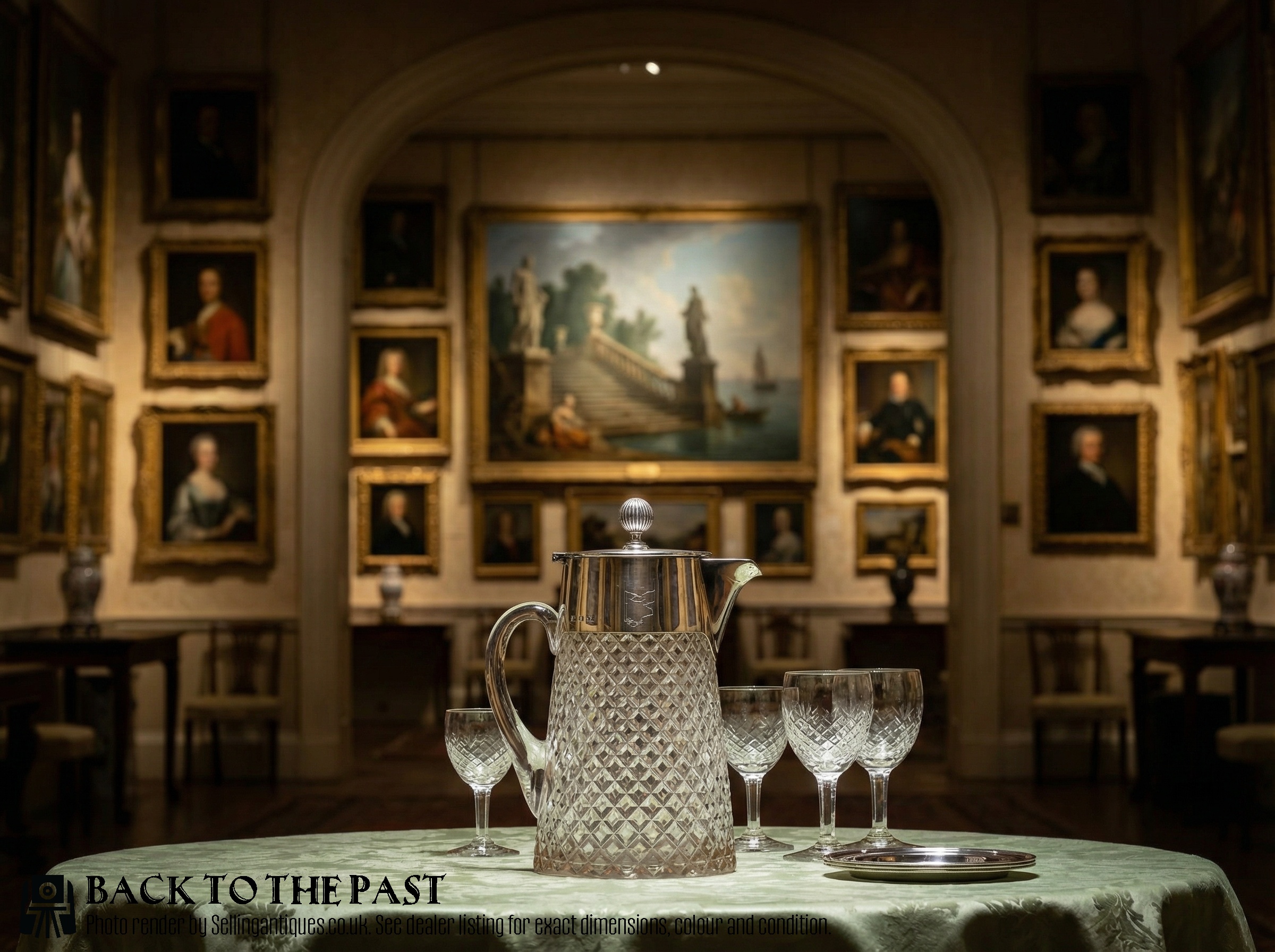
Materials and construction
These items combine sterling silver or silver plate with cut crystal glass, etched glass, engraved glass, or plain glass. Metal smiths formed mounts, handles, and hinged lids, attaching them securely to heavy glass bodies.
Decoration relied on precision handwork, including floral engraving on silver surfaces and detailed etching or cutting across the crystal and glass bowls. Makers utilised solid sterling and silver-plated metal over base cores.
Retail Price Guide 2026
Typical UK retail prices for silver wine pitcher, calculated from the Sellingantiques database of over a million retail prices indexed since 2003. This retail price guide relies exclusively on Sellingantiques data; no external sources or auction records are used, so the figures do not describe the wider market.
Victorian diners clearly believed that claret tasted significantly better if poured through an intricately hinged silver bird head.
Distinctions in quality
Quality rests in the harmony between the metal mount and the glass body, alongside the crispness of the cutting or engraving. Superior examples display deeply etched or hand-engraved patterns that catch the light, paired with sturdy, well-balanced silver or silver-plated handles and hinged lids.
The weight of the crystal and the fidelity of the period style dictate the standing of a piece. Earlier Victorian models show dense floral motifs, whereas later Art Deco vessels prioritise geometric purity and clean silhouettes.
Elkington·Hukin and Heath
The Antique Silver Wine Pitcher Glossary
- Sterling silver
- A silver alloy containing ninety-two point five percent pure silver by mass, ensuring durability and a bright lustre. This material forms the primary metal mounts on finer period jugs.
- Silver plate
- A layer of silver bonded to a base metal core, offering the appearance of solid silver at a different scale of production. Many nineteenth-century vessels utilise this technique for elaborate mounts.
- Claret jug
- A specialised pouring vessel designed for serving red wine at the table. These items feature prominently among the forms found in this category.
- Cut crystal glass
- High-clarity glass shaped by deep wheel-cutting to create faceted patterns that refract light. This material provides the substantial body for decorated wine pitchers.
Frequently Asked Questions
What is an antique silver wine pitcher?
An antique silver wine pitcher is a serving vessel, commonly referred to as a claret jug, featuring a glass body and silver or silver-plated mounts. These items were standard dining accessories during the nineteenth and early twentieth centuries.
They combine functional pouring spouts and hinged lids with decorative etched, engraved, or cut glass bodies designed to present wine at the table.
How do I date a silver claret jug?
Dating relies on stylistic markers, such as the heavy floral engraving typical of eighteen-sixties Victorian pieces or the geometric lines of nineteen-thirty Art Deco designs. Maker marks and silver hallmarks also provide precise chronological reference points.
The combination of mount style and glass-cutting technique generally indicates whether a piece originates from the Victorian, Edwardian, or later periods.
How were these pitchers used historically?
These vessels were utilised in formal dining rooms to decant and serve claret and other red wines from larger storage bottles. The hinged lid allowed servants or hosts to pour wine cleanly while keeping the contents covered.
Beyond practical service, they served as decorative centerpieces on dining tables, reflecting the wealth and taste of the household through polished metal and sparkling glass.
How should I clean a silver wine pitcher?
Cleaning requires separating the care of the metal mounts from the glass body using mild, non-abrasive agents suited to antique silver and crystal. Avoid submerging mixed-material pieces for extended periods to protect internal mounts and adhesives.
Soft cloths and gentle polishing preserve the original lustre of the silver plate or sterling without wearing down delicate hand-engraved details.