
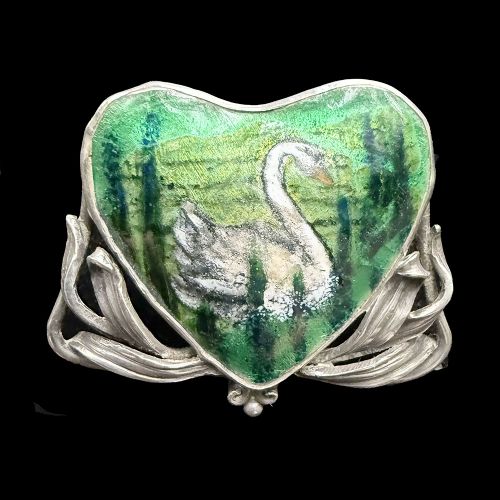
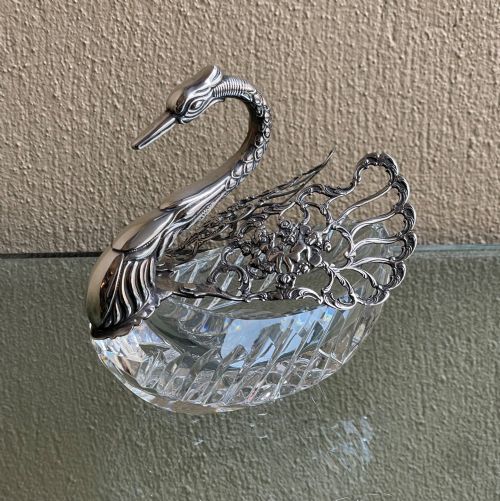


Antique Silver Swan
These antique silver swan pieces capture avian form in cast metal, glass, and velvet.
Antique Silver Swan
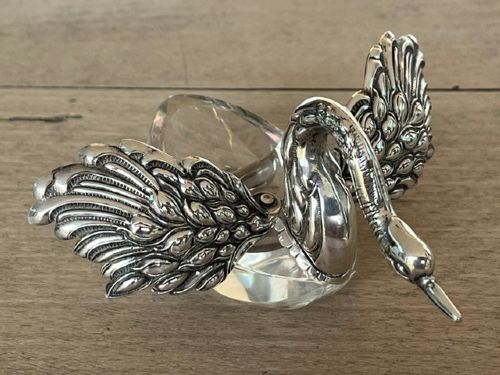
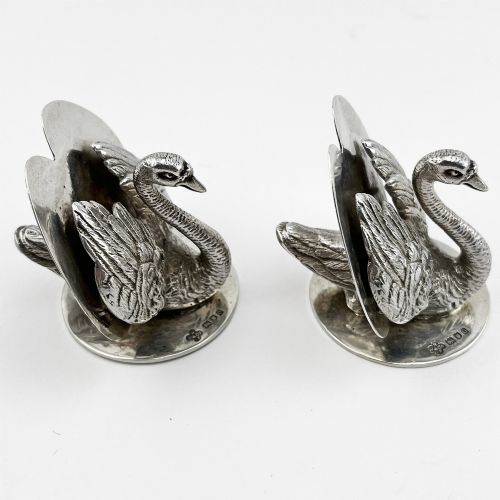
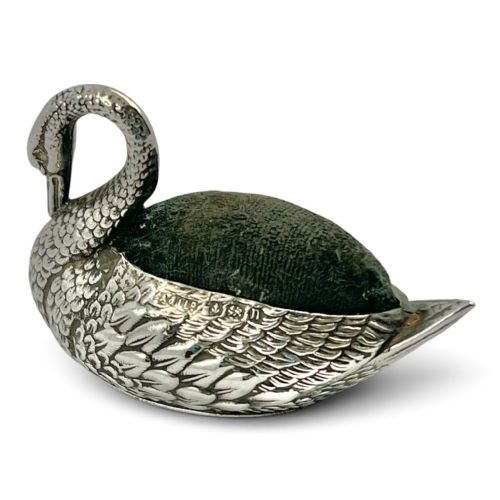
When you search for an antique silver swan, you encounter a distinct category of decorative and functional items modelled after waterfowl, predominantly appearing as pin cushions, salt cellars, and table ornaments. The objects span the Victorian, Edwardian, and mid-twentieth-century periods, with a strong concentration of Edwardian novelty pin cushions cast in sterling silver. These tabletop items frequently incorporate hinged wings or glass liners to combine naturalistic sculpture with domestic utility.
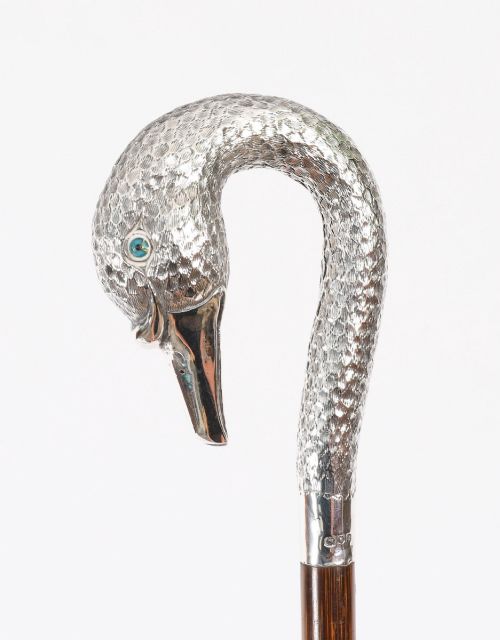
Beyond desk accessories, the motif extends to walking stick handles, menu holders, toast racks, and glass dishes resting on silver-plated stands. The forms range from miniature figural models designed for vanity tables to substantial German cast silver salts and Spanish dishes. Encountering these pieces reveals how silversmiths utilised avian anatomy to animate functional silverware.
Materials and construction
Makers constructed these pieces primarily from sterling silver, solid silver, and silver plate, often combining metalwork with cut glass, crystal, velvet, and enamel. Casting allowed artisans to shape the arched necks and feather details of the birds, while piercing and chasing defined wings and plumage. Many pin cushions integrate fitted velvet inserts nestled inside the hollow silver bodies.
Larger table salt cellars and dishes incorporate removable glass liners held securely within metal frames shaped as swimming swans. Walking cane handles and magnifying glasses utilise cast silver heads mounted to hardwood shafts, demonstrating durable joining techniques suited for daily handling.
Silversmiths turned ordinary pins into swan feathers, ensuring even a sewing basket could double as a menagerie.
Evaluating quality in silver swans
Quality depends heavily on the crispness of the chasing and the naturalism of the bird's posture. Superior examples display finely articulated feather engraving and balanced proportions, whereas inferior versions exhibit soft details and static forms. The integration of functional elements, such as smoothly articulating hinged wings on pin cushions or snugly fitted glass inserts, separates standard production from finer workmanship.
Maker attribution and clear hallmarks also elevate a piece, distinguishing marked items produced by established silversmiths from unmarked novelty wares. The density and gauge of the silver used in casting dictate the heft and durability of the object, influencing how well the piece survives centuries of handling.
Mappin & Webb·Nathaniel Mills·Adie & Lovekin·Elkington
The Antique Silver Swan Glossary
- Pin Cushion
- A small domestic accessory filled with textile and padded material designed to hold sewing pins. These often take figural shapes like animals.
- Sterling Silver
- An alloy of silver containing 92.5 percent pure silver and 7.5 percent other metals, usually copper. This standard ensures structural durability for detailed casting.
- Salt Cellar
- A small open dish or container placed on the dining table for holding salt. Examples frequently feature glass liners protected by silver frames.
- Chasing
- A metalsmithing technique where the artisan hammers metal from the front to sink the surface and create raised decorative relief.
- Toast Rack
- A tabletop framework of metal dividers used to hold slices of toast upright. Figural models often incorporate animal motifs into the central handle.
Antique Silver Swan: Frequently Asked Questions
What were silver swan pin cushions used for?
Victorian and Edwardian households used these miniature figures on dressing tables and desks to keep sewing pins organised and accessible.
The dense velvet inserts secured the pins safely while the solid silver bodies provided a decorative novelty ornament for the room.
How do I date an antique silver swan?
Dating relies primarily on the official hallmarks stamped into the metal by assay offices, which indicate specific year letters and towns.
Style also helps determine the period, as Edwardian novelty pieces differ significantly in finish and weight from later mid-century examples.
Are silver swan salt cellars safe to use?
Most salt cellars feature protective glass or crystal liners that separate the corrosive salt from the sterling silver or silver plate.
Removing the liner allows for safe cleaning of both the glass component and the exterior metal swan mount without causing chemical damage.
What is the difference between solid silver and silver plate?
Solid silver items consist of precious metal all the way through, typically meeting sterling or continental silver standards.
Silver-plated pieces feature a thin layer of silver bonded over a base metal core such as brass or copper.