
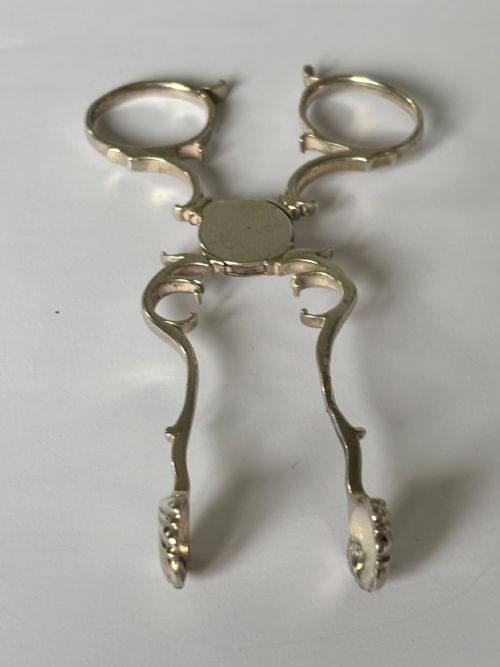


Antique Silver Sugar Cutlery
Antique silver sugar cutlery encompasses specialised implements designed for sweetening tea and serving confectionery, combining historic craftsmanship with practical utility.
Antique Silver Sugar Cutlery
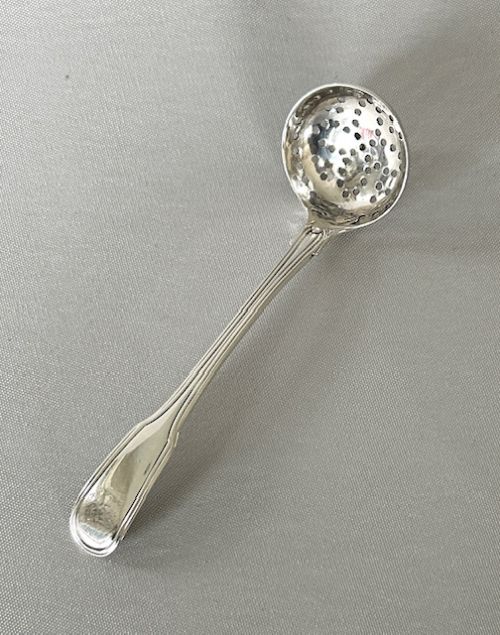
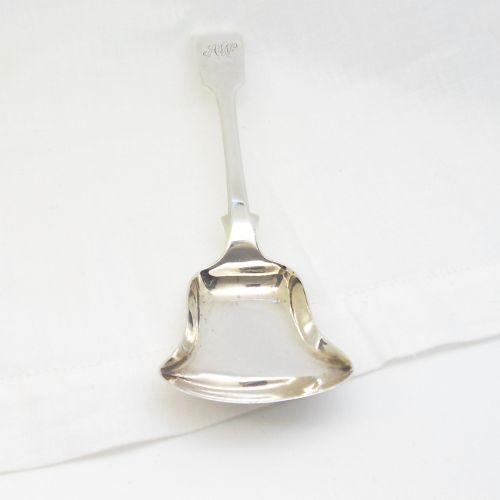
Antique silver sugar cutlery includes tongs, nips, shovels, and sifting spoons spanning the Georgian, Victorian, and Edwardian eras. These forms developed to handle lump, powdered, and loaf sugar during formal tea service and dining.
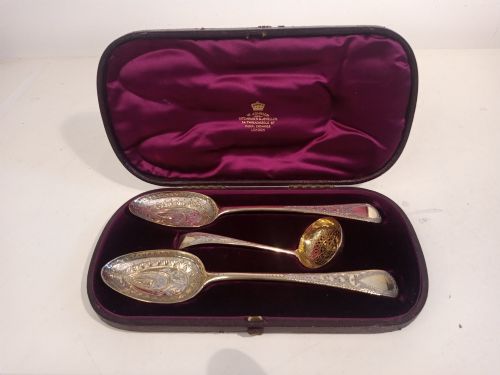
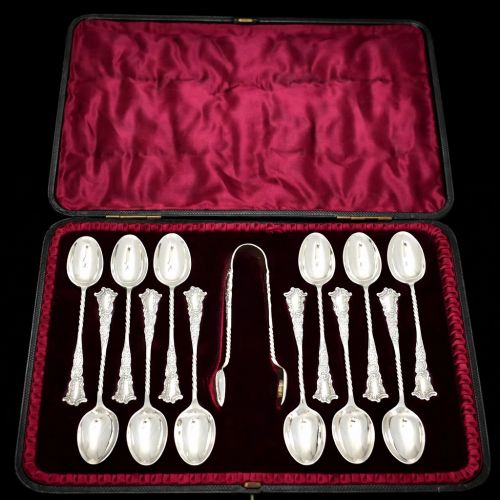
The pieces on this page range from individual George III scissors-style nips to cased sets of teaspoons and sugar tongs from Birmingham and Chester. Buyers encounter both sterling silver and silver-gilt examples, frequently housed in fitted leatherette or velvet-lined boxes.
Serving utensils and berry spoons often feature repoussé decoration and pierced bowls designed for sifting sugar over fruit or desserts. The selection moves from late eighteenth-century domestic items to twentieth-century Art Deco flatware.
Materials and methods of production
Makers utilised sterling silver and silver-gilt as the primary metals for these implements, supplemented by silver plate for specific nineteenth-century serving sets. Handles occasionally incorporate alternate materials, while fitted presentation cases employ velvet, silk, and leatherette.
Silversmiths formed the spoons and tongs through traditional forging, piercing, and hammering techniques. Decoration was applied via hand engraving, chasing, and cast shell motifs, complemented by official hallmarks struck to verify metal purity and origin.
Listings feature sterling silver and silver-gilt pieces spanning from the eighteenth century through the Art Deco period.
Distinctions in standard and execution
Superior examples display crisp piercing, substantial gauge metal, and well-defined hallmarks from regional assay offices such as London, Newcastle, Birmingham, and Exeter. Finer sets maintain their original fitted presentation cases lined with silk or velvet.
The precision of the maker's handwork in chasing or engraving fruit and foliage motifs determines the refinement of individual sifter spoons and tongs. Maker attribution, such as work by identified silversmiths, elevates the standing of specific pieces.
John Walton·Thomas Tookey·Robert Stebbings
The Antique Silver Sugar Cutlery Glossary
- Sugar Nips
- Early scissor-action implements used for cutting or gripping sugar loaves before granulated sugar became common. They typically feature small bowl-ended arms for grasping lumps.
- Sugar Sifter
- A perforated spoon designed for dusting loose sugar over desserts or fruit. The bowl contains pierced patterns to distribute the powder evenly.
- Silver-Gilt
- Silver that has been coated with a thin layer of gold on the surface. This technique provides a rich, warm finish often seen on interior bowls of serving spoons.
- Hallmark
- An official stamp applied to precious metals indicating the standard of purity, the assay office, and the date letter. English pieces carry distinct marks reflecting their testing location.
Antique Silver Sugar Cutlery: Frequently Asked Questions
What is the difference between sugar nips and sugar tongs?
Sugar nips operate with a scissor action and feature small grips intended for breaking or holding sugar from a loaf. Tongs are spring-action V-shaped implements designed to lift loose lump sugar without cutting.
Both tools served the tea table during the Georgian and Victorian periods, with tongs gradually replacing nips as standard sugar production changed.
How do I date antique silver sugar cutlery?
Dating relies primarily on the stamped hallmarks, which include maker's marks, duty marks, and date letters corresponding to specific assay offices like London, Birmingham, or Chester. Stylistic clues such as George III neo-classical engraving or Victorian pierced decoration also indicate the period.
Reference books match the stamped letters and symbols to exact operating years for each regional office.
Were these items originally sold in presentation cases?
Many fine sets of teaspoons and sugar tongs were retailed in fitted boxes lined with velvet, silk, or satin, particularly from the late Victorian and Edwardian eras. These presentation cases protected the silver and made the sets suitable for gifting.
Loose items were typically stored in drawer canteens or kept individually in household silver collections.
Can I use antique silver sugar spoons daily?
These pieces function adequately for modern dining, though delicate antique sifter spoons and thin Victorian tongs benefit from gentle handling and hand washing rather than machine cleaning. Sterling silver develops a natural patina with regular use.
Careful maintenance preserves the original hallmarks and engraved details on the bowls and handles.