





Antique Silver Shears
Antique silver shears mostly comprise specialised grape scissors and needlework implements crafted to serve formal dining and domestic tasks.
Antique Silver Shears
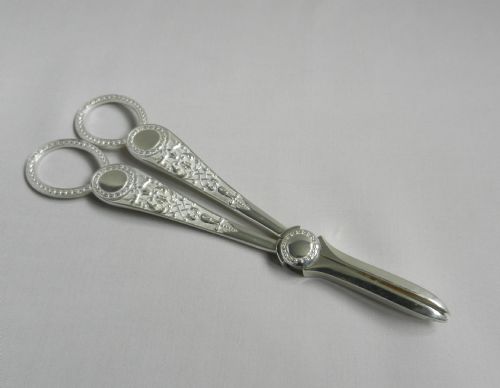
When searching for antique silver shears, buyers encounter two primary domestic forms: grape scissors designed for formal dining and smaller scissors intended for sewing or needlework. Grape scissors dominate the selection, appearing frequently in Victorian and Edwardian iterations alongside earlier Georgian examples.
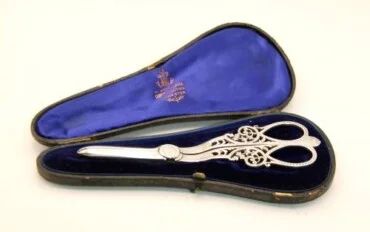
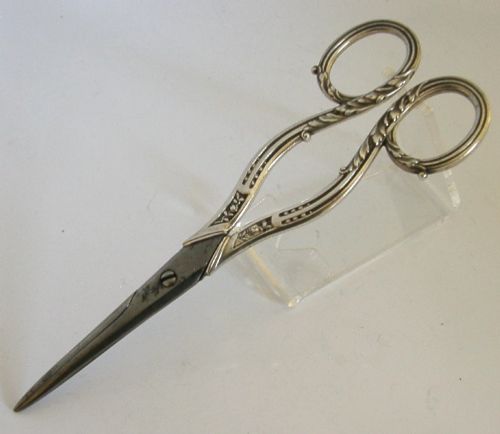
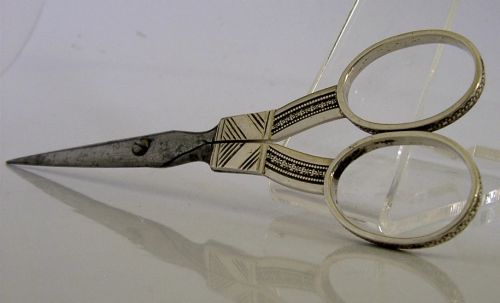
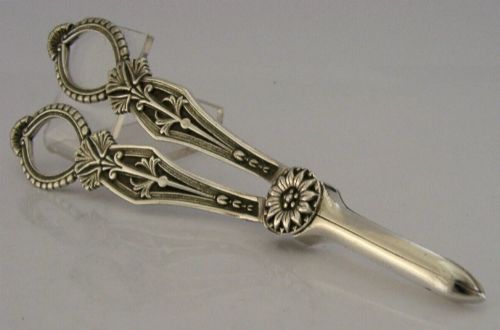
Dining implements often feature specialised cast decoration such as grapevines, acanthus leaves, or figural masks relating to fruit and wine. Needlework variants emerge less often, providing delicate cutting edges for thread and fabric within fitted cases lined with silk or velvet.
How they were made
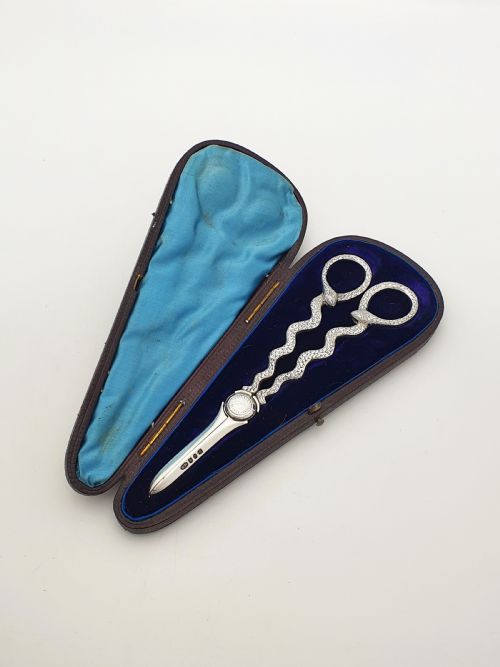
Makers utilised sterling silver and silver plate, frequently shaping handles through casting to achieve high relief ornamentation like naturalistic vines and serpent motifs. Gilt finishes, also known as vermeil, appear on select interiors to provide a contrasting gold tone against polished silver blades.
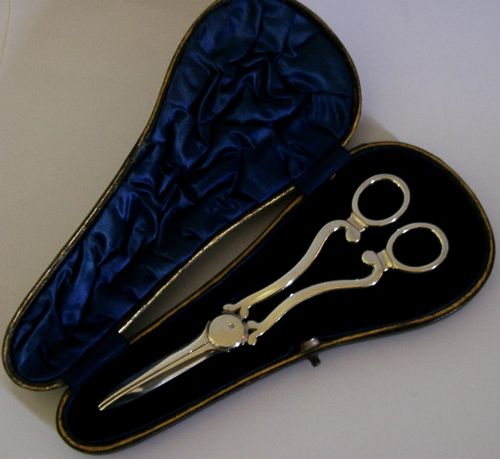
Fitted presentation boxes utilise structured timber bases covered in leatherette or leather, lined internally with velvet, satin, or silk to protect the metalwork during storage.
Antique Silver Shears Retail Price Guide 2026
Typical asking prices for silver shears among the pieces listed under this phrase on Sellingantiques today, from the lower quarter to the upper quarter. They describe what is for sale here now, not the wider market.
Listings feature items spanning from the early nineteenth century through the Edwardian era and into the mid-twentieth century, predominantly rendered in sterling silver.
What varies in quality
Quality rests principally on the depth and clarity of the casting and engraving across the handles, distinguishing mass-produced items from deeply chased or hand-modelled studio work. Weight serves as another indicator, with heavier gauge silver providing a more substantial balance in the hand during use.
The presence of original fitted cases lined in silk or velvet adds significantly to the completeness of a set, as does clear hallmarking stamping the maker's mark, town, and date letter onto the silver.
Goldsmiths & Silversmiths Co·Gibson & Langman·Charles Reily & George Storer·Paul Storr·Chawner & Co·C.J. Vander·Francis Higgins·Charles Boyton
The Antique Silver Shears Glossary
- Sterling silver
- A standard alloy consisting of ninety-two point five percent silver by mass, with the remainder made up of other metals for durability. This material forms the basis of nearly all high-grade dining and sewing implements recorded here.
- Silver gilt
- Sterling silver that has been coated with a thin layer of gold, creating a warm yellow sheen across the surface. This technique is frequently applied to the interior blades of fruit scissors to prevent staining from citric acids.
- Hallmark
- An official stamp or series of marks applied to precious metals to indicate the standard of purity, the assay office, and the year of manufacture. These small punches allow collectors to date individual items precisely.
- Vermeil
- Alternative terminology for silver gilt, describing silver plated with gold. It combines the structural rigidity of silver with the decorative appeal of gold.
- Cast silver
- Molten silver poured into a mould to form complex, three-dimensional shapes such as handles styled as vine stems or animal figures. This method allows for deeper relief than simple stamping.
Antique Silver Shears: Frequently Asked Questions
What were antique silver shears used for?
These implements served specific domestic and social functions, primarily involving the cutting of fruit clusters at the dining table. Grape scissors were engineered with blunt tips and curved blades to separate individual fruit without bruising.
Smaller variants functioned within sewing baskets and needlework boxes for trimming threads. Both categories reflect the formal domestic rituals of the nineteenth and early twentieth centuries.
How can I tell the age of silver shears?
Dating relies primarily upon the hallmarks stamped directly into the silver, which record the assay office, standard mark, and a specific date letter. Comparing the style of decoration, such as Gothic Revival motifs or Art Nouveau curves, provides additional contextual clues regarding the period of manufacture.
Design elements like figural masks and cast acanthus leaf handles also align with specific stylistic movements prevalent during the Georgian and Victorian eras.
Are cased grape shears more desirable?
Original fitted presentation boxes enhance the completeness of an antique set by preserving the implements alongside their matching velvet, satin, or silk interiors. These cases protect the metalwork from surface scratches and oxidation over decades of storage.
Collector interest often centres on surviving pairs that retain their matching leather or leatherette outer casing in sound condition.