







Solid Silver Scissors
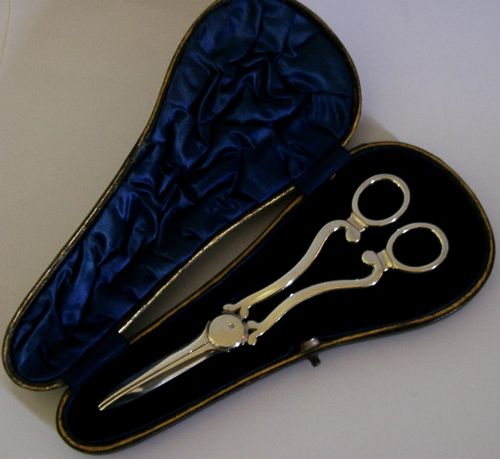
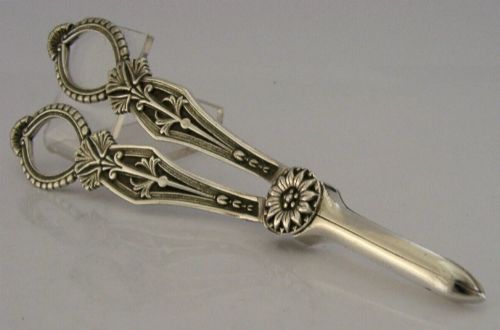
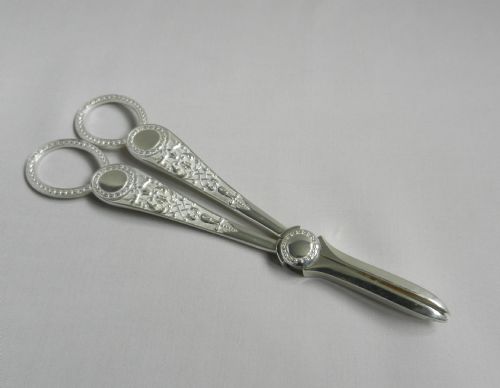
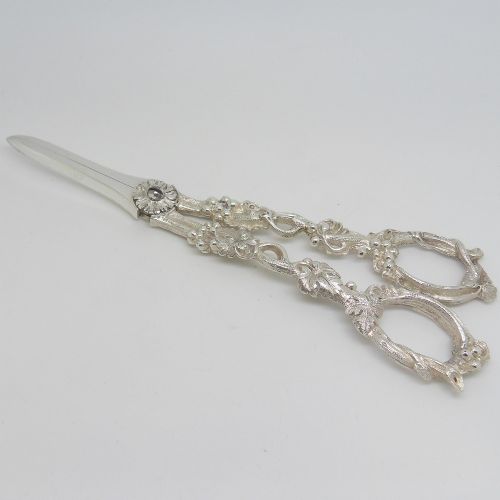
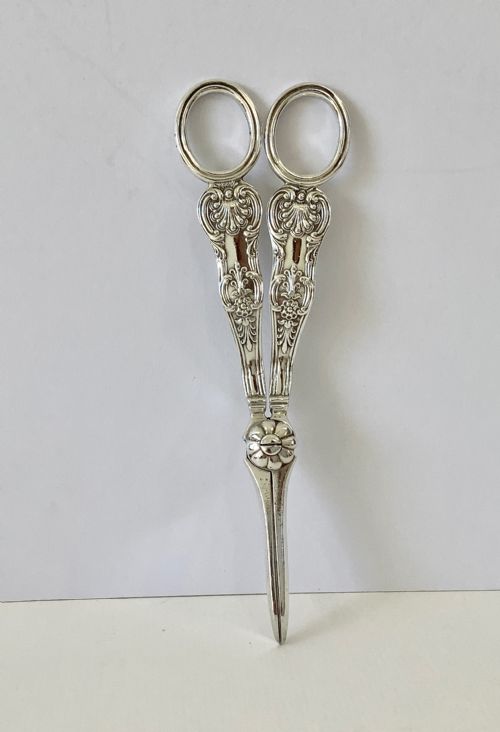
Solid silver scissors are functional works of art, chiefly taking the form of grape shears designed for the dining table.
Solid Silver Scissors
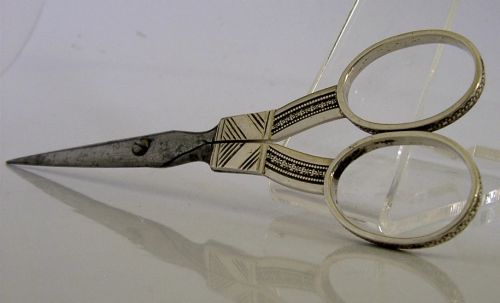
Beyond dining implements, the category encompasses specialised sugar nips, sugar tongs, and needlework sewing scissors. The dominant forms stem from the Victorian and Edwardian eras, alongside Georgian and mid-twentieth-century examples.
Makers utilised various presentations, including fitted leather cases lined with velvet, satin, and silk. Collectors encounter styles ranging from plain cast handles to elaborate Gothic Revival and Art Nouveau motifs.
Materials and methods of construction
The primary material found across these pieces is sterling silver, frequently paired with steel blades to provide a dependable cutting edge. Many historical examples exhibit heavy cast construction, reaching substantial weights through solid silver handles and bows.
Gilding is another technique utilised by silversmiths, resulting in silver gilt finishes that offer a rich, golden tone. Decoration was applied through hand engraving, chasing, and detailed casting featuring naturalistic foliate designs, grape vines, and figural masks.
Solid Silver Scissors Retail Price Guide 2026
Typical asking prices for solid silver scissors among the pieces listed under this phrase on Sellingantiques today, from the lower quarter to the upper quarter. They describe what is for sale here now, not the wider market.
Some nineteenth-century diners required specialised hooked shears simply to prevent their dessert fruit from rolling away across the mahogany.
Assessing quality in silver scissors
Quality rests heavily upon the crispness of the cast or engraved decoration, such as deep acanthus leaves or intricate grape vine motifs. High-tier examples display exceptional weight and balance, often bearing the marks of prominent silversmiths.
Goldsmiths & Silversmiths Co·Gibson & Langman·Charles Reily & George Storer·Paul Storr·Chawner & Co·Francis Higgins·C.J. Vander·John Gilbert·William Eley & William Fearn·George Angel·Walker & Hall·Mappin And Webb
The Solid Silver Scissors Glossary
- Sterling silver
- A standard of silver alloy containing ninety-two point five percent pure silver and seven point five percent other metals, usually copper. This composition provides the durability required for functional items like scissors.
- Grape shears
- Specialised scissors engineered with blunt-tipped blades and decorated handles for harvesting individual fruits from a cluster at the table. They prevent damage to the remaining fruit and the table linens.
- Sugar nips
- Small hinged tools utilised for breaking pieces from a sugar loaf before the standardisation of sugar cubes. They share a mechanical kinship with many specialised scissors.
- Cast silver
- Molten silver poured into a mould to create three-dimensional relief patterns and robust handles. This technique allowed makers to produce high-relief grape vine and foliate designs.
- Silver gilt
- Sterling silver that has been coated with a thin layer of gold through a chemical or electrochemical process. This finish provides a warm aesthetic and protects the underlying silver from tarnishing.
Solid Silver Scissors: Frequently Asked Questions
Why were grape scissors made of solid silver?
Silver did not react with the acids present in fresh fruit juice in the manner that base metals might. This prevented unpleasant metallic tastes and preserved the visual appearance of the metal.
Craftsmen also utilised the precious metal to display wealth and refinement during formal nineteenth-century dining occasions.
How do I identify the date of my silver scissors?
British pieces typically bear a series of hallmarks that include a date letter, a lion passant indicating sterling standard, and a town mark. Consulting standard assay office registers decodes these symbols to the exact year of manufacture.
Stylistic cues such as Art Nouveau curves or heavy Victorian casting also point toward specific decades of production.
Were all silver scissors used for fruit?
While grape shears dominate the available examples, the category includes domestic implements intended for other pursuits. Needlework scissors served textile tasks, while sugar nips addressed tea service needs.
Each purpose dictated the length of the bows and the shape of the blades, though decorative elements often remained consistent across types.
What is the difference between sugar tongs and grape shears?
Grape shears feature pivoted blades joined by a screw or pin, operating like standard scissors to sever stems. Sugar tongs and nips rely on a sprung metal arch without a central pivot to squeeze and hold sugar lumps.
Despite their different mechanics, silversmiths frequently applied matching naturalistic grape vine decorations to both forms.