



Antique Silver Sewing Collectibles
These antique silver sewing collectibles bring domestic utility into the realm of miniature sculpture, offering charming forms from pin cushions to thimble cases.
Antique Silver Sewing Collectibles
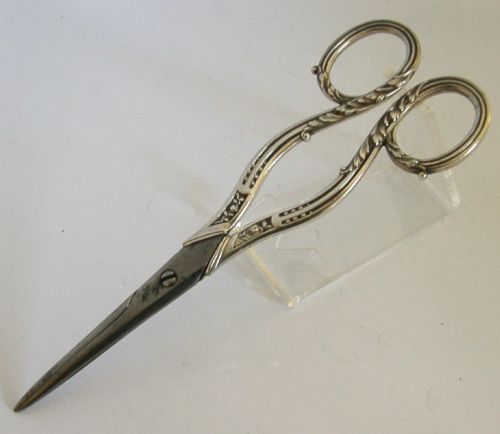
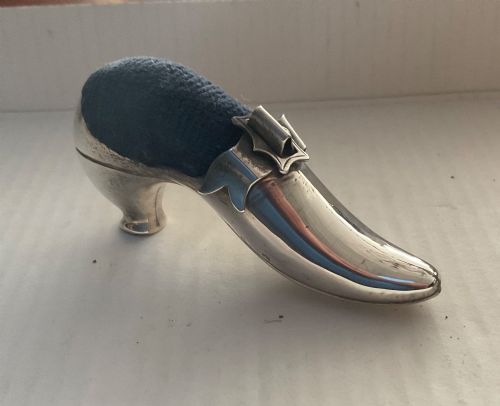
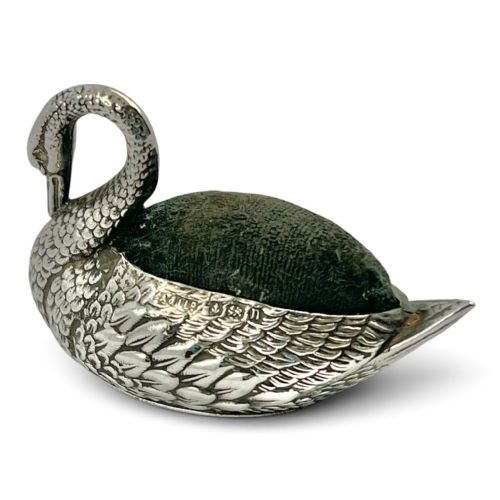
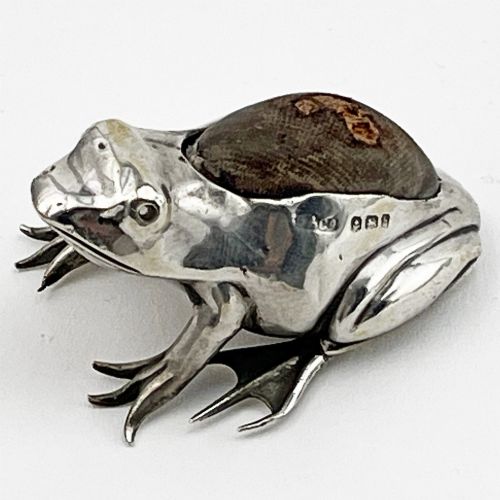
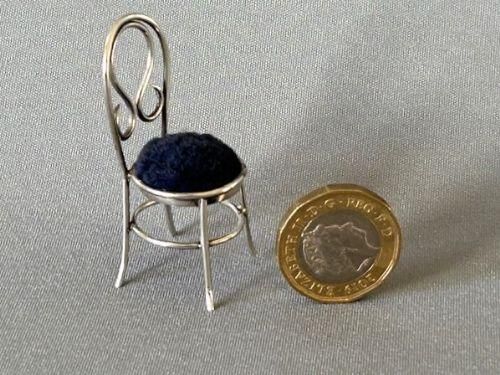
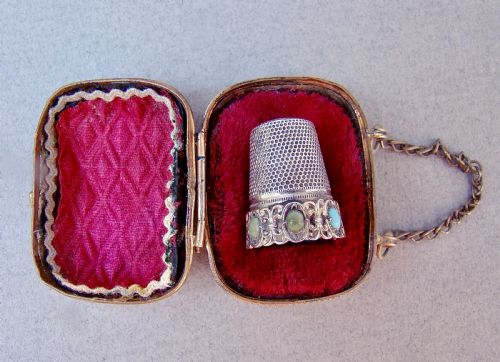
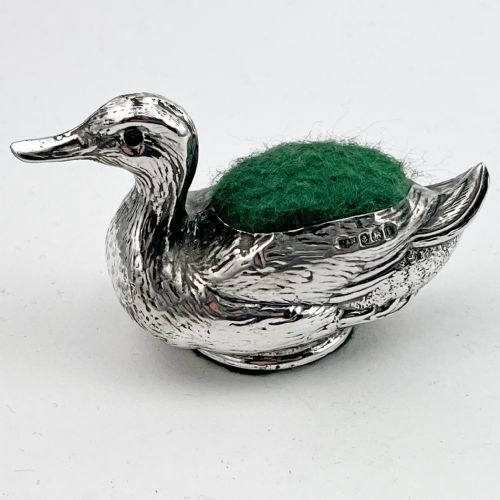
When you search for antique silver sewing collectibles, you encounter a specialised group of functional items designed for needlework, tailored with considerable decorative ambition during the nineteenth and twentieth centuries. The selection centres heavily on novelty silver pin cushions shaped as animals, birds, vehicles and everyday objects alongside fitted thimble cases and scissors.
Victorian and Edwardian workshops produced the majority of these pieces, translating domestic tools into whimsical display objects that sat upon dressing tables or hung from chatelaines. Alongside utilitarian thimbles and cotton reel holders, the novelty pin cushion emerges as the dominant form within this category.
Origins span English provincial centres such as Birmingham and Chester, alongside continental makers from France and Norway. Buyers meet everything from naturalistic swans and pigs to mechanical novelties like hatching chicks and railway lamps.
Materials and technique
Silversmiths utilised sterling silver alongside base metals and gilt accents, shaping the housings through casting, stamping and hand-chasing. These metallic frames were then fitted with velvet, fabric or leather inserts designed to receive pins without dulling delicate steel points.
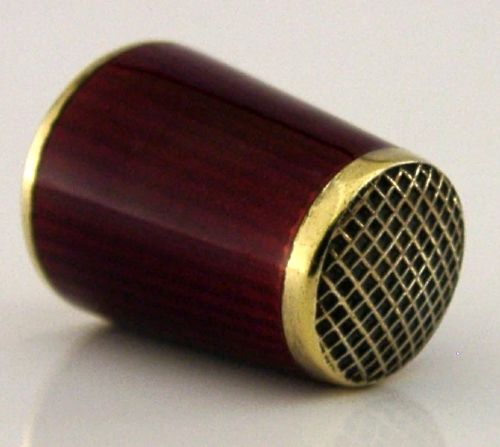
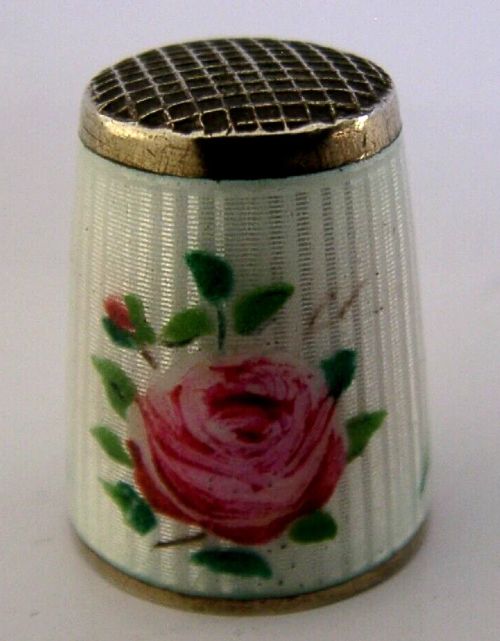
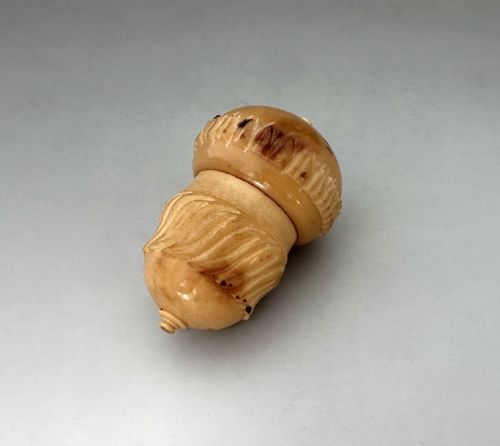
Enamel work appears on specific mid-century Norwegian pieces, fusing vitreous colour to silver surfaces. Other items incorporate natural materials such as Corozo nut, glass, stone settings and ormolu to provide tactile contrast against the polished metal.
Periods represented span the Victorian, Edwardian, Regency and mid-century eras across the nineteenth and twentieth centuries.
What varies in quality
Quality rests upon the crispness of the modelling and the imaginative scope of the silver smithing, particularly in novelty forms where anatomical detail or mechanical accuracy defines the piece. Superior examples display fine hand-chasing that brings texture to feathers, fur or architectural elements rather than relying on soft, mass-produced stampings.
The integrity of the internal stuffing and the preservation of original velvet or fabric inserts influence desirability among collectors. Furthermore, clear hallmarks and legible maker marks anchor the provenance and attest to the original standard of the silver.
Adie & Lovekin·David Andersen·Walter & George Myers·Charles Horner·Sampson Mordan & Co.
The Antique Silver Sewing Collectibles Glossary
- Chatelaine
- A decorative belt hook suspended with chains carrying utilitarian household tools such as scissors, thimble cases and smelling bottles.
- Novelty silver
- Silver objects fashioned into humorous or realistic shapes outside their standard functional geometry, such as animals or everyday vehicles.
- Pin cushion
- A padded receptacle designed to hold pins and needles securely during sewing, frequently mounted within silver frames shaped as novelty figures.
- Sterling silver
- A silver alloy containing substantial pure silver combined with copper to ensure durability for functional domestic items.
- Thimble case
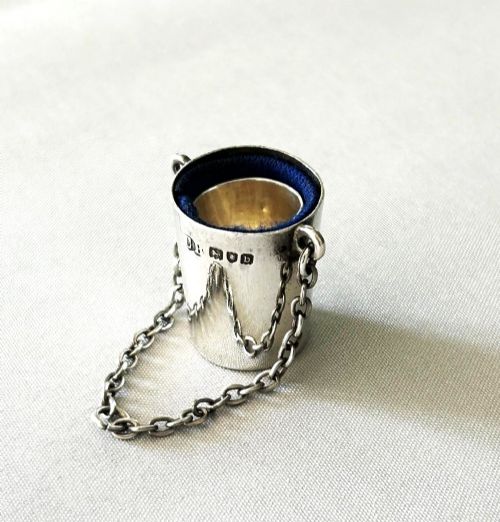
- A small protective housing, often egg-shaped or cylindrical, designed to safeguard a sewing thimble when not in use.
Antique Silver Sewing Collectibles: Frequently Asked Questions
What are antique silver sewing collectibles?
These objects comprise functional needlework tools and decorative receptacles produced primarily during the Victorian and Edwardian periods in sterling silver and related materials.
They encompass items such as pin cushions, thimbles, scissors, cotton reel holders and fitted chatelaine cases designed for domestic sewing.
How were novelty pin cushions used?
Pin cushions served as practical desktop or dressing table accessories where dressmakers and home sewers could temporarily park pins while working on garments.
Novelty versions combined this domestic utility with whimsical display value, turning miniature sculptures of animals and objects into decorative talking pieces.
How do I identify Edwardian silver pieces?
Edwardian items date from the reign of King Edward VII between nineteen hundred and nineteen ten, typically featuring lighter, more whimsical designs than their heavier Victorian predecessors.
Official assay office hallmarks stamped directly onto the silver provide precise date letters and town marks to confirm the exact year of manufacture.
What materials accompany the silver?
Makers frequently paired sterling silver frames with plush velvet, silk fabric or leather inserts to cushion delicate needle points securely.
Selected pieces also incorporate coloured enamel, natural Corozo nut, glass accents and ormolu mounts to enhance the decorative presentation.
How should I display them?
These miniature pieces suit enclosed glass cabinets or dedicated display shelves where their intricate chasing and diminutive scale remain visible.
Keeping them away from direct sunlight and excessive humidity protects the original fabric inserts and velvet upholstery inside the silver frames.