


Antique Silver Scent Jar
An antique silver scent jar brings refined dressing table craft to hand, pairing heavy cut glass with hallmarked metal lids from the Victorian era onward.
Antique Silver Scent Jar
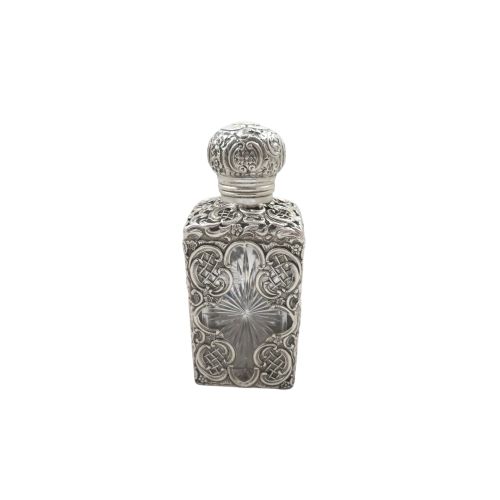
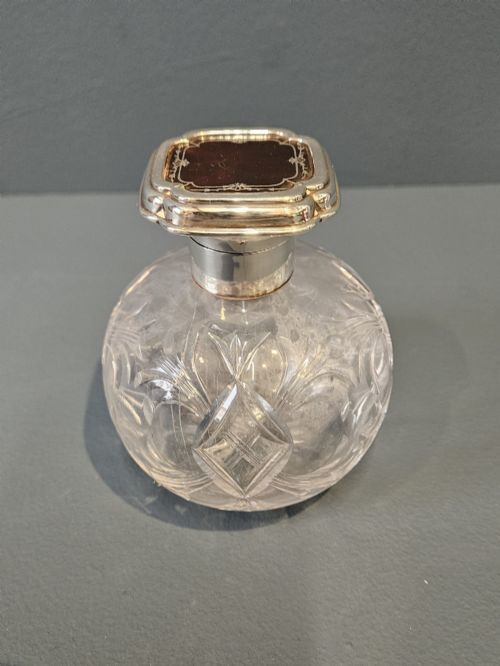
An antique silver scent jar combines a glass or crystal vessel with a protective metal mount, cap, or lid for holding perfume, salts, or cosmetics. These pieces appear primarily as cut glass or crystal bottles alongside vanity jars and dressing table accessories.
The selection ranges from Victorian and Edwardian examples to later Art Deco designs spanning the late nineteenth century through the 1930s. Buyers will regularly encounter sterling silver mounted cut glass bottles alongside tortoiseshell, enamel, and amethyst glass variations.
Forms include globular perfume bottles, tall vanity jars, and swing-handle potpourri baskets intended for domestic dressing tables. English provincial and London assay offices provide date letters and maker marks across the surviving inventory.
Materials and construction
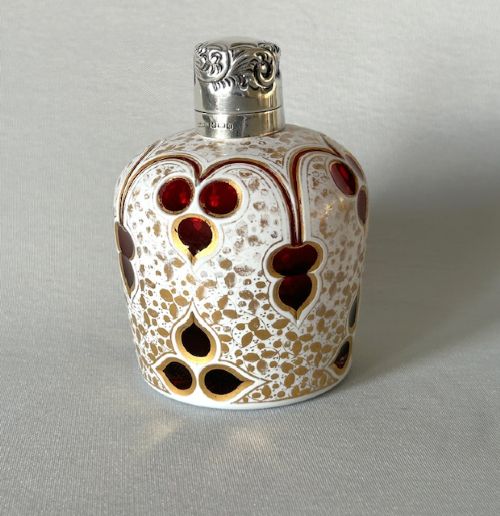
Glass bodies rely on heavy cutting, moulding, or overlay techniques in clear crystal, cranberry, and amethyst hues. The glass is shaped to refract light, providing a textured grip and visual depth beneath the metal mounts.
Sterling silver caps and collars are formed by stamping, spinning, or casting, then secured to the glass necks with cork or friction fits. Many mounts feature detailed repoussé work, engine turning, or applied enamel colour.
Organic materials such as tortoiseshell are inlaid directly into the silver lids or fitted across the tops of crystal bodies. Hallmark stamps inside the silver rims record the city of assay and the year of manufacture.
Listings span the Victorian, Edwardian, and Art Deco periods, incorporating sterling silver, cut crystal, tortoiseshell, and enamel.
Judging quality and character
Quality rests on the depth of the glass cutting and the weight of the silver mounts rather than mere scale. Crisp facets on the crystal and substantial gauge silver on the lids indicate superior manufacture.
The integration between the glass body and the metal collar determines durability and visual harmony. Intact enamel panels, unblemished tortoiseshell inserts, and clear, legible hallmarks elevate individual pieces.
Henry Perkins·Barnsley & Co·Adie Brothers Ltd·William Comyns
The Antique Silver Scent Jar Glossary
- Hallmark
- A series of official stamps punched into silver indicating the standard of purity, the assay office, and the year of making. These marks allow collectors to date the mount precisely.
- Sterling silver
- An alloy consisting of ninety-two point five percent silver by mass, with the remainder being other metals, usually copper. This standard is denoted by the lion passant mark on English silver.
- Cut glass
- Glass decorated by grinding facets and patterns into the surface using rotating wheels. The technique creates brilliant light refractions across vanity jars and perfume bottles.
- Repoussé
- A metalworking technique where the silver is hammered from the reverse side to form a raised design in relief. It is frequently seen on Edwardian and Victorian bottle caps.
- Enamel
- A glassy substance fused to the surface of the silver lid through high-temperature firing. Art Deco examples often utilise coloured enamel geometric panels.
Antique Silver Scent Jar: Frequently Asked Questions
How do I clean an antique scent bottle?
Use a soft brush and warm soapy water for the glass exterior, taking care to keep moisture away from cork liners inside silver lids. Polish the silver mounts gently with a dry microfibre cloth to preserve the original hallmarks.
Avoid submerging pieces that combine silver with tortoiseshell or enamel, as water can damage organic adhesives and delicate coloured inlays.
Are these glass bottles safe for modern perfume?
Most surviving bottles function well for display or occasional use, provided the internal stopper or cork remains secure. Modern alcohol-based sprays can sometimes degrade historic cork linings over extended periods.
Inspect the interior neck for secure fitting before tipping any liquid inside a fragile cut glass vessel.
How can I date my silver topped jar?
Locate the hallmark stamps on the metal rim or lid, which typically include a date letter corresponding to specific assay office records. Comparing the stylistic cues like Edwardian glass cutting or Art Deco enamel work helps confirm the decade.
Matching the maker mark alongside the town mark narrows the production year with high accuracy.
What is the difference between a scent bottle and a vanity jar?
Scent bottles feature narrow necks designed for pouring liquid perfume, often fitted with internal glass stoppers beneath outer metal caps. Vanity jars have wider openings intended for creams, powders, or dressing table accessories.
Both forms served similar functions within late Victorian and Edwardian bedroom sets.