





Antique Silver Plate Goblets
These antique silver plate goblets bring historic weight and gleaming ceremony to a table, spanning church chalices to intimate loving cups.
Antique Silver Plate Goblets
When searching for antique silver plate goblets, buyers examine vessels created across several centuries, with the nineteenth century heavily represented on this page. These pieces encompass church chalices, communion vessels, loving cups, and drinking vessels fashioned in styles ranging from Georgian and Victorian to Edwardian and Art Deco.
The assortment frequently includes Old Sheffield Plate items alongside electroplated designs and nickel silver forms. Forms shift from towering ecclesiastical chalices intended for ritual use to domestic tankards and handled mugs bearing intricate engravings.
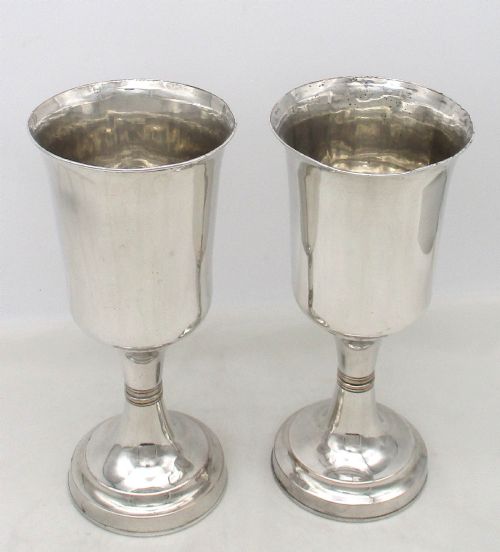
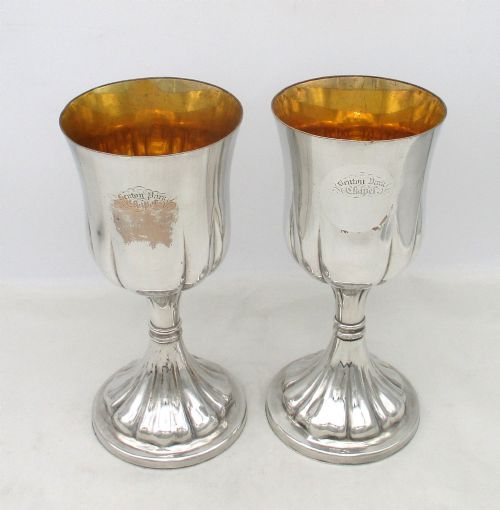
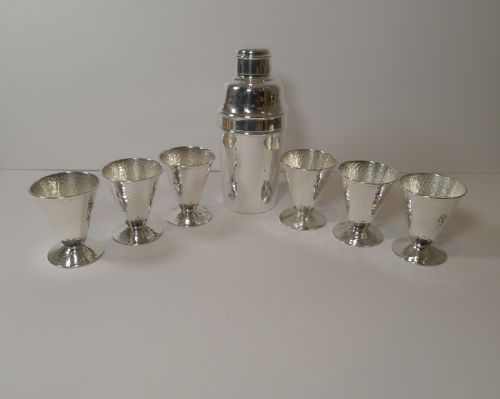
Ecclesiastical examples dominate the early offerings, often appearing as matched pairs or larger sets dating from the eighteen-thirties and forties. Domestic loving cups and cocktail sets emerge later, reflecting changes in social dining and entertaining habits.
Materials and methods of production
Many early vessels utilise Old Sheffield Plate, a technique fusing a thin sheet of silver to a thicker copper base through heat and pressure. This method produces a distinct edge where the base metal shows through wear over time.
Later Victorian and Edwardian items rely heavily on electroplating, a process applying a silver layer to metals like nickel silver or copper using an electrical current. Artisans also employed electrotype methods to build up heavy, sculptural metal forms.
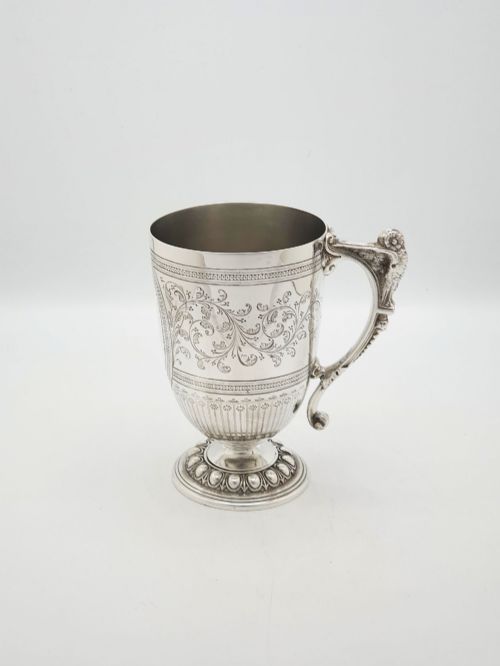
Decoration involves hand embossing, chasing, and engraving to create surface patterns, alongside cast metal elements such as figural handles shaped like owls or decorative mounts soldered onto the bodies.
Antique Silver Plate Goblets Retail Price Guide 2026
Typical asking prices for silver plate goblets among the pieces listed under this phrase on Sellingantiques today, from the lower quarter to the upper quarter. They describe what is for sale here now, not the wider market.
Determinants of distinction
Superior quality rests on the clarity of the chased and engraved ornament and the crispness of cast handle attachments. Hand-worked vessels show deliberate precision in every decorative line.
The underlying material integrity defines the longevity of each piece, particularly in Old Sheffield Plate where the original silver fusion thickness dictates how the metal ages. Substantial gauge metal resists denting and maintains structural balance.
Attribution to documented workshops and silversmiths elevates a vessel, especially when maker marks remain sharp and legible on the base or rim.
Henry Bourne·Richard Morton·Elkington Mason·Joseph Rodgers & Sons
The Antique Silver Plate Goblets Glossary
- Old Sheffield Plate
- An early fusing method where silver is bonded to a copper core before shaping. This technique creates a characteristic warm tone distinct from later electroplate.
- Electrotype
- A replication process using electrolysis to deposit metal onto a mould, producing deeply sculptural three-dimensional vessels. It allowed makers to create complex figurative details.
- Chalice
- A consecrated cup used in religious communion services, frequently designed with a sturdy stem and wide base. These ecclesiastical pieces often survive in matched pairs.
- Loving Cup
- A large two-handled drinking vessel traditionally passed among guests at banquets and celebrations. They appear in both plain domestic silver plate and heavily embossed presentation formats.
Antique Silver Plate Goblets: Frequently Asked Questions
How do I clean antique silver plate goblets?
Use a gentle silver cream applied with a soft cloth, taking care not to rub too vigorously on raised edges where thin plating might reveal the base metal underneath. Rinse with warm water and dry immediately with a soft lint-free cloth to prevent spotting.
Avoid abrasive dips or harsh chemical cleaners that strip the original patina and damage Old Sheffield Plate layers. Regular dusting with a microfibre cloth keeps tarnish at bay between careful polishing sessions.
Can I drink from antique silver plate goblets?
Most antique silver plate drinking vessels are safe for occasional use with cool beverages, provided they have been thoroughly cleaned and checked for any interior residue. Church chalices and communion vessels should be assessed carefully before food or drink use.
Acidic drinks like wine or citrus juice should not be left in silver plate vessels for extended periods because they can react with the metal surface. Wash the pieces by hand promptly after any use.
How can I tell Old Sheffield Plate from later electroplate?
Look closely at the rims and high points for a faint coppery line where the thin sheet of silver has worn away from the copper base beneath. This physical fusion is unique to Old Sheffield Plate produced before electroplating was invented.
Electroplated pieces show a uniform silver layer across all surfaces, and they often carry maker marks associated with nineteenth-century manufacturing firms. The weight and construction style also offer clues to the manufacturing decade.
What is the difference between a chalice and a goblet?
Chalices typically feature deep bowls set atop a prominent stem and a wide, stable foot, often designed for liturgical or ceremonial church use. They tend to be heavier and more formal in their ecclesiastical ornamentation.
Goblets encompass a broader category of drinking vessels used in domestic dining, social gatherings, and secular toasts. They share the stemmed silhouette but appear in varied decorative styles ranging from Georgian simplicity to Art Nouveau curves.