

Antique Silver Mustard
Antique silver mustard pots bring functional elegance to the dining table, taking forms from simple Georgian drums to elaborate Victorian novelties.
Antique Silver Mustard
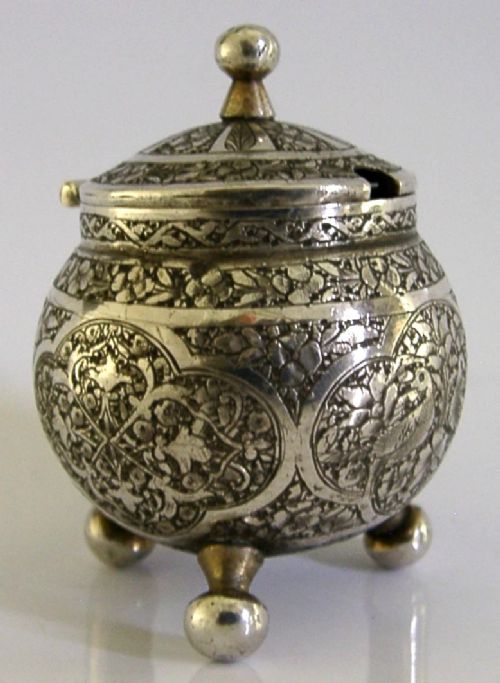
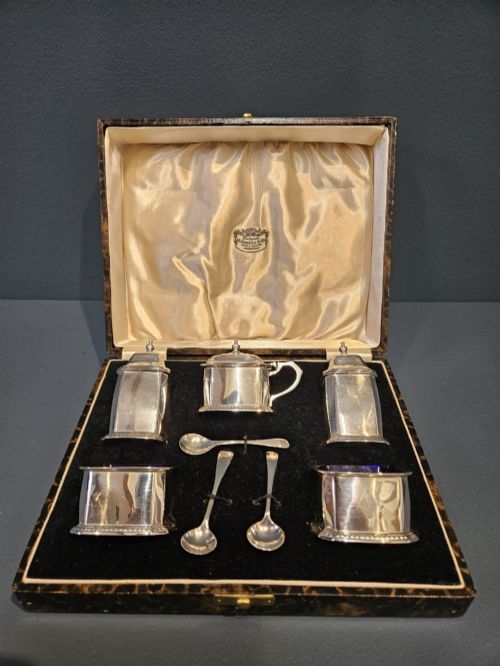
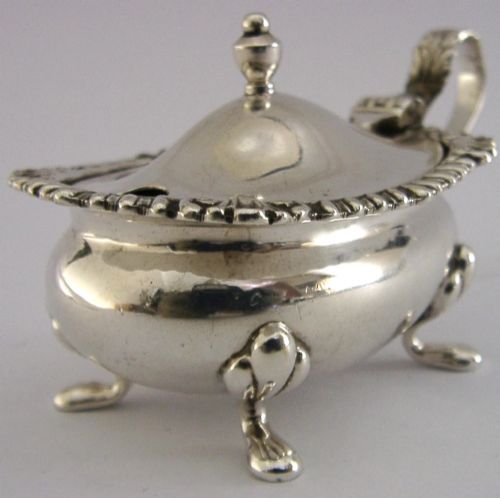
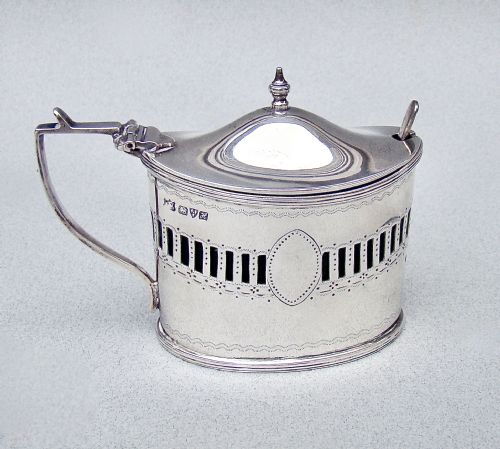
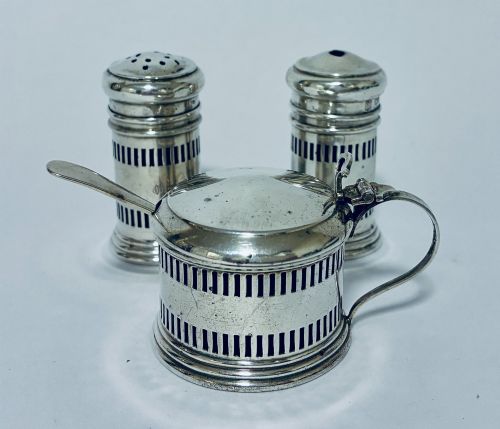
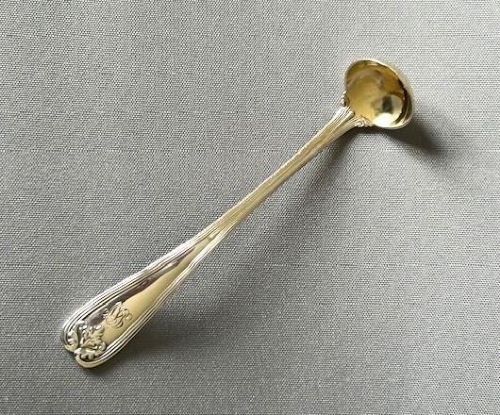
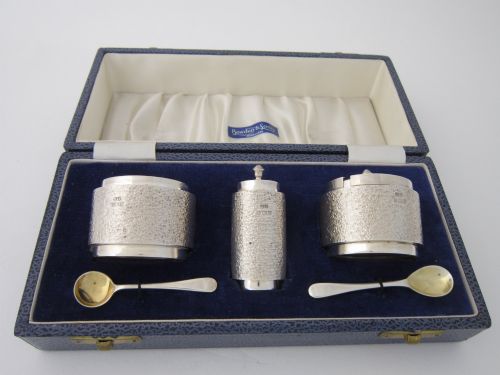
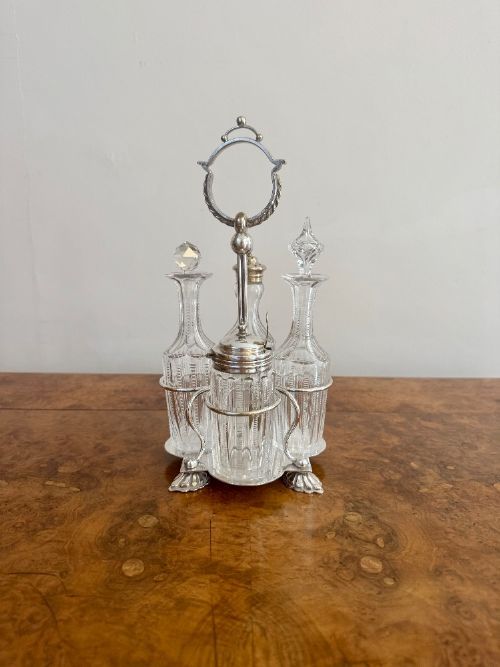
When you search for antique silver mustard, you encounter small table containers designed to hold prepared mustard, frequently accompanied by a small spoon and an internal glass liner. The pieces span Georgian, Victorian, and Edwardian periods, appearing as standalone pots or as part of larger cruet and condiment sets.
How they were made
Silversmiths utilised sterling silver or silver plate, often shaping bodies through piercing, hammering, or casting techniques. Pierced examples required meticulous hand-sawing to create openwork fretwork patterns.
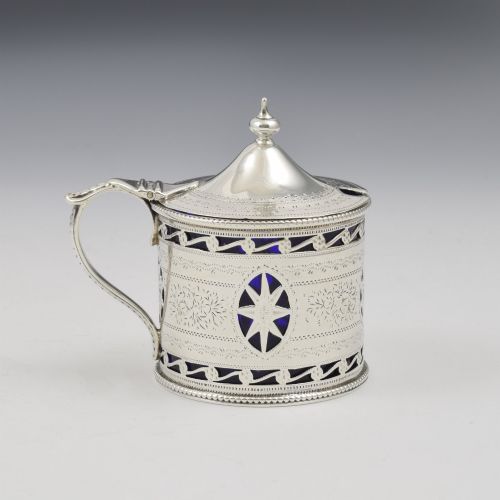
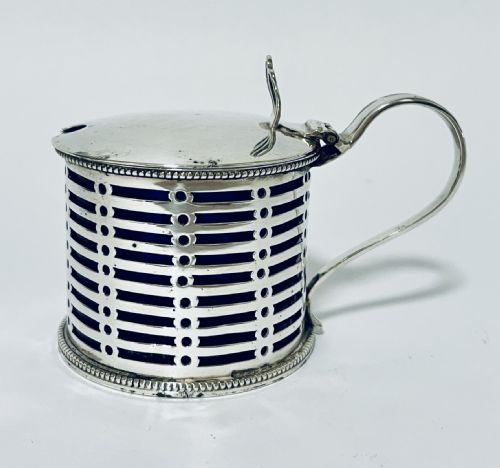
Many pots incorporate internal glass liners made from cobalt blue, cranberry, or clear cut glass to protect the metal from vinegar corrosion. Hinged lids with thumb-pieces and cast handles were soldered securely to the main bodies.
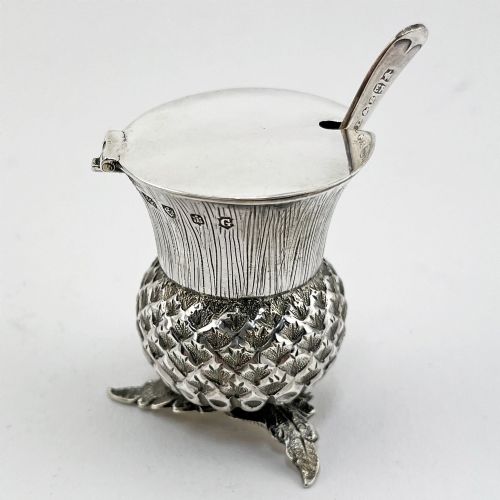
Some Victorian silver mustard pots take the form of miniature walnuts, apples, and milk cans to amuse diners at the table.
What varies in quality
Quality rests on the weight of the metal, the crispness of the chasing or piercing, and the integrity of the maker's marks. Heavier gauges of silver provide a substantial feel in the hand, whereas lighter pieces rely solely on pressed decoration.
The presence of an original matching glass liner and a well-fitting, balanced lid also distinguish finer specimens. Details such as cast figural legs or intricate hand-engraved hunting scenes elevate specific pieces above standard domestic tableware.
Nathan and Hayes·Charles and George Fox·Mappin Brothers·William Neale·Alfred Marston·Hamilton and Inches·Omar Ramsden
The Antique Silver Mustard Glossary
- Cruet set
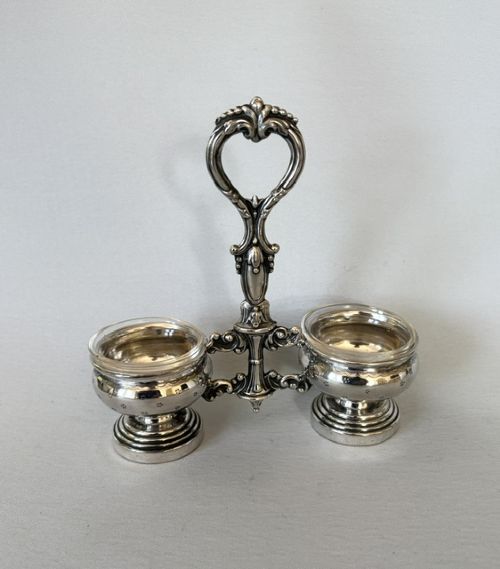
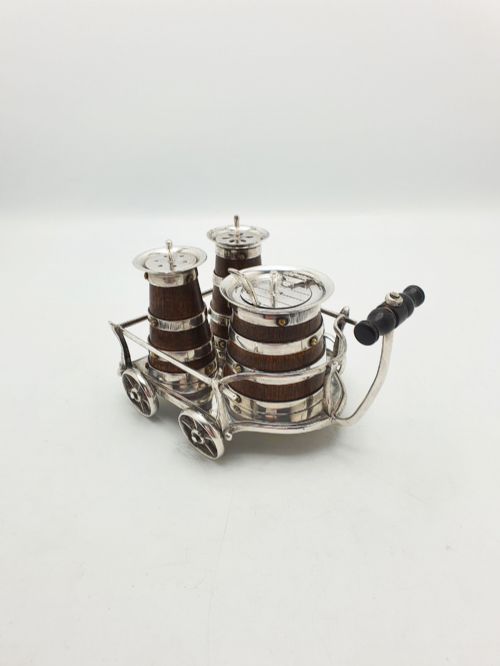
- A fitted stand holding multiple condiment bottles or pots for the dining table. These collections often unite oil, vinegar, salt, pepper, and mustard containers.
- Pierced work
- Metal decorated by cutting or sawing small apertures through the silver sheet. This technique lightens the visual weight and reveals coloured glass liners beneath.
- Drum pot
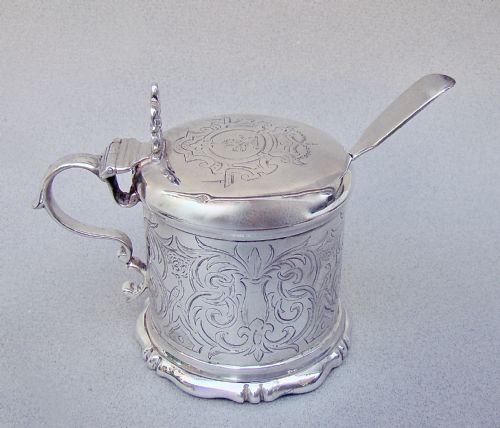
- A cylindrical mustard container shaped like a small drum, popular during the Georgian and Victorian eras. Flat tops and straight vertical sides define the silhouette.
- Liner
- A removable glass insert placed inside openwork or solid silver mustard pots. It prevents the mustard condiment from making direct contact with the silver.
Antique Silver Mustard: Frequently Asked Questions
What were antique silver mustard pots used for?
These vessels served prepared mustard at formal and domestic dining tables during breakfast, lunch, and dinner services. Guests used the accompanying small spoon to transfer condiment portions onto individual plates.
Over centuries, dining etiquette dictated that sauces and mustards be presented neatly in dedicated hollowware rather than common jars. Tableware collections expanded to include these small pots alongside salt cellars and pepper shakers.
How do I identify a Georgian mustard pot?
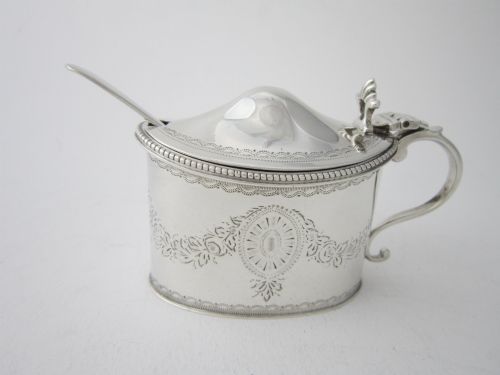
Georgian examples frequently take the form of straight-sided cylinders, known as drum pots, often featuring bright-cut engraving or pierced geometric panels. Makers such as Charles Fox produced restrained, elegant designs with flat hinged lids and simple scroll handles.
Handling a piece from this era reveals thinner gauge silver compared to later Victorian iterations, alongside crisp, hand-stamped hallmarks. Many rest on flat bases without the raised feet common in subsequent decades.
Why do some mustard pots have coloured glass liners?
Condiments containing vinegar and mustard seed are acidic and can tarnish or pit unprotected silver over extended periods. Inserting a removable glass liner protected the precious metal interior while adding vibrant colour through the openwork pierced sides.
Cobalt blue, cranberry, and clear cut glass liners became standard additions during the Victorian period. Finding a pot with its original matching glass insert adds notable interest for collectors.
How should I clean antique silver mustard pots?
Maintenance requires gentle washing in warm soapy water using a soft cloth, taking care to remove dried condiment residue from corners and hinges. Glass liners can be washed separately in standard dish water.
Harsh abrasive dips or excessive polishing thin the silver layer on plated items and wear away engraved details over time. Proper storage in dry conditions helps maintain the natural patina of the metal.