



Antique Silver Compact Mirror
An antique silver compact mirror is a pocket-sized accessory for powder and cosmetics, prized for its intricate metalwork and enamel decoration.
Antique Silver Compact Mirror
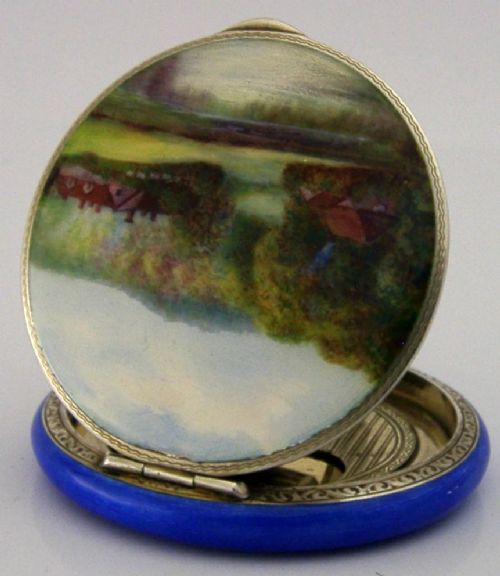
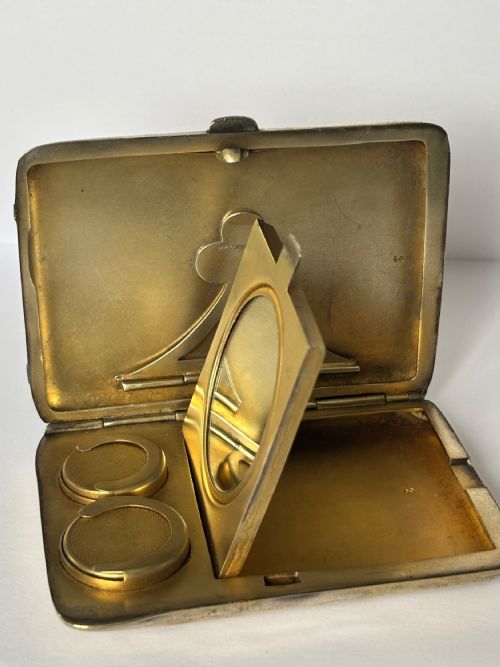
When you search for an antique silver compact mirror, you are looking at small vanity accessories designed for ladies' powder and cosmetics, spanning the early to mid-twentieth century. The selection ranges from simple pocket cases to elaborate combination pieces that include spaces for lipsticks, cards, or sovereign holders.
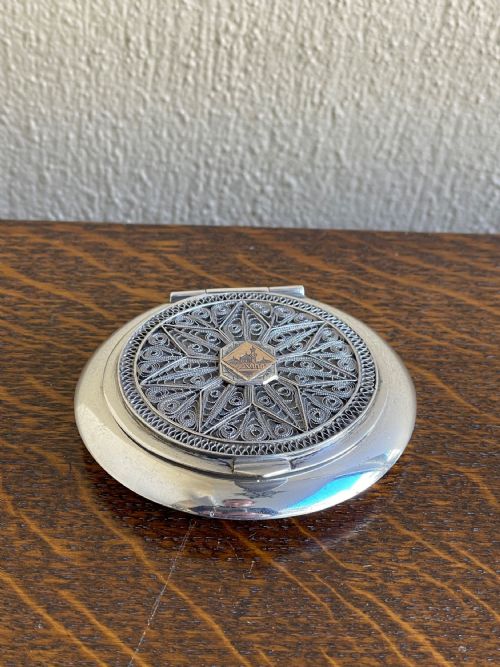
The pieces on this page heavily feature the geometric lines of the Art Deco movement, alongside traditional Persian filigree work and Chinese export silver forms. You will find items originating from British makers in Birmingham as well as continental European and American workshops.
Most examples date from the nineteen-twenties and nineteen-thirties, with occasional representations from the nineteen-hundreds and the nineteen-fifties. Common formats include powder compacts, vanity cases, and miniature purse mirrors equipped with interior mirror glass.
How they were made
Makers shaped these vanity accessories using sterling silver, German silver, and silver gilt, often applying engine-turning to create repetitive geometric surface patterns. Filigree work appears on Persian examples, while other pieces utilise cast metal techniques for structural rigidity.
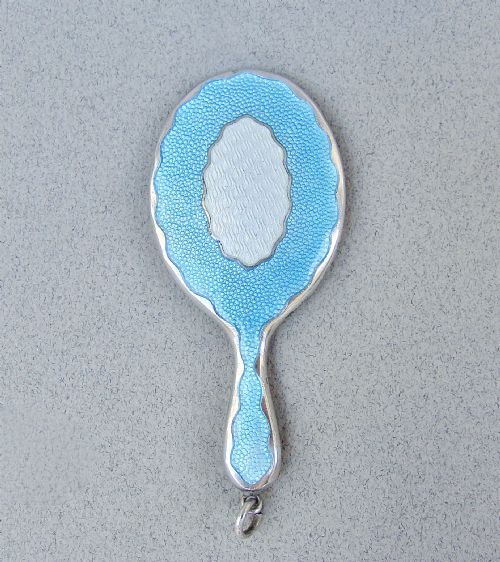
Vitreous enamel and guilloche enamel provide the vibrant coloured surfaces seen on many lids, frequently paired with hand-painted details. Interiors often incorporate functional elements such as mesh panels, suede linings, and fitted mirror glass.
What varies in quality
The distinction between standard items and superior examples lies in the complexity of the enamel work and the precision of the metal smithing. Finer pieces display intricate guilloche patterns beneath translucent enamel layers, whereas simpler items rely purely on plain or engine-turned metal.
The reputation of the maker and the inclusion of original fitted elements, such as interior suede linings or matching cosmetic tubes, elevate the standing of a piece within this category.
Henry Williamson·Henry Matthews·Richard Hudnut·Houbigant·Giuliano Spinelli
The Antique Silver Compact Mirror Glossary
- Guilloche enamel
- Decorative technique where an intricate geometric pattern is mechanically engraved beneath a translucent layer of coloured enamel. This method allows light to reflect through the glaze.
- Silver gilt
- Silver object that has been coated with a thin layer of gold on its surface. This treatment provides a warm golden tone while maintaining a silver base.
- Filigree
- Delicate metalwork formed from fine silver wires twisted and soldered together into openwork motifs. It appears frequently in Middle Eastern and Asian decorative items.
- Engine-turned
- Surface decoration produced by a specialised lathe that cuts precise geometric patterns into the metal. It adds texture and reduces glare on polished silver.
- Vitreous enamel
- Glass fused to the surface of metal through high-temperature firing. It creates a durable, glossy coloured finish that resists tarnishing.
Antique Silver Compact Mirror: Frequently Asked Questions
How do I clean an antique silver compact?
Clean the silver exterior gently with a specialised polishing cloth, avoiding any abrasive pastes that might scratch the metal. Take care to keep polishes and liquids away from enamel surfaces and interior mirrors.
Store the compact in a dry environment to prevent future tarnishing and protect the delicate hinges and clasps from unnecessary strain.
What is the difference between a compact and a vanity case?
A powder compact is specifically designed to hold loose or pressed face powder, usually including a sifter and a mirror inside the lid. Vanity cases are generally larger and built to accommodate multiple items simultaneously, such as coins, cards, lipstick, and compact sections.
Both forms served as essential social accessories during the early twentieth century, reflecting the fashion and grooming habits of the period.
How can I date my silver compact?
Dating relies heavily on hallmarks stamped into the metal, which indicate the assay office, the specific year of production, and the maker's mark. Stylistic clues, such as Art Deco geometric motifs or mid-century Italian designs, also help narrow down the manufacturing decade.
Examining the manufacturing techniques and interior fittings provides further context for when the accessory was produced.
Are these compacts still usable today?
Many of these pieces remain fully functional, featuring working hinges, secure clasps, and intact interior mirrors suitable for daily use. However, due to their age and delicate enamel work, many collectors prefer to treat them as display objects.
If you choose to use one, inspect the interior powder wells and mesh linings to ensure they are clean and free of old cosmetic residue.