



Antique Silver Chatelaine Flask
These antique silver chatelaine flasks are practical scent bottles and vanity accessories designed to hang from a belt, offering portable elegance.
Antique Silver Chatelaine Flask
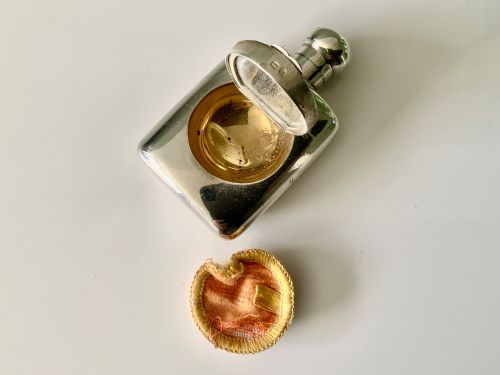
An antique silver chatelaine flask is a small container for perfume or salts that ladies suspended from a decorative waist-hook during the nineteenth and early twentieth centuries. These miniature vessels allowed the wearer to carry scented water or smelling salts close at hand while attending social events.
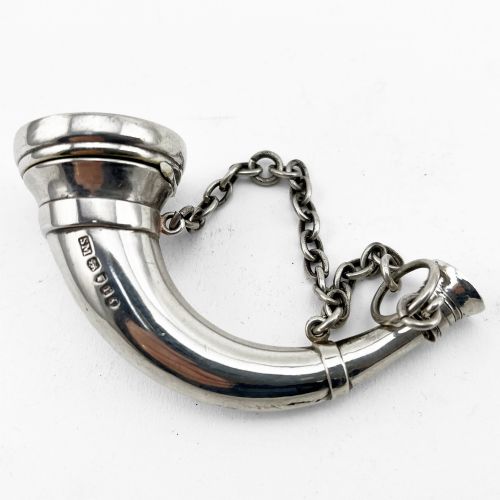
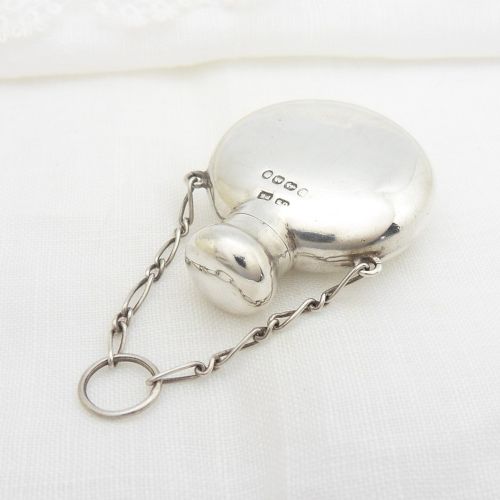
The examples gathered here span from the Victorian era into the Art Deco period, taking forms such as scent bottles, perfume flasks, and powder compact combinations. Most pieces feature a secure cap and a suspension ring meant to attach directly to a chatelaine chain.
Victorian sterling silver designs predominate on this page, often paired with coloured glass inserts like opaline or cranberry glass. Makers from Birmingham and London produced these portable accessories alongside continental workshops, reflecting changing fashions in personal adornment.
How they were made
Silversmiths shaped the outer jackets using sterling silver or continental silver, frequently embellishing the metal with repoussé work, chasing, or cast cherub and angel decorations. These silver mounts were custom-fitted to hold delicate glass containers securely within the metal framework.
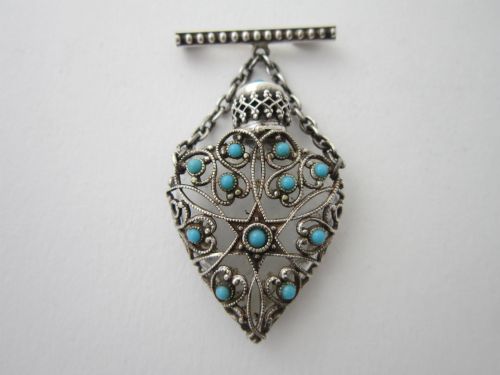
The internal vessels often utilised specialised glass techniques, including opaline glass, triple overlay glass, and cranberry glass. Some pieces incorporated cabochon stones such as turquoise to accent the silver mounts and provide a colourful contrast.
Antique Silver Chatelaine Flask Retail Price Guide 2026
Typical asking prices for silver chatelaine flask among the pieces listed under this phrase on Sellingantiques today, from the lower quarter to the upper quarter. They describe what is for sale here now, not the wider market.
Victorian ladies trusted these tiny flasks to revive them from tight corsets when a ballroom became too warm.
What varies in quality
The distinction between standard pieces and superior work lies in the crispness of the silversmith's chasing and the complexity of the glass body. Finely articulated repoussé decoration and undamaged triple overlay glass indicate a higher grade of craftsmanship.
Makers known for exceptional standards, such as Sampson Mordan or Saunders & Shepherd, demonstrate superior attention to detail in their hinged lids, secure stoppers, and well-balanced miniature proportions.
Sampson Mordan·Saunders & Shepherd·S. Morden & Co
The Antique Silver Chatelaine Flask Glossary
- Chatelaine
- A decorative belt hook and hook-suspended chain assembly used to carry keys, watches, and scent flasks. It served both a utilitarian and a decorative function for the Victorian lady.
- Repoussé
- A metalworking technique where the silversmith hammers the design from the reverse side to form a raised relief on the front. This method creates the dimensional motifs seen on many nineteenth-century mounts.
- Opaline glass
- An opaque or translucent glass developed in the nineteenth century, often appearing in soft pastel shades. It provides a smooth, milky background for silver mounts.
- Cranberry glass
- A rich red glass coloured with gold chloride during the manufacturing process. It was widely utilised for Victorian scent bottles and decorative tableware.
Antique Silver Chatelaine Flask: Frequently Asked Questions
How do I wear one today?
While original chatelaine hooks are scarce, you can suspend these flasks from a modern silver chain or display them securely on a decorative stand.
Many collectors prefer to keep them in dedicated vitrines to protect the delicate glass and intricate silver mounts.
Are the stoppers original?
Original inner glass or cork stoppers occasionally survive alongside the screw caps, though many have been replaced over the centuries.
Examining the fit between the cap and the neck helps determine if the components share the same period of origin.
How do I date a flask?
Hallmarks stamped onto the silver mounts provide the most reliable dating evidence, indicating the assay office and year of manufacture.
Stylistic cues, such as the heavy ornamentation of the Victorian era or the geometric lines of the 1920s, also point to the correct period.