
Antique Silver Christening
These antique silver christening pieces span from Georgian tankards to Art Deco beakers, offering traditional silver gifts meant to mark a child's birth or baptism.
Antique Silver Christening
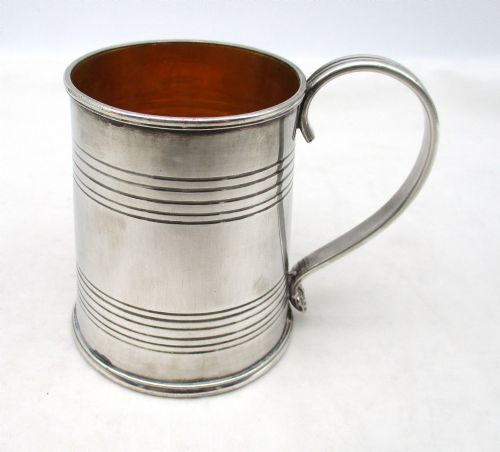
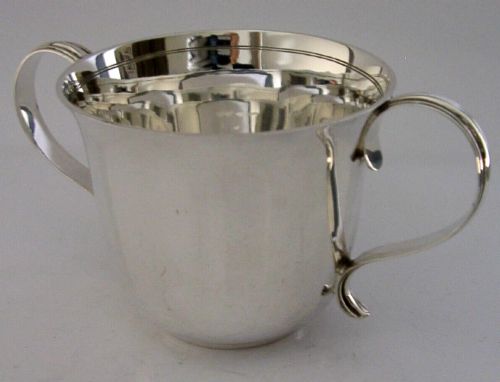
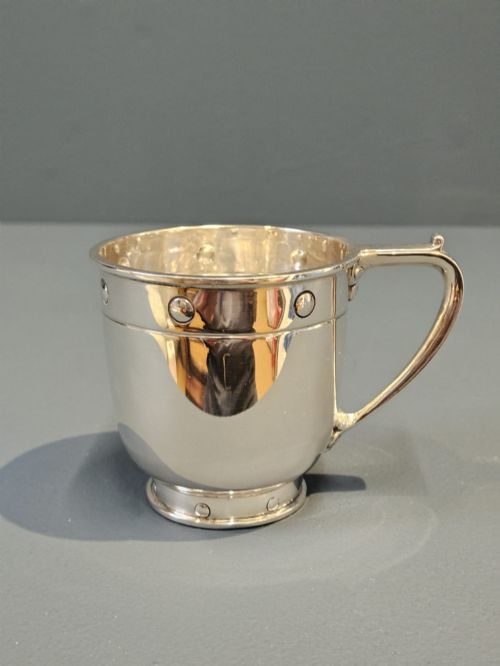
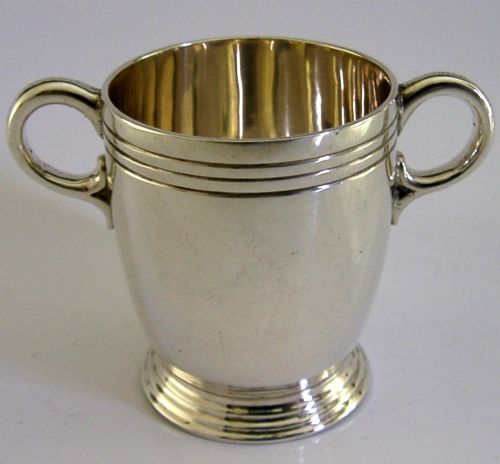
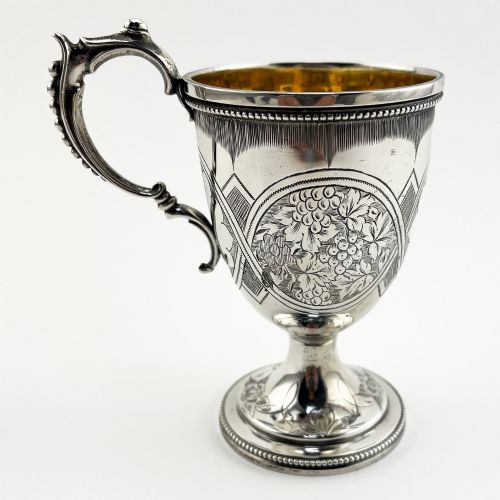
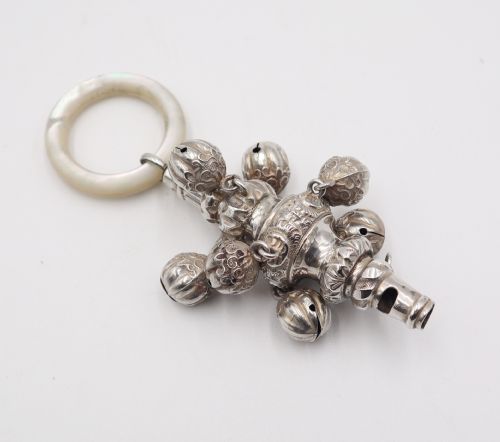
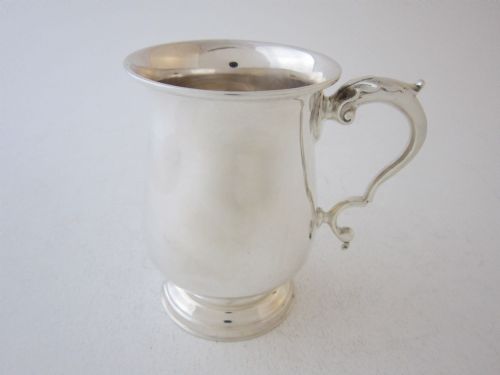
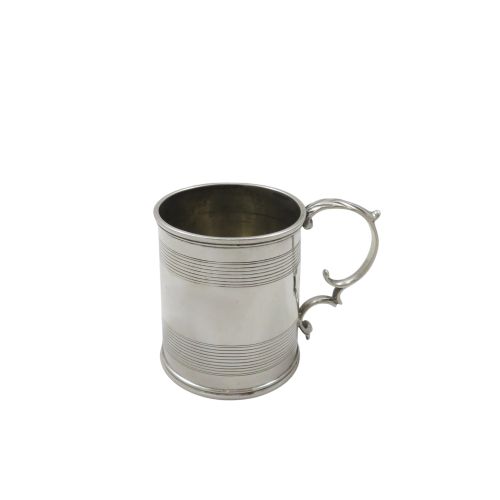
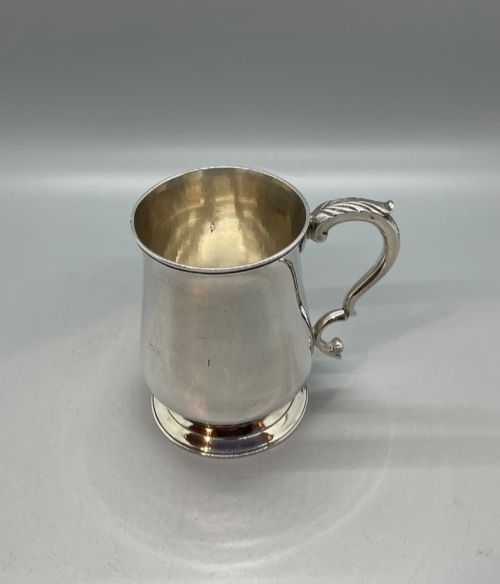
When you search for antique silver christening items, you encounter a specialised category of domestic metalwork intended for early childhood ceremonies and milestones. These objects traditionally include mugs, tankards, porringers, bowls, rattles, spoons, and boxed cutlery sets designed specifically for infants.
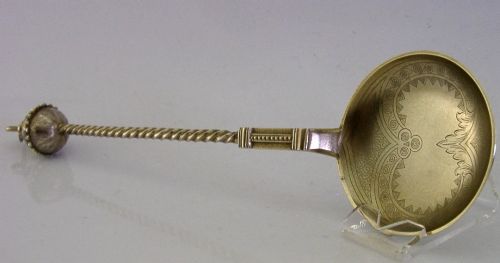
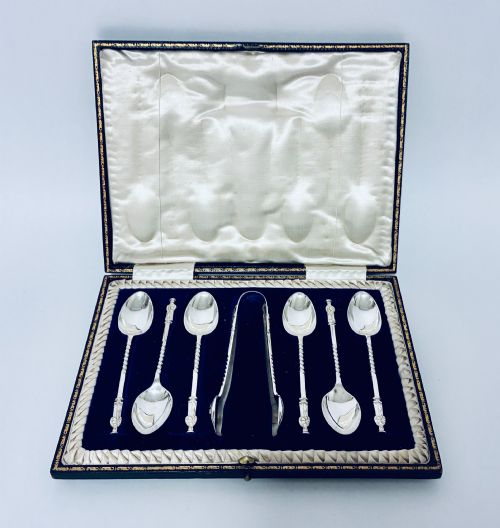
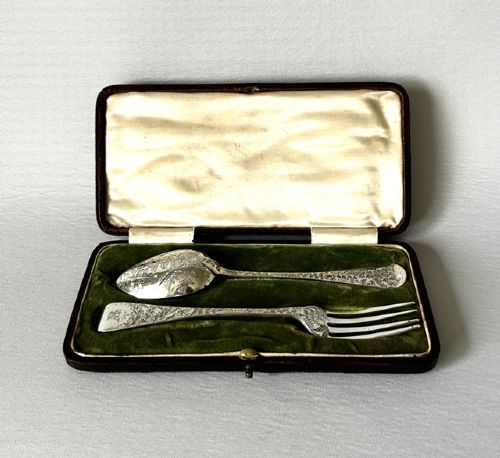
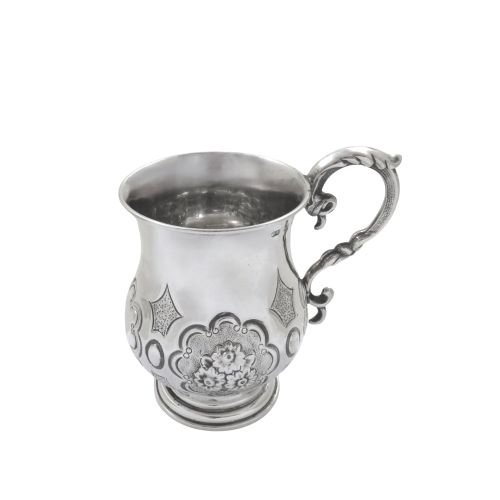
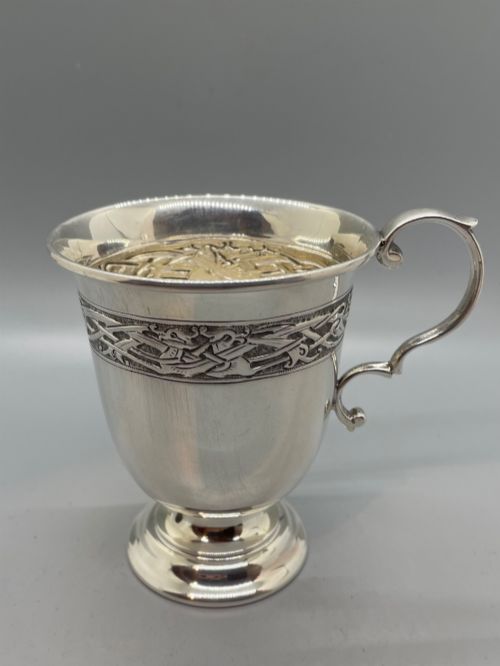
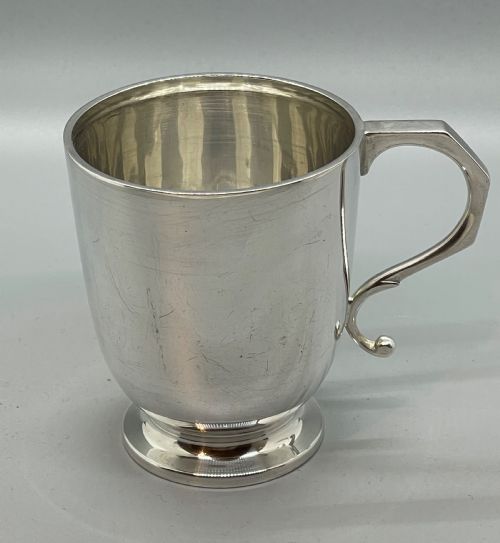
The pieces appearing on this page range from Georgian and Victorian eras through the Edwardian period into Art Deco and mid-century modern designs. Mugs and tankards dominate the selection, often accompanied by apostle spoons, baptismal spoons, and multi-piece boxed sets featuring knives and forks.
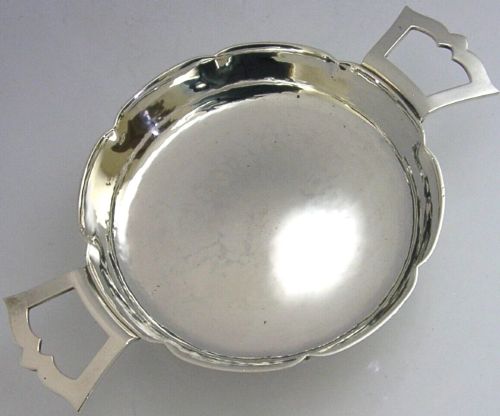
Makers utilised these domestic forms to create durable keepsakes that combined utility with sentimental value. Whether you find a plain Victorian mug or a planished Arts and Crafts quaich, each item reflects the social customs surrounding birth gifts across past centuries.
How they were made
Silversmiths constructed these items primarily from sterling silver, occasionally employing silver gilt, gold gilt, or Old Sheffield plate over a base metal. Many pieces incorporate supplementary materials such as mother-of-pearl for rattle handles, alongside fitted presentation cases lined in silk or velvet.
Manufacturing techniques evolved across the periods represented, moving from hand-raised bodies with chased or embossed floral decoration in the Victorian era to clean lines and planished surfaces during the Arts and Crafts and Art Deco movements. Makers also utilised casting for handles, applying figural elements like owls or scrollwork to standard vessel forms.
Keep an eye out for silver mugs featuring whimsical animal handles shaped like owls or birds.
What varies in quality
The calibre of a piece often rests upon the weight of the metal and the crispness of any hand-engraved or embossed ornamentation. Heavier gauges of sterling silver provide structural substance, whereas thinner vessels or plated items lack the same tactile permanence.
Barker Bros·G R Collis·R E Stone·Joseph Angell·Garrards
The Antique Silver Christening Glossary
- Quaich
- A traditional Scottish two-handled drinking vessel with a shallow bowl, often adapted as a christening cup in silver.
- Porringer
- A small bowl with one or two horizontal flat handles, traditionally used for porage or broth and frequently given as a christening gift.
- Planished
- A surface finish showing the subtle, rhythmic hammer marks left by the silversmith during the final shaping process, typical of Arts and Crafts silver.
- Apostle spoon
- A spoon featuring the figure of an apostle or saint cast on the terminal of the handle, often sold in sets as a traditional baptismal gift.
- Old Sheffield plate
- An early form of composite metal produced by fusing a thin sheet of silver to a thicker copper ingot before rolling and shaping.
Antique Silver Christening: Frequently Asked Questions
What is an antique silver christening mug used for?
These mugs were traditionally given as baptismal gifts or keepsakes to mark the birth of a child. While some were sized for actual use by an older child, many served purely as decorative presentation pieces.
Over generations, families engraved these vessels with the child's initials and birthdate. Today, they remain popular ornamental items for nurseries and display cabinets.
How do I identify the date of a silver christening set?
British silver typically carries hallmarks stamped directly into the metal. These marks include symbols for the assay office, the maker's stamp, and a specific date letter.
Matching these hallmarks against published assay records reveals the exact year and town of manufacture. Boxed sets may also retain original retailer labels inside the lid.
What comes in a three-piece christening set?
Standard Victorian and Edwardian three-piece sets usually comprise a knife, a fork, and a spoon. These utensils were scaled down for a child's small hands.
They frequently arrive inside fitted leather cases lined with velvet or silk. Some variations substitute a small mug or porringer in place of one of the cutlery pieces.
Are silver rattles safe for modern infants?
Antique silver rattles are generally collected as display objects rather than toys for daily use. Older pieces may feature delicate mechanisms, mother-of-pearl components, or construction standards that differ from modern safety regulations.
Collectors prefer to preserve them in original condition within display settings. The inclusion of bells and teething elements reflects historical childcare practices.