


Boxed Christening Set
A boxed christening set is a traditional silver gift, usually comprising a knife, fork, spoon or egg cup, preserved in its original fitted case.
Boxed Christening Set
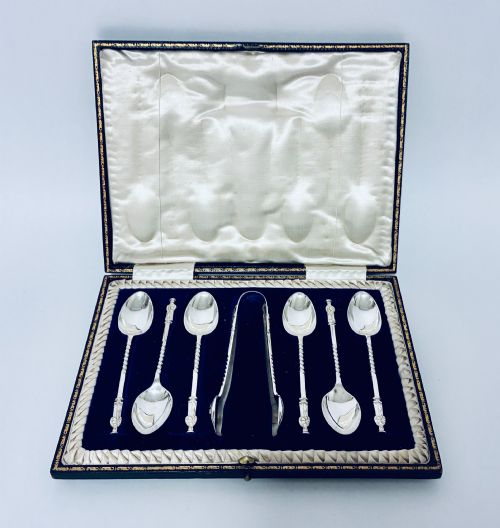
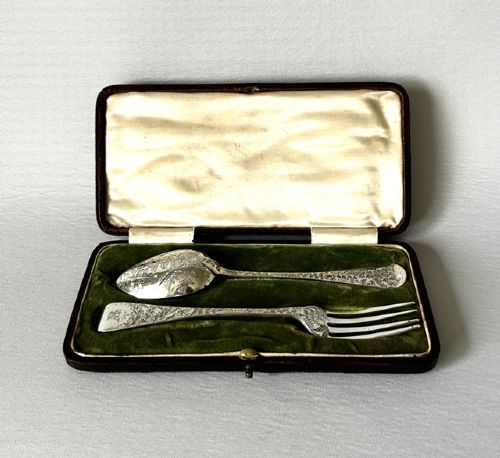
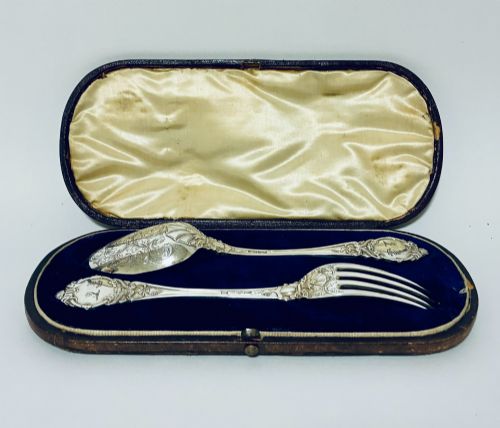
When you search for a boxed christening set, you encounter precious silver presentation wares designed to mark a birth or baptism. The pieces range from single spoon and pusher combinations to three-piece place settings and more elaborate sets including mugs or bowls.
The examples seen here span the Victorian, Edwardian and Georgian periods, alongside pieces from the early twentieth century. Most frequently, you meet Victorian sterling silver sets featuring fitted leather or leatherette cases lined with silk or velvet.
Makers in the past include notable firms such as Tiffany & Co and Elkington & Co, sitting alongside provincial British hallmarked items. Sets from this era often include apostle spoons, child-sized knives and forks, or specialist items like food pushers and egg cups.
Materials and Construction
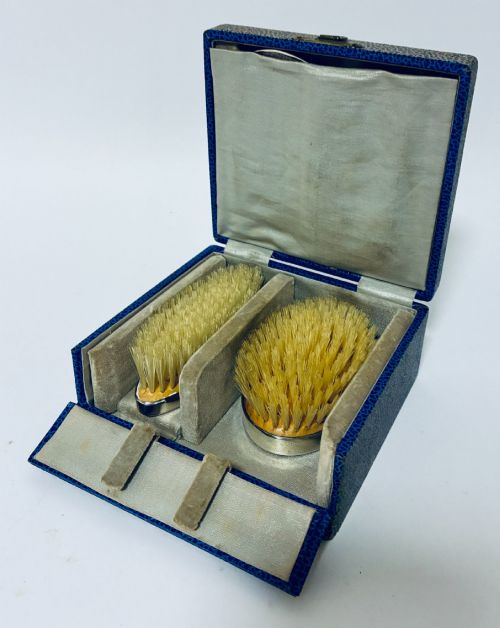
The metalwork relies primarily on sterling silver, shaped through traditional smithing and stamping techniques then finished with clear hallmarks. Handles may integrate natural bristle for brush components in larger vanity-style sets, though solid silver predominates for eating utensils.
Enclosing these silver components are rigid cases built from wood or thick card, clad in leather, faux leather or leatherette. The interiors feature moulded recesses lined with silk or velvet to secure each utensil snugly within the presentation box.
Listings for this phrase feature Victorian, Edwardian and Georgian periods alongside materials including silk, velvet, leather and sterling silver.
Judging Quality and Completeness
Quality rests significantly on the integrity of the original presentation box and its internal fabric lining. Sets that retain their fitted silk or velvet padding alongside an undamaged leather or leatherette exterior command greater interest.
The level of ornamentation on the silver itself separates standard utilitarian items from finer presentation pieces. Complete multi-piece sets containing matching forks, knives, spoons or egg cups demonstrate higher original craftsmanship than assembled groupings.
Tiffany & Co·Elkington & Co·Goldsmith & Silversmith
The Boxed Christening Set Glossary
- Sterling silver
- An alloy containing ninety-two point five percent silver and seven point five percent other metals, typically copper, standard for British plate.
- Pusher
- A flat-ended silver utensil designed to assist young children in guiding food onto a spoon or fork without a traditional knife.
- Leatherette
- A simulated leather material made from a cloth base coated with a plastic or PVC resin, commonly found on later nineteenth-century cases.
- Apostle spoon
- A spoon featuring the figure of an apostle or saint cast upon the terminal end of the handle, frequently seen in commemorative sets.
- Hallmark
- An official stamp applied by an assay office indicating the purity of the metal, the maker and the year of manufacture.
Boxed Christening Set: Frequently Asked Questions
What is inside a boxed christening set?
These sets typically contain items like silver spoons, forks, knives, food pushers or egg cups tailored for small hands.
Many also include a tea cup, saucer or specialised feeding spoon housed in a dedicated fitted presentation case.
Who made these silver sets?
Production was handled by major silversmithing firms, high-end retailers and regional makers across Britain and beyond.
Well-known houses like Tiffany and Elkington produced notable examples alongside unrecorded provincial silversmiths.
How do I date a christening set?
Dating relies primarily on the hallmarks stamped onto the silver components, which indicate the specific assay office and year.
The style of the exterior box, lining materials and typography inside the lid also offer strong chronological clues.
Were these sets meant to be used?
Most sets were created as keepsake gifts for infants rather than for daily domestic service.
Their survival in fitted cases suggests they were preserved as family heirlooms rather than worn out through everyday dining.