

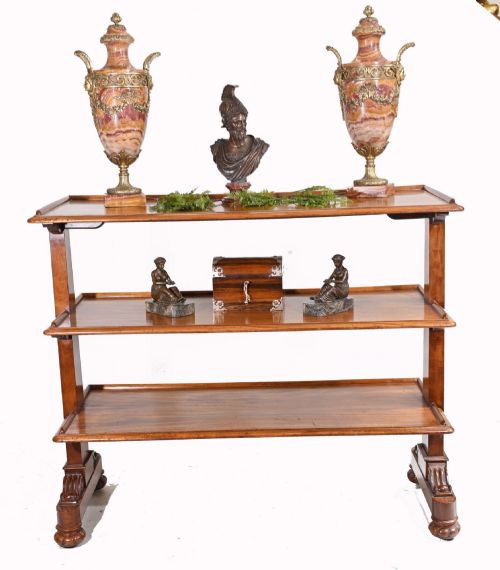
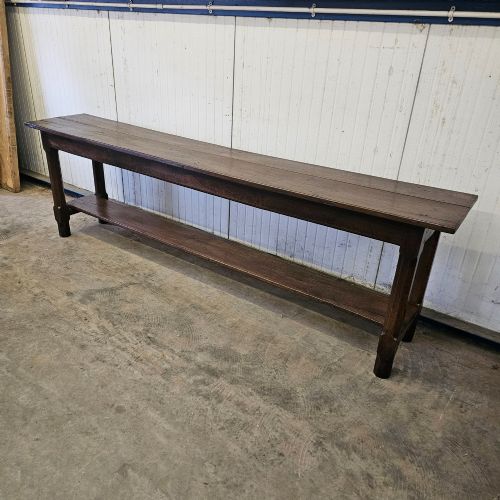
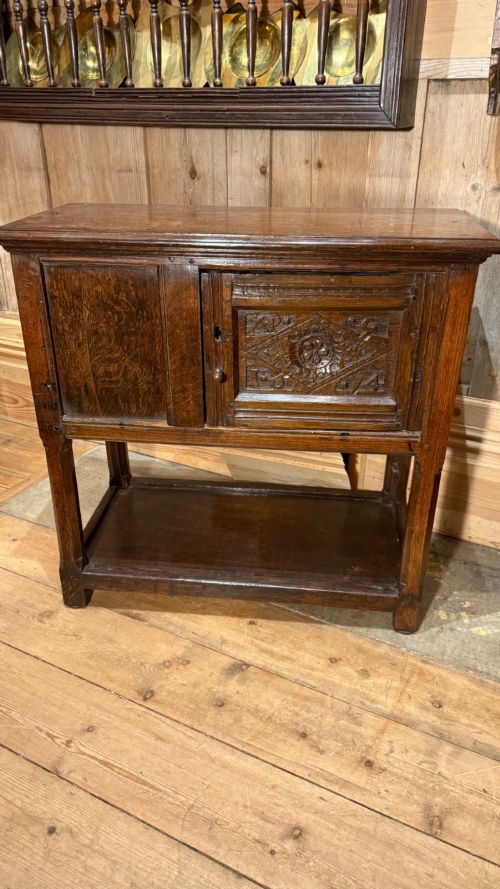
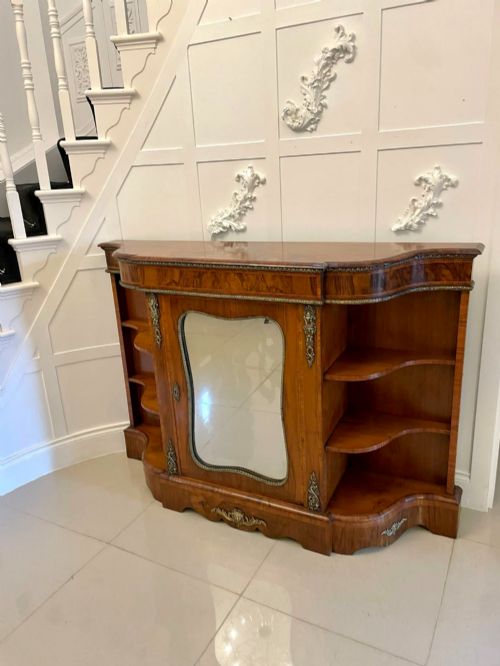
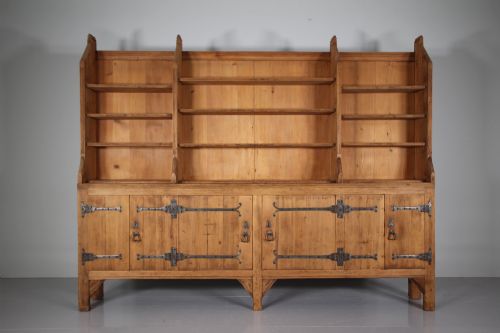
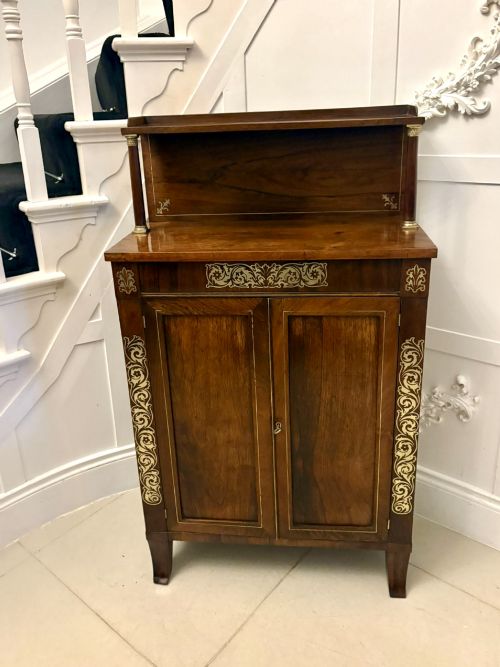


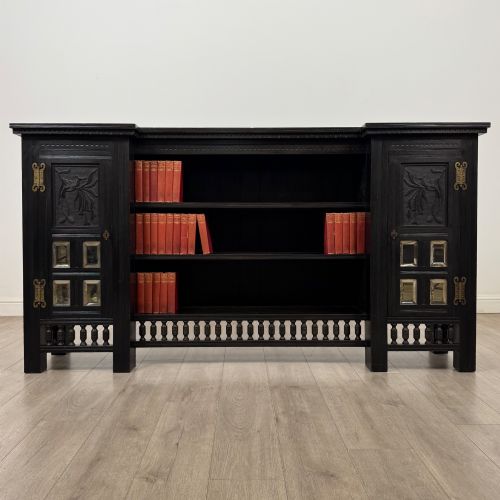
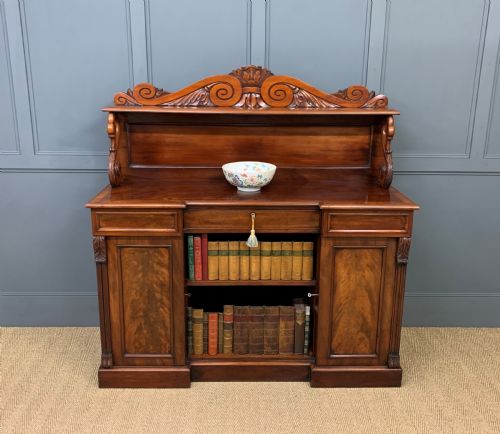
Antique Sideboard with Shelves
An antique sideboard with shelves provides a sturdy foundation for display and storage, uniting practical timber cabinetry with accessible upper tiers.
Antique Sideboard with Shelves
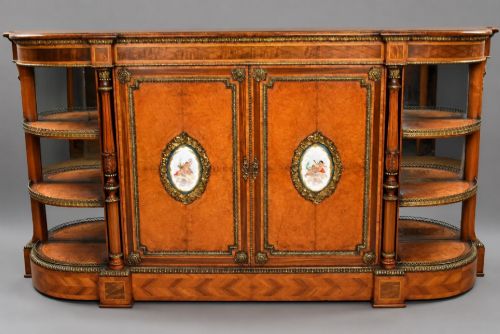
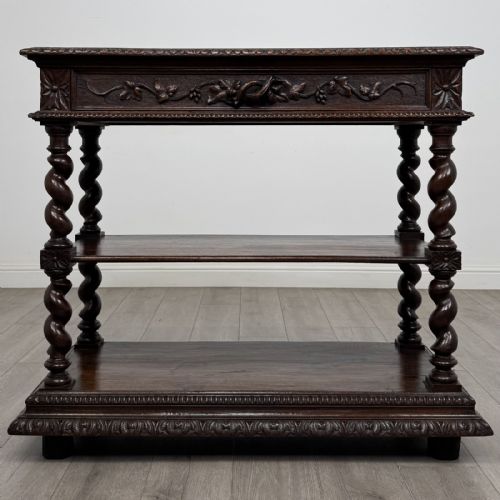
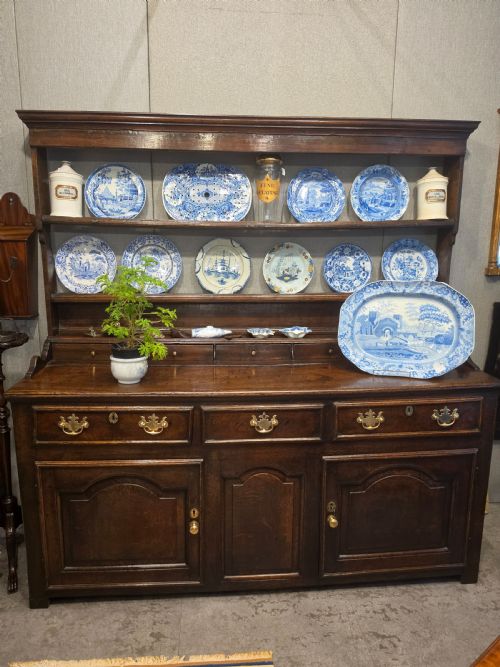
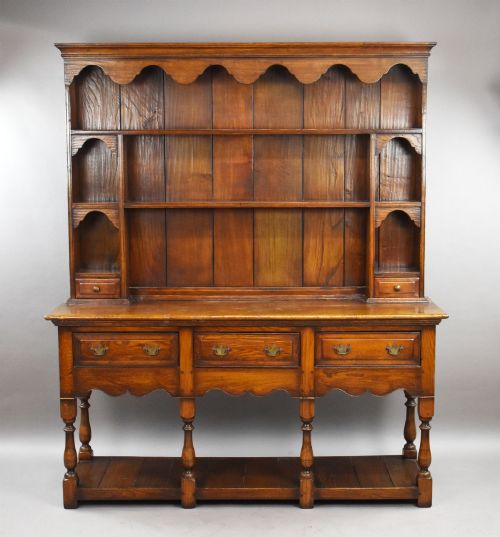
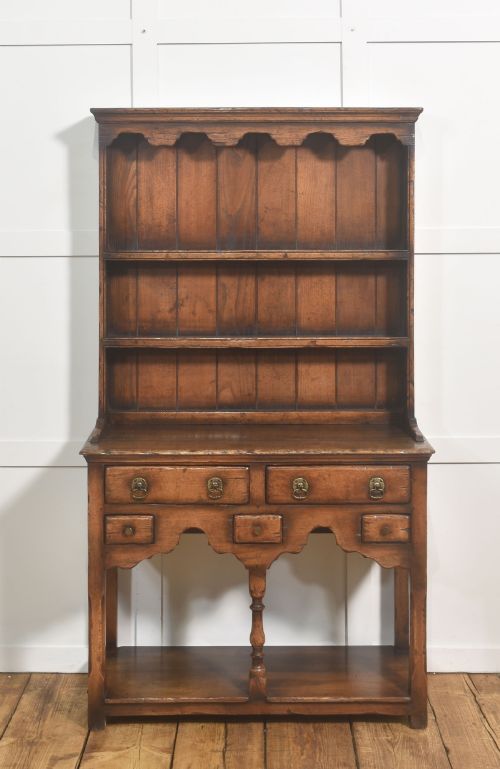
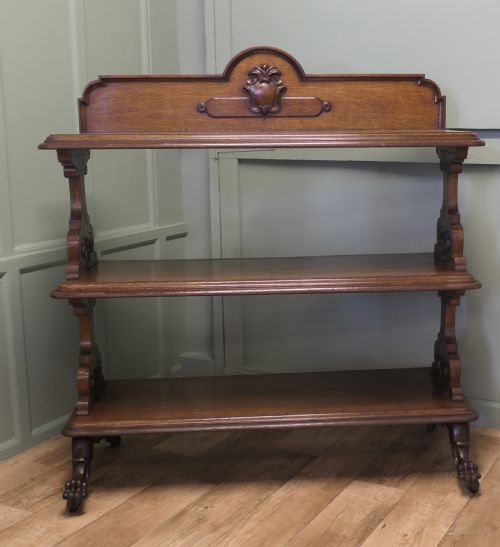
An antique sideboard with shelves encompasses a diverse group of case furniture designed to hold tableware, books or ornaments across various periods. When you search for this phrase, you encounter forms such as oak dressers with plate racks, mahogany chiffoniers with tiered superstructures, and walnut side cabinets featuring open or glazed upper compartments.
The selections span centuries of cabinet-making, drawing heavily from Georgian, Regency, and Victorian eras alongside English Country and continental traditions. Most examples combine a lower timber base enclosing cupboards or drawers with fixed upper shelving, plate racks or mirrored backs.
Regional variations appear frequently, from Shropshire and Welsh oak dressers to French serving tables and Scottish oak pieces. Buyers select these items to anchor a dining room or hallway, using the integrated shelves to exhibit ceramics or collections while concealing everyday items below.
Materials and construction
Cabinet-makers relied primarily on solid timbers like oak, mahogany, and pine, often enhancing finer pieces with flame mahogany veneer, burr walnut, or figured walnut. Structural elements frequently incorporated secondary woods, while brass handles, ormolu mounts, and glass panes added decorative and functional contrast.
Joinery techniques matched the period and timber, utilising sturdy dovetail joints for drawer construction and pegged mortise and tenon joints in earlier country pieces. Carved details, inlay work, and turned supports required specialist hand tools, resulting in robust carcases capable of supporting heavy rows of shelving and displayed wares.
Antique Sideboard with Shelves Retail Price Guide 2026
Typical asking prices for sideboard with shelves among the pieces listed under this phrase on Sellingantiques today, from the lower quarter to the upper quarter. They describe what is for sale here now, not the wider market.
Materials represented across the inventory include rich hardwoods like mahogany, rosewood, and satinwood alongside rustic pine and polished brass hardware.
Judging the standard
Quality in these pieces depends heavily on the selection of timber and the crispness of any carved or inlaid ornamentation. Superior examples display carefully matched veneers, well-figured grain, and meticulous joinery that remains tight and stable over centuries of use.
Proportion and originality also dictate the standing of a piece, distinguishing workshop-produced items from later alterations or marriages of separate upper racks and lower bases. The integration between the sideboard base and the attached shelves reveals the intentionality of the original design.
Gillows
The Antique Sideboard with Shelves Glossary
- Chiffonier
- A low sideboard or cabinet, typically featuring a set of shelves or a mirrored back on the upper surface. This form gained popularity during the Regency and Victorian periods for dining and drawing rooms.
- Dresser
- A kitchen or dining room piece combining a lower storage base of drawers and cupboards with an upper plate rack or shelving unit. Country examples often feature pot boards or open lower tiers.
- Credenza
- A fine cabinet or sideboard, frequently associated with Victorian and continental styles and often embellished with ormolu mounts and glazed doors. These pieces served both display and storage functions.
- Plate rack
- A set of open wooden shelves affixed to the top of a dresser or sideboard, specifically grooved or railed to hold plates and platters upright. They allow for the decorative exhibition of ceramic collections.
- Pot board
- An open lower shelf positioned beneath a country dresser base, traditionally used for storing pots and heavy kitchen utensils. This feature is particularly characteristic of earlier oak furniture.
Antique Sideboard with Shelves: Frequently Asked Questions
What is the difference between a dresser and a chiffonier?
A dresser generally incorporates a substantial lower cabinet or base paired with an open upper rack designed for displaying plates and kitchenware. These pieces often lean towards rustic or country traditions in oak and pine.
A chiffonier is typically a more formal, smaller sideboard from the Regency or Victorian era featuring enclosed lower storage beneath a tiered superstructure or mirrored back. They were designed primarily for sitting rooms and dining parlours rather than utility spaces.
How were these pieces used in historic homes?
These items served as both functional storage units and display stages for household wealth and hospitality. The lower cupboards and drawers held linens, cutlery, and serving dishes.
The upper shelves allowed families to exhibit prized ceramics, silver, and glassware to guests. In kitchens and dining rooms, they kept everyday dining equipment close at hand.
Are the upper shelves usually detachable?
In many dressers and chiffoniers, the upper rack or shelving unit is physically separate from the lower base and simply sits or screws securely on top. However, transport and placement require care because some larger Victorian and Georgian examples were constructed as a single integrated carcase.
Buyers should examine the structural joints where the shelf meets the sideboard to determine if it was manufactured as one unified piece.
How do I identify a Georgian piece from a Victorian one?
Georgian furniture generally displays restrained classical proportions, rectilinear lines, and favored timbers such as figured mahogany and country oak without excessive ornamentation. The construction often relies on hand-cut dovetails and simpler brass hardware.
Victorian pieces frequently embrace bolder revival styles like Gothic or Jacobean, utilising heavier woods like burr walnut, tiger oak, and elaborate ormolu mounts. Mirrored doors and glazed compartments also become much more common in the later nineteenth century.