

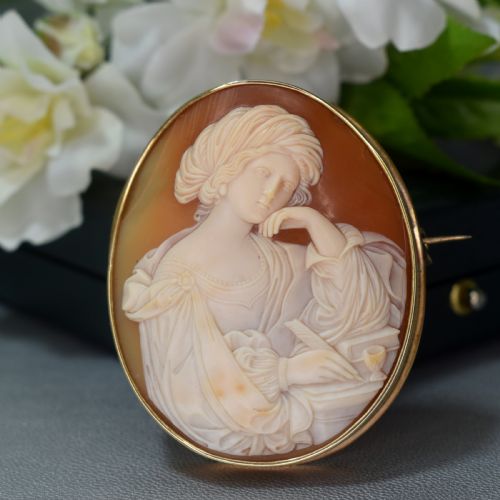


Antique Shell Cameo
These antique shell cameo pieces bring carved classical profiles and mythological scenes into wearable Victorian gold frames.
What antique shell cameo pieces are
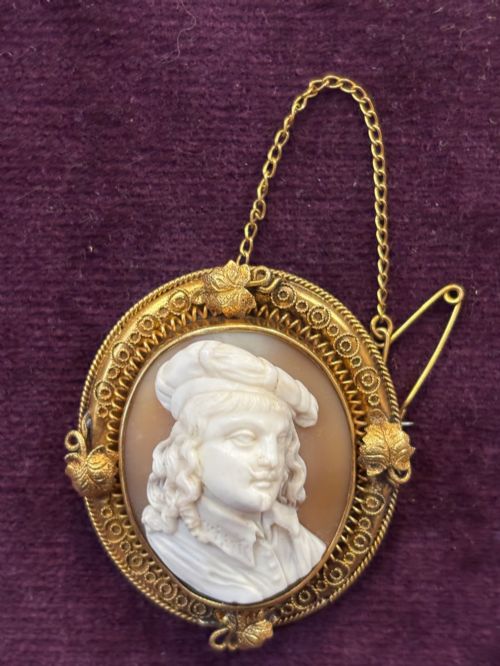
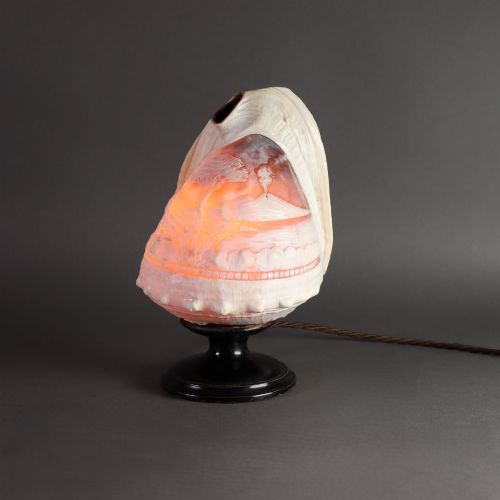
An antique shell cameo presents a carved relief portrait, mythological figure or historical scene layered on natural shell. Buyers searching this phrase will most frequently encounter Victorian brooches and pendants shaped from these organic materials.
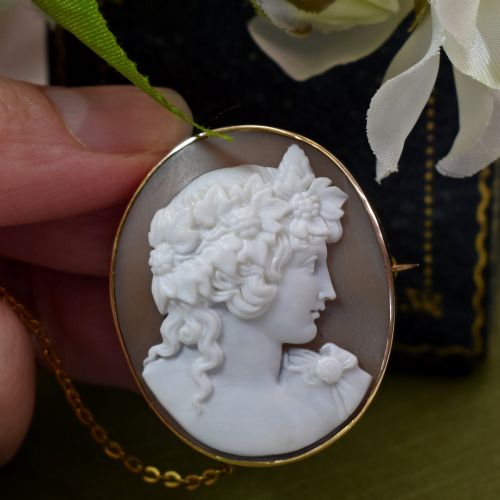
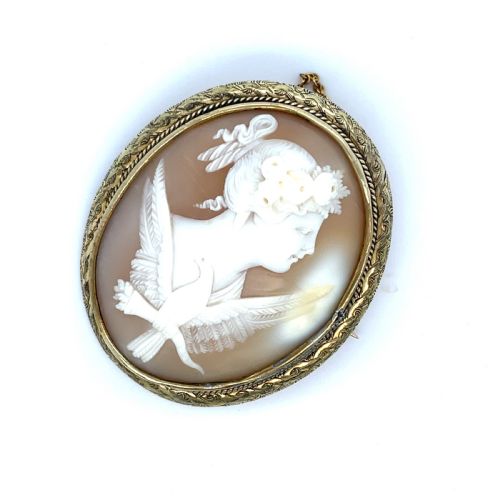
The selections span the nineteenth century, including specific Victorian examples featuring classical heads, cherubs and figural subjects. These ornaments double as brooches and pendants, often set within ornate yellow gold mounts.
How they were made
Carvers cut directly into the varying colour layers of marine shells, such as conch, to isolate a pale white relief against a darker background. Artisans then mounted these hand-carved shells into secure frames of nine carat, fourteen carat, fifteen carat, eighteen carat, twenty carat or twenty-one carat yellow gold.
Frames frequently incorporate twisted wirework, applied bead decoration, or seed pearls to accent the central carved shell. Some designs function dually as pendants and brooches, combining structural metalwork with delicate relief carving.
Retail Price Guide 2026
Typical UK retail prices for shell cameo, calculated from the Sellingantiques database of over a million retail prices indexed since 2003. This retail price guide relies exclusively on Sellingantiques data; no external sources or auction records are used, so the figures do not describe the wider market.
What varies in quality
Mount quality further separates these ornaments, with heavier gold frames, higher carat standards, and integrated seed pearl decoration marking superior craftsmanship.
The Antique Shell Cameo Glossary
- Cameo
- A method of carving an object such as a gemstone or shell so that a relief image stands out distinctly from a background of a different colour. This technique exploits the natural colour banding found in shells.
- Maenad
- A female follower of Dionysus, frequently depicted in classical Greek and Roman art with flowing hair and ivy wreaths. These mythological subjects appear carved into Victorian shell pieces.
- Conch shell
- A large spiral shell utilised by carvers for its pinkish or orange-peach background tones. These shells provide the distinct backdrop seen in specific antique portrait carvings.
- Pendant
- An item of jewellery that hangs from a chain or cord around the neck. Many Victorian cameo pieces feature hidden or integrated loops allowing them to function as both brooches and pendants.
Frequently Asked Questions
How do I wear a cameo brooch?
Pin these gold-framed shell carvings securely onto heavy fabrics such as wool jackets, scarves, or lapels. The weight of the metal mount requires sturdy cloth to support the piece without sagging.
Many examples include integrated loops that allow conversion to a necklace pendant using a suitable gold chain.
Are all cameos Victorian?
The majority of pieces found in this category originate from the nineteenth century during the Victorian era. However, the archive demonstrates that designs also extend into twentieth-century periods such as the nineteen-twenties.
Stylistic cues and mount characteristics help separate mid-nineteenth-century work from later productions.
What metals were used for frames?
Makers housed these carved shells in varying purities of yellow gold, ranging from nine carat up to twenty-one carat gold. Frames were occasionally accented with seed pearls or marcasites.
The metal purity often reflects the overall quality and ambition of the mounting.
What subjects appear on the carvings?
Carvings frequently display classical Greek and Roman mythological figures, including Menelaus, Dionysos, Maenads, and the Three Graces. Profile portraits of ladies and cherubs also recur across the selection.
These motifs draw directly from neoclassical design revivals popular throughout the nineteenth century.