


Antique Shell Cameo Pin
An antique shell cameo pin brings classical profiles and mythological scenes to life, carved directly into natural shell and mounted for wear.
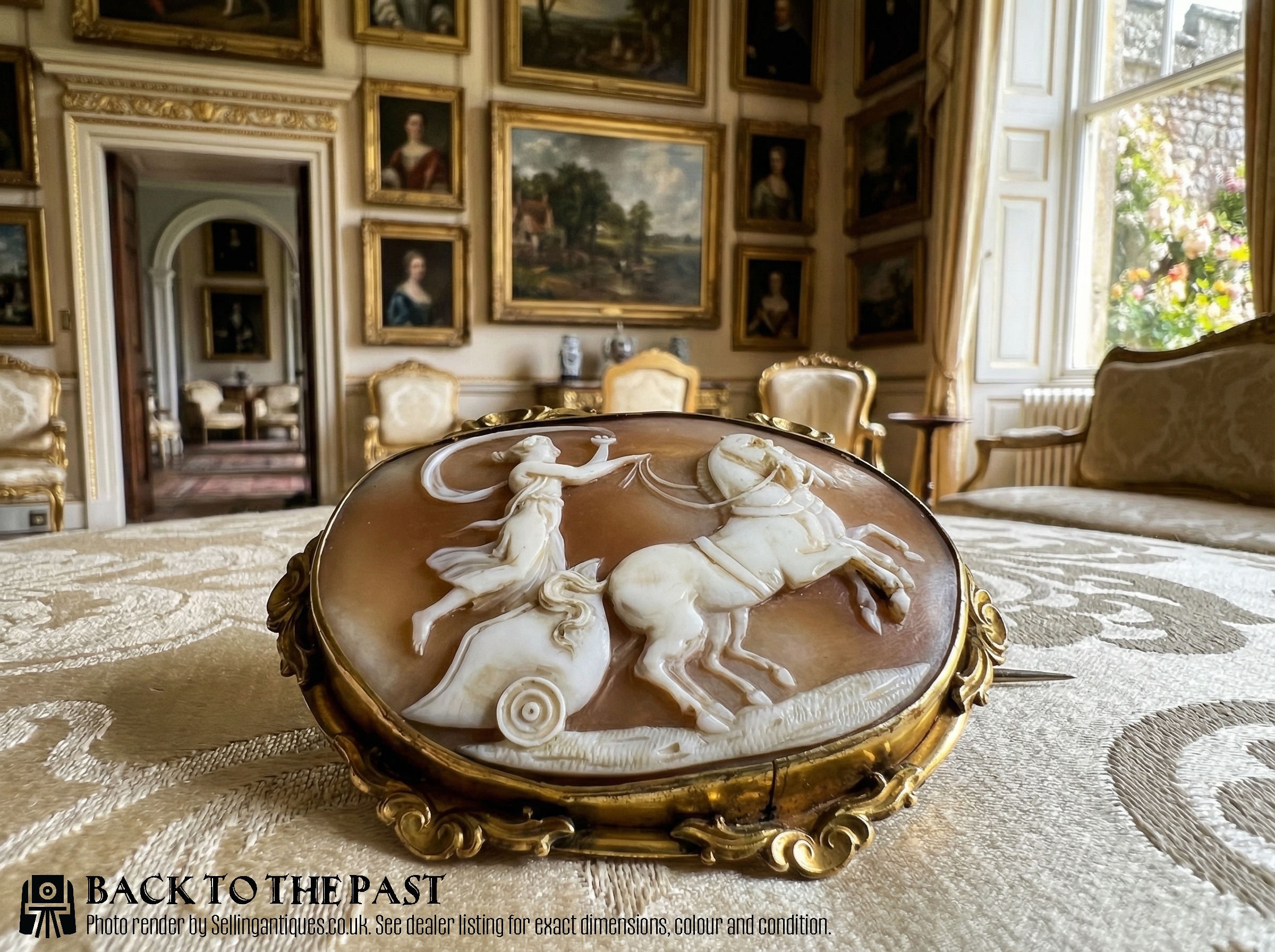
Antique Shell Cameo Pin
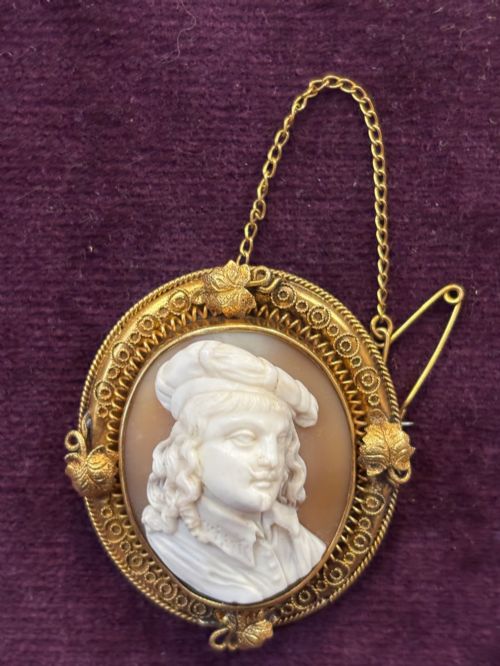
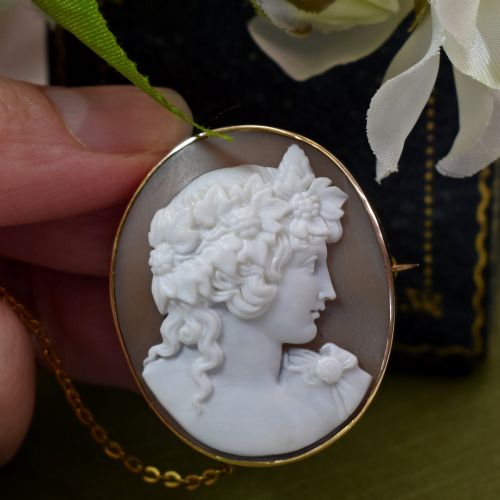
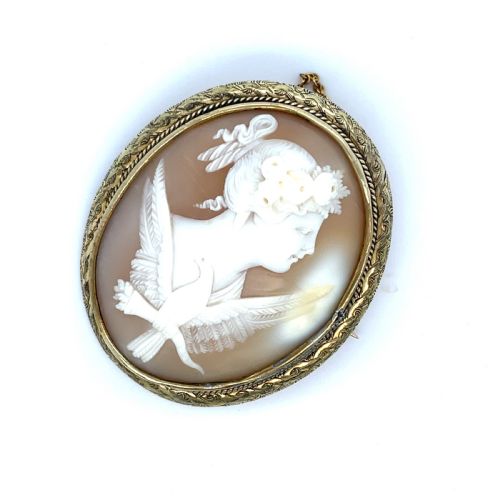
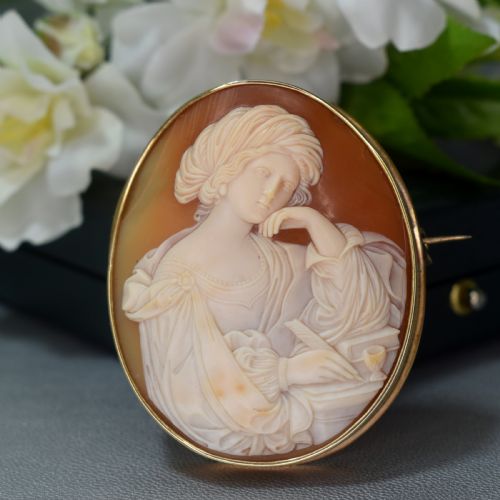
When you search for an antique shell cameo pin, you are looking at small relief carvings mounted as brooches or pendants. These pieces span the Georgian and Victorian eras up to the early twentieth century, capturing classical figures, mythological deities, and historical portraits.
The most common examples on this page are Victorian brooches featuring carved shell set in various grades of gold or silver frames. They range from modest portrait pieces to monumental statement brooches depicting complex scenes.
Makers often drew inspiration from grand tour travels, classical mythology, and Renaissance art. Subjects such as Aurora in her chariot, Flora, and Psyche with Cupid appear repeatedly in these historical mountings.
What varies in quality
The metalwork of the frame also dictates the tier of the piece. Substantial solid gold frames with intricate wirework or cast ornament indicate a higher grade of manufacture than simple base metal or lower-carat settings.
Some Victorian carvers doubled as miniature portraitists, immortalising grand tour travellers who wanted their profiles carved into shell.
R Pernice
The Antique Shell Cameo Pin Glossary
- Cameo
- A method of carving an object such as a gemstone or shell so that a raised relief image stands out from a background of a different colour. The technique relies on layered natural materials.
- Relief
- Sculptural technique where the sculpted elements remain attached to a solid background of the same material. High relief projects boldly from the background, while low relief stays flatter.
- Pinchbeck
- An alloy of copper and zinc invented in the eighteenth century to imitate gold. It provides a warm golden appearance without the expense of precious metal.
- Filigree
- Delicate ornamental work made of twisted wire, usually gold or silver, soldered together in open patterns. It is common in Victorian and Georgian frame designs.
- Grand Tour
- A traditional trip of Europe undertaken by upper-class European young men of sufficient status. Many cameos were purchased during these travels in Italy.
Antique Shell Cameo Pin: Frequently Asked Questions
How do I date a shell cameo pin?
Dating relies on the style of the carving, the subject matter, and the construction of the metal mount. Victorian pieces often feature heavier gold frames and specific classical revival motifs.
Earlier Georgian examples display distinct hand-carved traits, while Edwardian pieces often utilise lighter silver or gold settings with refined geometric details.
What materials are shell cameos carved from?
Carvers typically utilised marine shells with contrasting colour layers, such as conch shell or helmet shell. These natural materials provide the characteristic white relief against a peach, brown, or pink background.
Frames accompanying these carvings utilise gold of various carats, silver, or pinchbeck, often complemented by small accents of coral or stones.
How should I wear an antique brooch?
Antique pins look striking fastened to the lapel of a tailored blazer, the collar of a blouse, or anchoring a winter scarf. Ensure the fabric is sturdy enough to support the weight of the metal frame.
Secure the pin with its original C-clasp or safety fastening, checking that the pin stem remains straight and stable during wear.
Are these pins fragile?
Shell is an organic material and can be brittle if dropped or subjected to hard impacts. Proper care involves storing the brooch in a dedicated box away from harder jewellery pieces.
Avoid immersing antique shell cameos in liquid cleaners or ultrasonic baths, as moisture and chemicals can damage the delicate shell layers and historical settings.