


Carved Shell Portrait Brooch
A carved shell portrait brooch brings classical profiles and historical figures into wearable miniature sculpture.
Carved Shell Portrait Brooch
A carved shell portrait brooch is a form of antique jewellery that captures classical subjects, mythological figures, and historical portraits in layered shell. These pieces appear frequently in Victorian and Edwardian iterations, spanning periods from the mid-nineteenth century up to nineteen fifty.
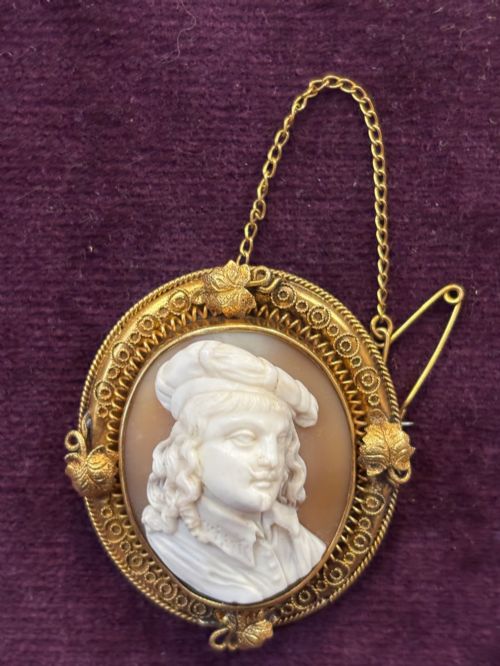
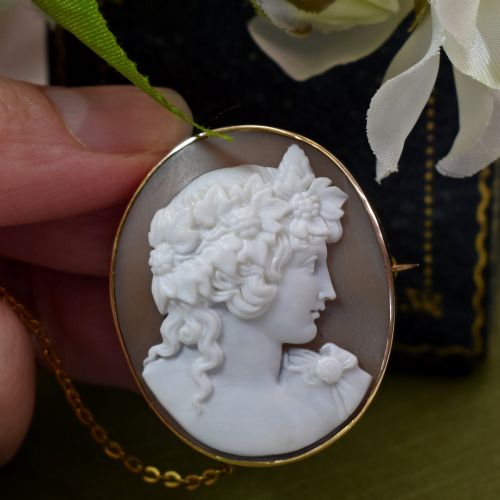
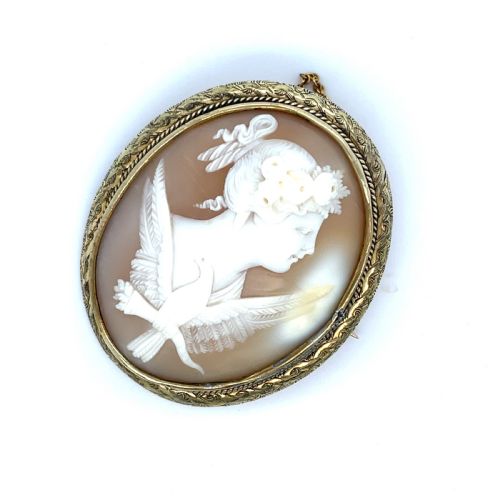
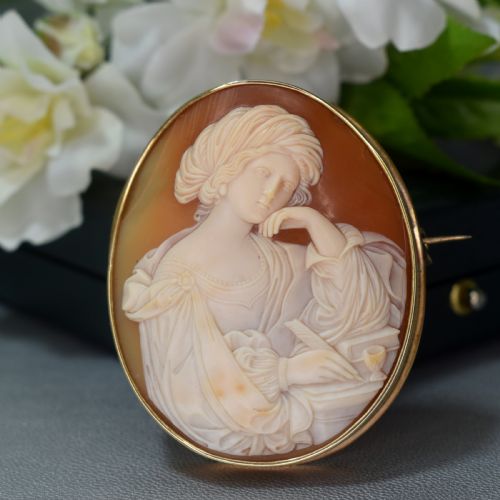
The objects take the form of brooches, pendants, and occasionally tabletop ornaments mounted in frames of various metals. Buyers often encounter classical deities, sibyls, and named historical figures carved with high relief against a darker background layer of shell.
How they were made
Carvers utilise natural shell, selecting varieties with contrasting colour layers to isolate the portrait from the background. The design is meticulously shaped by hand using small gravers to carve away the upper strata and reveal the finer details of the subject.
Antinous Vertumnus and Bonnie Prince Charlie rub shoulders in the shell cabinet.
What varies in quality
Mounting quality also distinguishes the tier of the piece, with substantial solid gold frames, intricate filigree, and maker signatures setting apart exceptional items from standard production.
R. Pernice
The Carved Shell Portrait Brooch Glossary
- Cameo
- A method of carving an object such as a gemstone or shell where the relief image stands out distinctly from a background of a different colour. This technique highlights the layered natural colours of the material.
- Pinchbeck
- An alloy of copper and zinc developed to imitate gold, often utilised for historical jewellery mounts. It provides a warm metallic tone without employing precious metal.
- Filigree
- Ornamental work consisting of fine wire twisted into delicate patterns, frequently seen applied to jewellery frames. This technique adds intricate texture around the central setting.
- Relief
- The projection of a carved figure from its flat background, distinguishing high relief from shallow work. Deeper carving allows for greater dimensionality in the portrait.
- Sibyl
- A prophetic woman in ancient Greek mythology and architecture, commonly depicted as a subject in classical carving. These figures often appear in nineteenth-century portrait pieces.
Carved Shell Portrait Brooch: Frequently Asked Questions
What is a carved shell portrait brooch?
A carved shell portrait brooch is an antique ornament featuring a hand-carved miniature relief portrait, typically fashioned from layered sea shell.
These pieces were predominantly produced during the Victorian and Edwardian eras and are set in metals ranging from silver to high-carat gold.
How do I date a shell cameo?
Dating a shell cameo involves examining the style of the carving, the mount construction, and the metal purity marks if present.
Victorian examples often feature classical motifs and specific bezel settings, whereas twentieth-century pieces can display distinct mounting styles and alternative gold purities.
How should I care for antique shell jewellery?
Shell is an organic material that requires gentle handling, as it is softer than gemstones and susceptible to acid damage and harsh impacts.
Store the brooch in a dry, padded box and avoid exposing it to water, perfumes, or ultrasonic jewellery cleaners.
Were these always worn as brooches?
While the primary function in the listings is a brooch, many mount designs include integrated loops or contemporary adaptations allowing them to double as pendants.
Some larger examples were even produced to function as tabletop ornaments with dedicated stands rather than personal adornment.