


Antique Sheffield Plate Candlestick Pair
An antique sheffield plate candlestick pair brings tangible Georgian or Victorian illumination to a table, combining copper warmth with a silver surface.
Antique Sheffield Plate Candlestick Pair
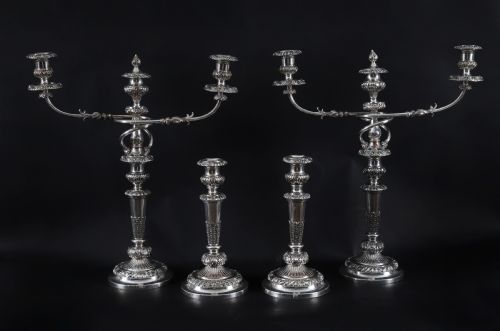
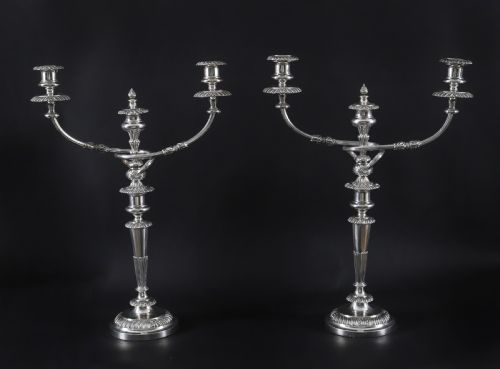
When you search for an antique sheffield plate candlestick pair, you encounter dual items designed to hold candles securely while displaying polished metal surfaces. The examples found here span the eighteenth and nineteenth centuries, taking the form of traditional candlesticks, chamber sticks, or larger three and four-light candelabra suites.
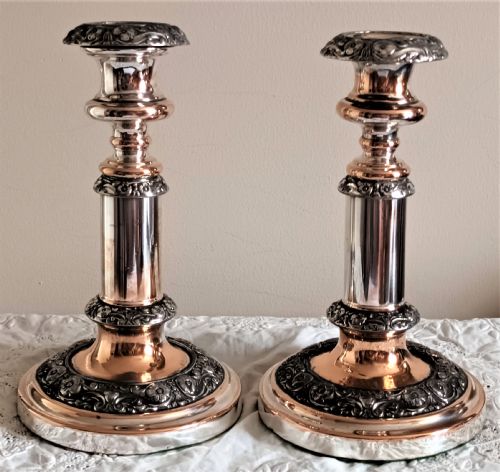
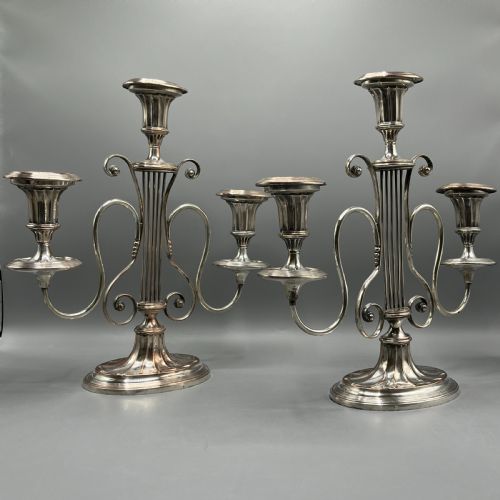
The most common formats on this page include Georgian telescopic pairs alongside Victorian ornate designs. Makers utilised copper cores fused with silver sheets, shaping them into circular bases, lyre-shaped structures, or tall proportions suitable for formal dining rooms.
Fusion and Form in Metalwork
Old Sheffield plate was produced through the fusion of a silver sheet onto a thicker copper ingot by heat and pressure, a technique that distinguishes these pieces from later electroplated wares. Smiths then hammered, rolled, or spun the resulting composite metal into specific candlestick and candelabra components.
Makers often incorporated removable sconces and weighted bases filled with pitch or wood to ensure stability. Decorative elements such as neoclassical urn motifs or rococo scrolls were then applied as sterling silver wire or stamped borders to conceal exposed copper edges.
Listings here feature examples spanning the eighteenth and nineteenth centuries, constructed from copper and silver plate.
Distinctions in Execution
Quality rests in the crispness of chased ornament and the retention of the original fused silver layer over the underlying copper. Finer pairs demonstrate balanced proportions, sturdy mechanics in telescopic columns, and well-fitted removable sconces that match the primary casting.
Workshop attribution also influences standing; pieces bearing recorded marks from notable makers command attention for their heavier gauge metal and superior engraving. Everyday domestic examples display simpler circular bases and minimal decoration, yet retain the same fundamental fusion technique.
Matthew Boulton·Blagden, Hodgson & Co.·Elkington
The Antique Sheffield Plate Candlestick Pair Glossary
- Old Sheffield Plate
- A composite material made by fusing a thin layer of silver to a copper core. This technique predates nineteenth-century electroplating.
- Telescopic
- A shaft design allowing the height of the candlestick to be adjusted upwards or downwards. This mechanical feature often appears in Georgian examples.
- Sconce
- The detachable pan at the top of a candlestick that catches dripping wax. Removable sconces simplify cleaning after use.
- Chamber candlestick
- A low candle holder fitted with a handle and a small saucer base. These items were carried through rooms to light the way before electric lamps.
- Candelabra
- A branched lighting fixture holding multiple candles from a central stem. These grander pieces often convert from standard candlesticks using detachable arms.
Antique Sheffield Plate Candlestick Pair: Frequently Asked Questions
How do I clean old sheffield plate?
Clean these pieces gently using a soft cloth and mild silver polish, avoiding aggressive rubbing that might wear through the thin silver layer to the copper beneath.
Regular dusting keeps the surface bright without risking the historical integrity of the fused metal.
Why can I see copper on the edges?
The presence of visible copper along raised edges or high points is a characteristic result of use and polishing over centuries on fused plate items.
Collectors often view this gentle telegraphing of the underlying metal as evidence of genuine age rather than a defect.
How do telescopic candlesticks work?
Telescopic stems rely on a snug inner sleeve that allows the upper column to slide smoothly and hold a raised position. This lets users alter the height depending on the setting.
Care should be taken when adjusting them to avoid straining the original soldered joints.
Can I use standard candles in them?
Most antique sockets accommodate standard taper candles, though slight variations in nineteenth-century sizing may require minor trimming at the base.
Securing the candle properly prevents leaning and keeps wax away from the delicate silver surface.
What is the difference between plate and solid silver?
Solid silver consists of a uniform precious metal alloy throughout, whereas old sheffield plate uses a fused silver skin over a copper base.
This composite method provided the visual weight and appearance of silver at a more accessible cost during the Georgian period.