

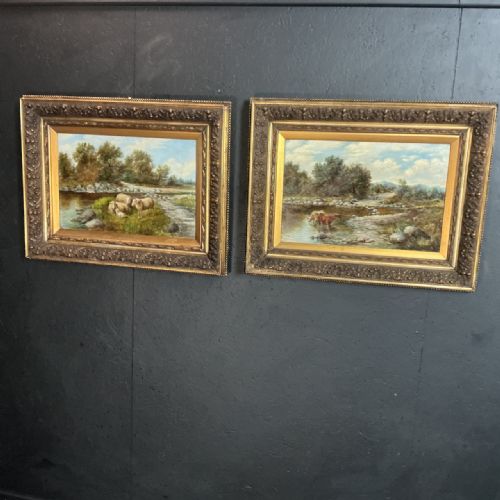

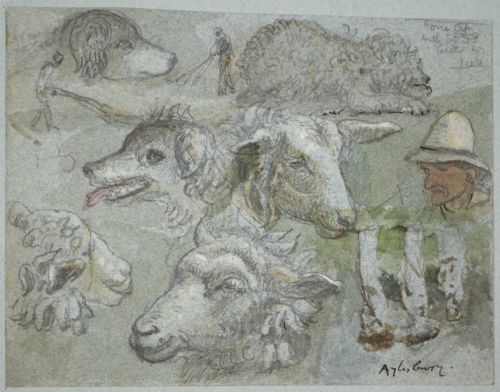
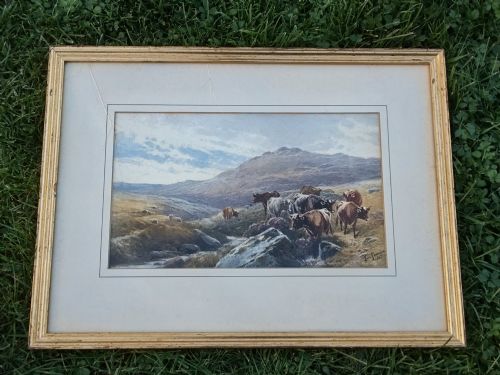
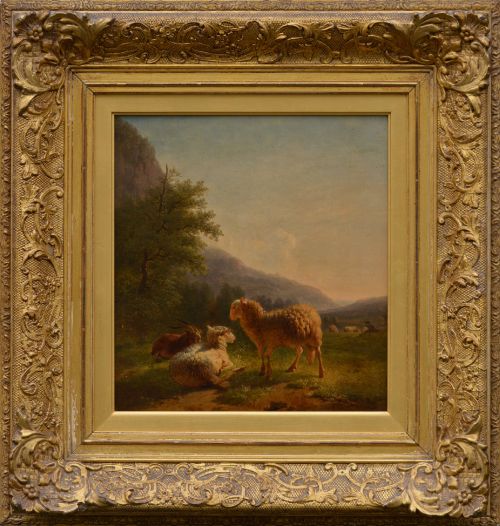



Antique Sheep Painting
These antique sheep painting works capture pastoral rural life through oil and watercolour, offering a tranquil window into historical agricultural landscapes.
Antique Sheep Painting
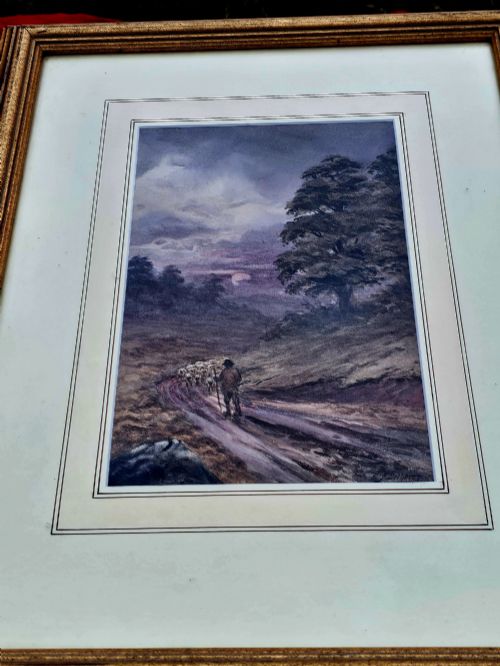
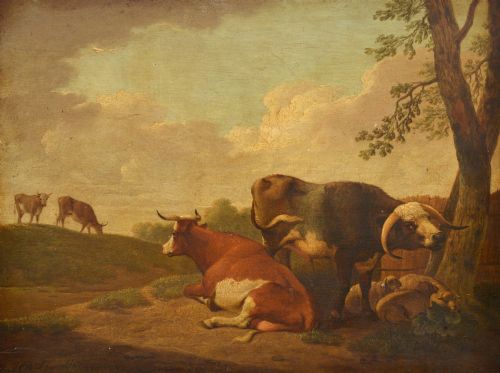
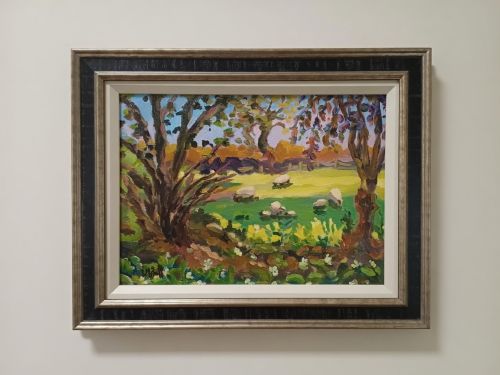
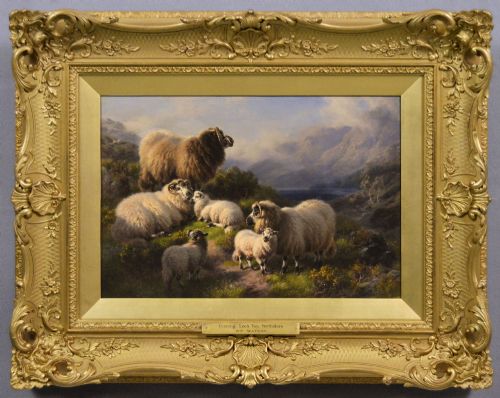
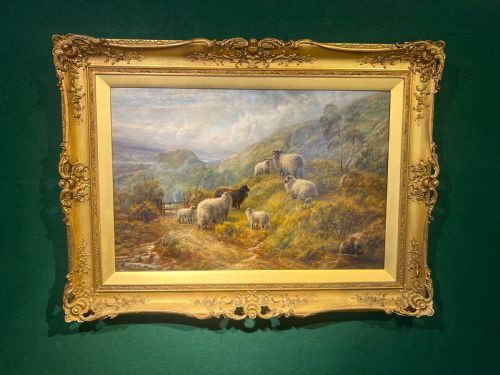
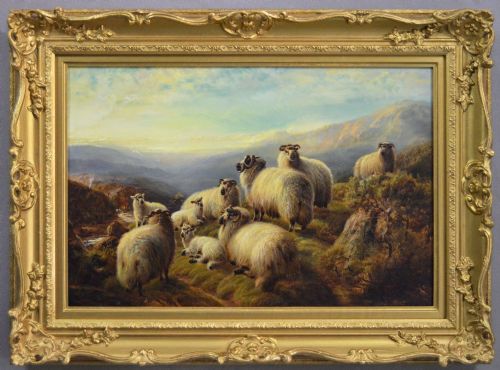
When you search for an antique sheep painting, you encounter rural landscapes and animal portraits spanning the nineteenth and early twentieth centuries. These works celebrate pastoral scenes, often featuring flocks grazing on moors, mountains, or farmland under various atmospheric conditions.
The pieces on this page are predominantly oil on canvas, wood panel, or watercolour on paper, framed within period giltwood or gesso surrounds. You meet Victorian and Edwardian interpretations created by British and continental European artists.
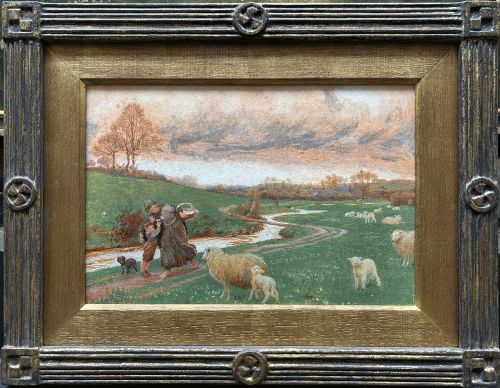
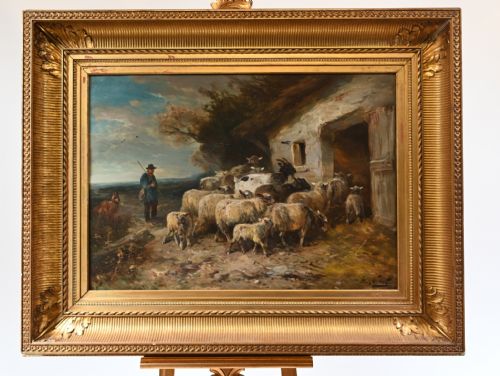
Subjects range from expansive Scottish Highland landscapes with sheep to intimate depictions of shepherds tending their flocks near coastlines or rivers. Such artworks reflect a nineteenth-century fascination with rural realism and romanticism.
How they were made
Artists painted these pastoral scenes using oil on canvas or wood panel, as well as watercolour on paper, applying pigments with traditional brushes to build texture and depth. Canvas supports allowed for larger landscape compositions, whilst wood panels provided a rigid surface for detailed brushwork.
Many works incorporate gesso and giltwood frames that complement the traditional subjects, showing the craftsmanship applied to framing fine art during the Victorian and Edwardian eras. Watercolour paintings utilised paper mounted beneath glass to preserve delicate washes and fine linework.
Antique Sheep Painting Retail Price Guide 2026
Typical asking prices for sheep painting among the pieces listed under this phrase on Sellingantiques today, from the lower quarter to the upper quarter. They describe what is for sale here now, not the wider market.
Even sheep needed shelter from nineteenth-century British weather, as proved by the artists who painted them huddled against barns.
What varies in quality
Quality in these artworks is determined by the handling of light, anatomical precision of the animals, and atmospheric depth within the wider landscape. Master artists achieved subtle tonal gradations in wool and fleece, whereas lesser works display flat, uniform application.
The condition and originality of the mounting also influence the standard of a piece, with period giltwood frames and signed panels commanding greater artistic interest. Provenance, including attribution to recorded nineteenth-century painters, separates standard decorative works from fine collectible pieces.
Eugène Verboeckhoven·Tom Campbell·James Smetham·Hendrik Willem Schweickhardt·Frederick Walker·Robert Watson·William Watson Jnr·Henry Schouten·F.J. Snell·Cornelius Pearson·Henry Charles Fox·William Henry Mander·Thomas Sidney Cooper·Franz van Severdonck·Owen Bowen·William Sydney Cooper·Samson Chelsea·Robert John Hammond·Willem Anton Alexander Knip·Eugene Joseph Verboeckhoven·Frederick W. Jackson·Walter J Watson·Royal Worcester·James de Rijk·Lorenzo Headley
The Antique Sheep Painting Glossary
- Oil on canvas
- A painting medium where pigments are suspended in drying oils and applied to a stretched woven fabric support. This technique allowed artists to create rich textures and blend colours seamlessly across pastoral landscapes.
- Watercolour
- A method where water-soluble pigments are applied to paper to create translucent washes of colour. It was widely utilised by nineteenth-century artists for capturing atmospheric skies and damp moorland conditions.
- Gesso
- A plaster-like mixture applied to wood or canvas as a base for painting or moulded to create ornate decorative details on frames. It provided a smooth, stable surface for gilding.
- Giltwood
- Timber carved and coated with a thin layer of gold leaf or gold-coloured pigment. It was the standard material for framing fine art during the Victorian and Edwardian periods.
- Pastoral
- A genre of art depicting rural life, shepherds, and agricultural landscapes in an idealized or realistic manner. These scenes emphasised harmony between humans, animals, and nature.
Antique Sheep Painting: Frequently Asked Questions
How do I care for an antique oil painting?
Keep the artwork away from direct sunlight and dramatic temperature shifts to prevent the canvas or wood panel from warping and the paint from cracking. Dust the surface gently with a soft, dry brush without applying pressure.
Avoid using commercial cleaning liquids or water on the painted surface or the giltwood frame. Consult a professional conservator if the canvas requires cleaning or tension adjustment.
Are these paintings signed by the artist?
Many of the works feature signatures, monograms, or inscriptions left by the painter, whilst others represent the broader output of contemporary schools. Signed pieces often provide clearer attribution to specific nineteenth-century artists.
Unsigned paintings frequently reflect the style of a known master or a regional tradition. Documentation on the reverse or framing can sometimes offer further context regarding provenance.
Where should I hang a pastoral landscape?
These works suit traditional living spaces, studies, or dining rooms where their rural themes complement classic architectural details. Placing them at eye level on neutral walls allows the naturalistic tones of the landscape to stand out.
Ensure the chosen wall does not experience dampness or excessive heat from fireplaces. Proper lighting with low-heat picture lamps enhances the fine details of the brushwork.
What is the difference between oil and watercolour?
Oil paintings use thick, viscous pigments on canvas or wood panel, allowing for rich texture, deep shadows, and luminous blending. They offer robust durability and distinct brushwork.
Watercolours rely on transparent washes on paper, producing a lighter, more immediate atmospheric effect. They are typically framed behind glass to protect the delicate paper surface from moisture.