




Antique Sheep Artwork
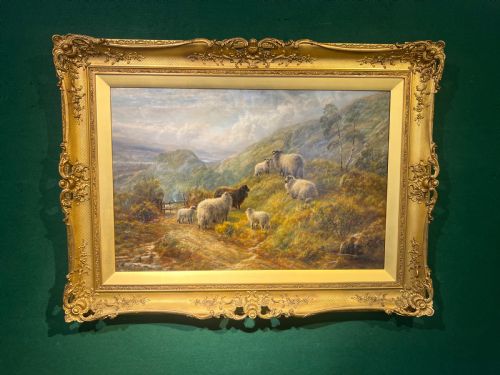
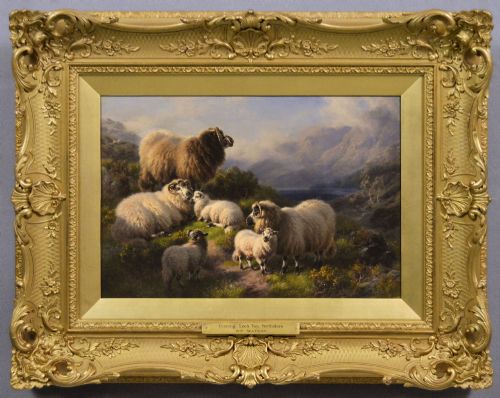
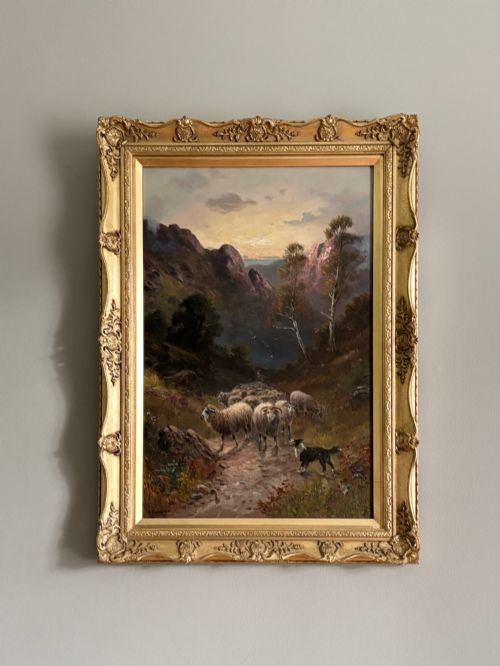
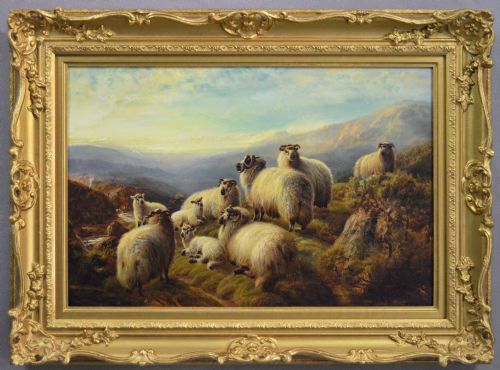
Antique sheep artwork captures pastoral life in oil and watercolour, bringing the quiet rhythm of the countryside and hills directly onto the wall.
Antique Sheep Artwork
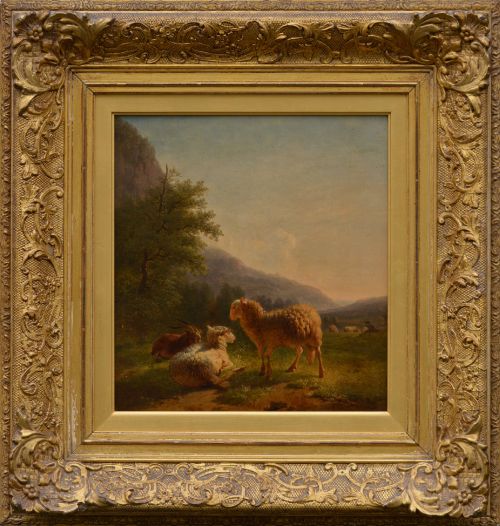
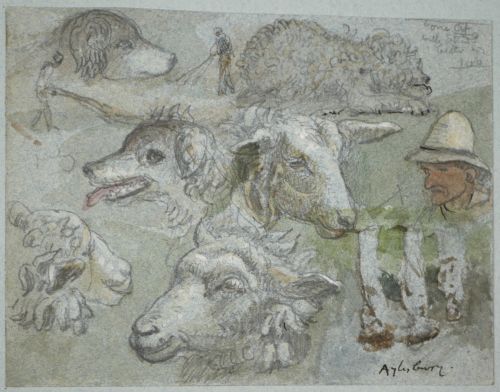
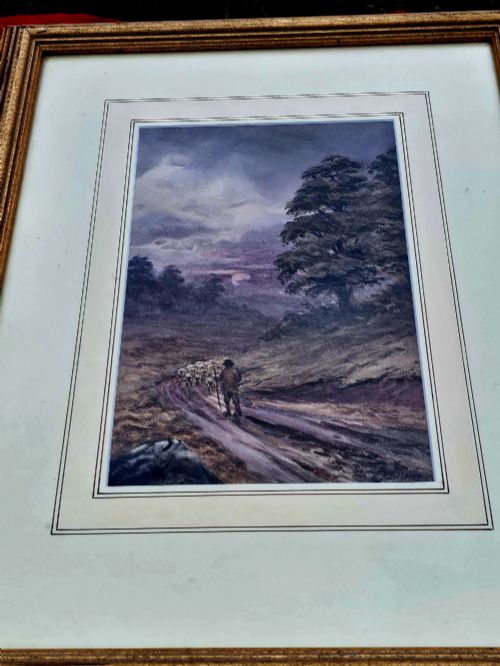
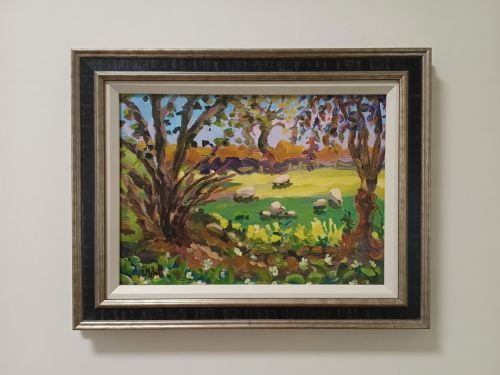
Antique sheep artwork encompasses pastoral scenes, rural landscapes, and animal portraits created during the nineteenth and early twentieth centuries. These pieces record agricultural life across Britain, the Scottish Highlands, and continental Europe, depicting flocks grazing on moors, sheltering in barns, or being driven to market along country lanes.
Buyers frequently encounter works from the Victorian and Edwardian eras, spanning British Impressionism, Romanticism, and pastoral styles. Mediums range from detailed watercolours on paper to substantial oil paintings on canvas and wood panels, often housed in period giltwood and gesso frames.
Materials and methods
Artists painted primarily in oils on canvas or wood panels, and in watercolour on paper, applying pigments to capture atmospheric effects of light and weather in rural settings. Canvases are stretched over wooden frames, while watercolours are mounted behind glass and protected within decorative frames.
Many works incorporate moulded gesso and giltwood frames that complement the painting style of the period, ranging from mid-nineteenth-century romantic landscapes to early twentieth-century impressionist watercolours.
Several sheep manage to find themselves sharing Scottish snowscapes with highland cattle, proving that woolly coats are no match for a proper Highland winter.
Distinctions in quality
Quality rests upon the artist's ability to render the anatomy and texture of wool against changing landscape light, moving beyond formulaic pastoral repetition. Superior works display confident brushwork and balanced composition, integrating the animals harmoniously into specific regional topography.
The integrity of the original support, the sensitivity of the framing, and the clarity of the surface condition separate standard decorative pastoral watercolours from signed works by established nineteenth-century animal painters.
Eugène Verboeckhoven·Tom Campbell·James Smetham·EJ Letheren·Frederick Walker·Robert Watson·William Watson Jnr·Douglas Cameron·F.J. Snell·Cornelius Pearson·Henry Charles Fox·William Henry Mander·Thomas Sidney Cooper·Franz van Severdonck·Owen Bowen·William Sydney Cooper·Robert John Hammond·Willem Anton Alexander Knip·Eugene Joseph Verboeckhoven·Frederick W. Jackson·Walter J Watson·James de Rijk·Lorenzo Headley·Herbert Royle·Bernard Walter Evans
The Antique Sheep Artwork Glossary
- Oil on Canvas
- A painting medium where pigments suspended in drying oil are applied to stretched woven fabric. This combination allows for rich colour blending and textured brushwork.
- Watercolour
- A painting method where fine pigment powders are mixed with water-soluble binders and applied to paper. It produces translucent washes of colour well suited to delicate atmospheric landscapes.
- Giltwood
- Timber carved and coated with a thin layer of gold leaf or metallic powder. It provides traditional ornamental framing for nineteenth-century fine art.
- Pastoral
- An artistic style celebrating rural life, shepherds, and livestock in natural landscapes. These scenes evoke a peaceful, idealized view of agricultural existence.
Antique Sheep Artwork: Frequently Asked Questions
What periods do these paintings come from?
These works date primarily from the nineteenth and early twentieth centuries, encompassing Victorian, Edwardian, and early modern eras. Artists worked across distinct regional schools in Britain, Scotland, and the Netherlands.
Dates recorded in the listings range from the 1850s through to the mid-twentieth century, reflecting changing interpretations of rural life and landscape painting.
How were these artworks displayed historically?
Paintings of this scale were typically hung in domestic reception rooms, parlours, and country houses throughout Britain. They served to connect urban interiors with the perceived tranquility of agricultural landscapes.
Original frames made of giltwood and gesso were chosen to complement the domestic interiors of the Victorian and Edwardian periods.
How do I care for antique watercolours?
Works on paper require protection from direct sunlight to prevent the fading of watercolour pigments and the yellowing of the paper support. Glazing helps shield the delicate surface from atmospheric dust and moisture.
Maintaining stable indoor humidity levels prevents warping of the paper and preserves the structural integrity of the frame.
How are oil paintings on canvas structured?
Oil paintings utilise woven fabric stretched tightly across a wooden frame, providing a resilient surface for layered pigment. This construction allows the paint layer to flex slightly with environmental changes.
Over decades, the canvas tightens or loosens depending on atmospheric conditions, resting securely within heavy wooden and gesso surrounds.