
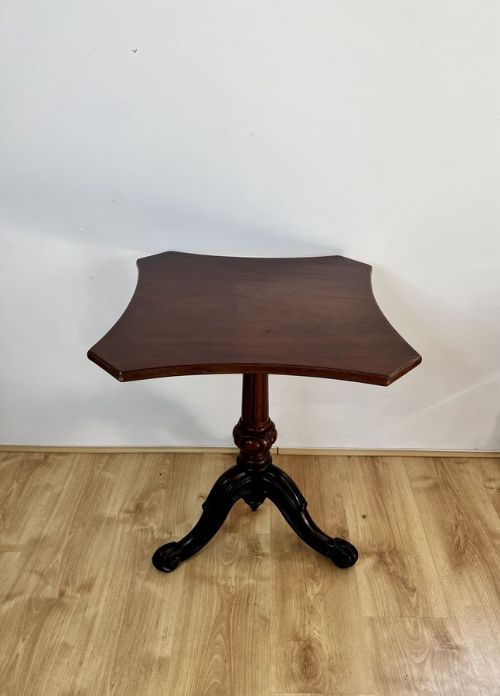


Antique Shaped Display Table
An antique shaped display table unites refined surface design with enclosed space to show small treasures, drawing the eye in any room.
Antique Shaped Display Table
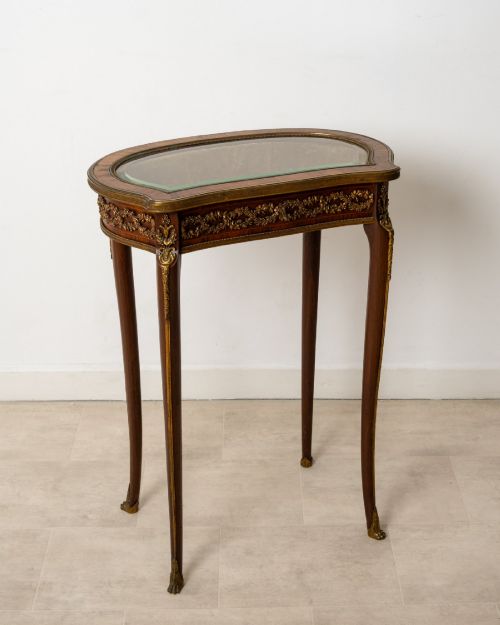
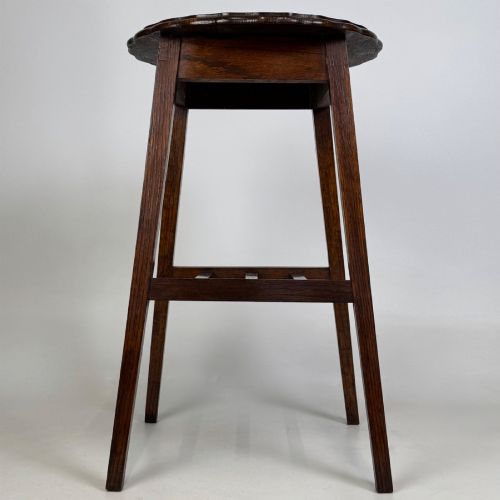
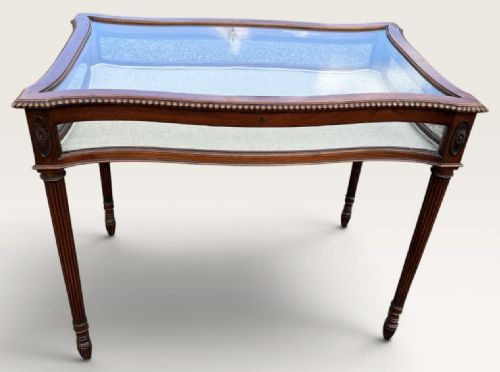
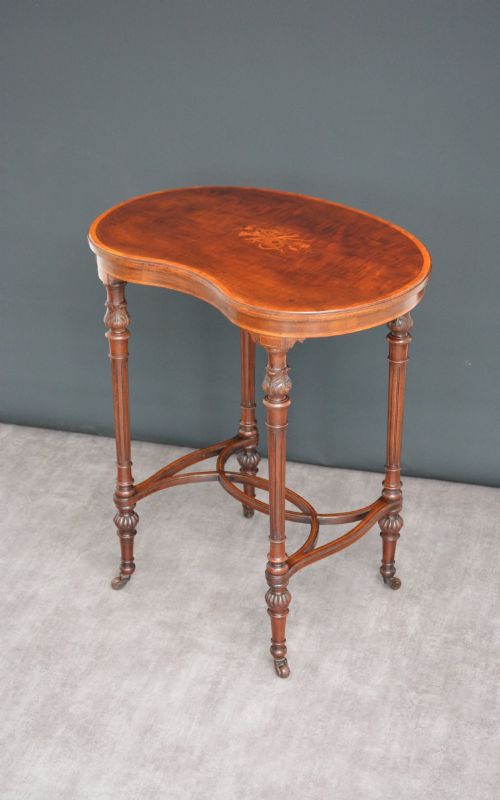
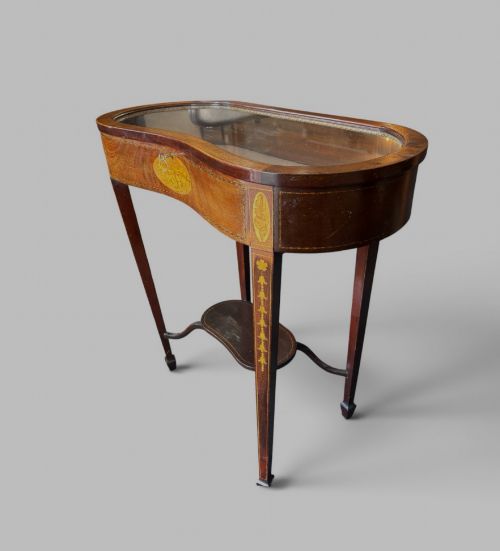
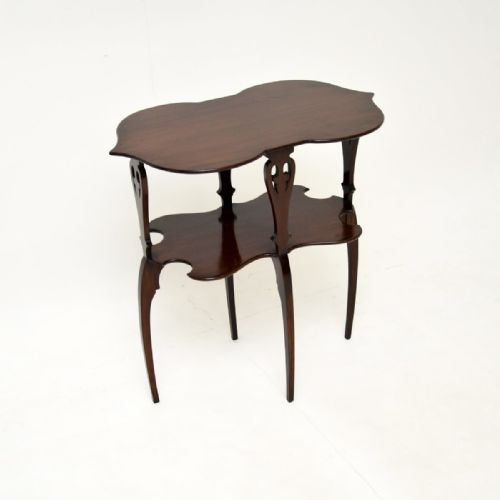
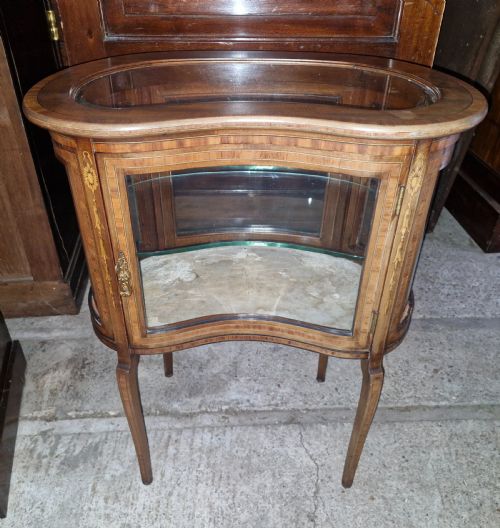
When you search for an antique shaped display table, you encounter pieces designed to exhibit small items beneath glass or upon sweeping surfaces rather than simply holding objects on a flat square board. The most frequent forms here include kidney shaped bijouterie tables, serpentine cabinets, and occasional tables with curved edges.
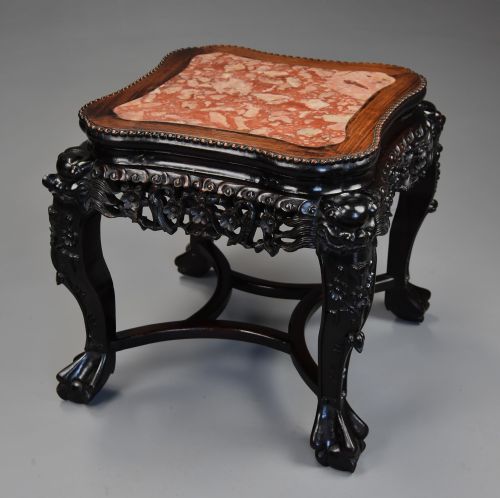
These items originate predominantly from the Victorian and Edwardian eras, alongside French influences like Louis XV style and Qing Dynasty hardwood stands. Makers constructed them to sit centrally in a room or against a wall, functioning as vitrines, lamp tables, or specialised collectors cabinets.
Materials and construction methods
Cabinet makers utilised foundational timbers such as mahogany, satinwood, rosewood, and hardwood, often enhancing the surfaces with marquetry inlay and boxwood stringing. These woods provided the structural strength required for slender legs and curved aprons.
Glass panels fitted into hinged or glazed tops allowed light to enter the interior display well, while brass mounts, fabric linings, and galleries completed the detailed construction of French and English examples.
Some tables double as tea stations, proving that Victorians liked their jewellery close at hand while pouring afternoon infusions.
Distinguishing quality across examples
Quality rests in the precision of the curved woodwork, the crispness of the marquetry inlay, and the fluidity of shapes such as the kidney outline or serpentine front. Superior pieces display seamless joints and balanced proportions across every angle.
Finer examples integrate superior internal fabric linings, robust brass hinges, and well-matched timber veneers that retain their depth and grain contrast over generations.
Edwards and Roberts
The Antique Shaped Display Table Glossary
- Bijouterie table
- A specialised display table featuring a glazed top and shallow compartment designed for housing small valuables, jewellery, and curiosities.
- Kidney shaped
- A curved furniture silhouette resembling a bean, frequently utilised in Edwardian writing and display tables to fit closely against the user.
- Marquetry inlay
- Decorative patterns formed by fitting contrasting veneers into a prepared wooden surface to create pictorial or geometric designs.
- Serpentine
- A furniture contour featuring a double-curved edge that bows outward in the centre and curves inward at the sides.
Antique Shaped Display Table: Frequently Asked Questions
What fits inside a bijouterie table?
These glass-topped compartments traditionally house small collectables, antique silver, pocket watches, and personal trinkets where they remain protected from dust while staying fully visible.
The shallow depth of the velvet or fabric-lined interior prevents larger objects from fitting, focusing attention entirely on miniature items.
How do I distinguish Edwardian from Victorian tables?
Edwardian display tables generally lean towards lighter satinwood timbers, delicate stringing, and Sheraton Revival influences, reflecting a brighter aesthetic.
Victorian pieces often employ denser mahogany or rosewood with heavier proportions, richer carving, and more robust structural framing.
Where should I place a shaped display table?
These tables function effectively as centre pieces in a drawing room or as lamp and side tables where their glass tops catch natural light.
Their curved outlines allow them to sit comfortably in corners or alongside seating without blocking walkways in smaller spaces.
Are French and English display tables different?
French models frequently incorporate kingwood, elaborate marquetry, and Rococo Revival or Louis XV curves that emphasise ornate decorative brass mounts.
English pieces tend to balance functional utility with refined inlay work, favouring structured mahogany frames and subtle Edwardian elegance.