


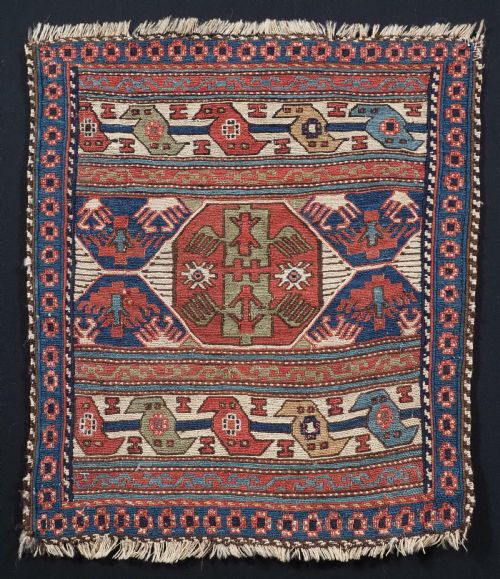


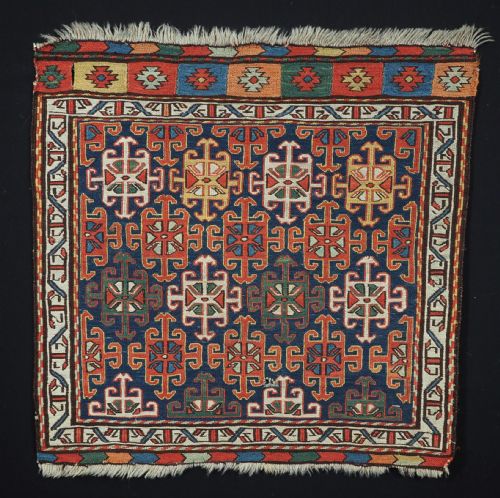
Antique Shahsavan Bag
These antique shahsavan bag examples are nomadic woven storage pieces and saddle bags carrying geometric motifs, prized for their rich wool texture and tribal character.
Antique Shahsavan Bag
An antique shahsavan bag brings together the nomadic weaving traditions of the Caucasus and North West Persia, spanning the nineteenth century. Buyers searching this phrase encounter functional storage items such as complete mafrash storage pieces, khorjin saddle bags, and individual bag faces.
The surviving pieces on this page include panels, pairs of kilim bags, and soumak bag faces dating from eighteen fifty to eighteen ninety. These items served practical uses for transport and domestic storage within tribal communities before entering the collector market.
Materials and Weaving Technique
The makers utilised hand-spun wool combined with natural and vegetable dyes to build durable textile art. Artisans employed the soumak technique alongside flatweave kilim methods to construct sturdy storage bags and panels.
Additional structural elements incorporated leather and metal components to reinforce saddle bags intended for daily practical use. The interplay of dyed wool yarns creates the characteristic surface texture seen across these tribal textiles.
Antique Shahsavan Bag Retail Price Guide 2026
Typical asking prices for shahsavan bag among the pieces listed under this phrase on Sellingantiques today, from the lower quarter to the upper quarter. They describe what is for sale here now, not the wider market.
Certain bag faces hide stylized dragons among their geometric bird motifs, quietly guarding nomad provisions across the centuries.
Assessing Quality and Execution
Superior examples display precise execution in complex supplementary weft-wrapping techniques like soumak, alongside well-preserved natural dye palettes. The complexity of figurative motifs, such as bird and dragon designs, distinguishes finer bag faces from simpler utility panels.
The structural integrity of complete pairs, storage boxes, and intact saddle bags separates comprehensive items from single fragments. Mastery in colour saturation and knot or weave density marks the upper tier of tribal textile production.
The Antique Shahsavan Bag Glossary
- Soumak
- A flatweave technique involving supplementary weft wrapping that produces a textured surface resembling embroidery. This method creates durable structures without a pile.
- Mafrash
- A large rectangular storage bag or chest panel used by nomadic tribes for bedding and household goods. These pieces are often constructed with four side panels and a base.
- Khorjin
- The traditional Persian term for a double saddle bag designed for transport on horseback or camel. They feature two pouches connected by a central slit.
- Kilim
- A flat tapestry-woven carpet or bag lacking a pile, produced by tightly interweaving warp and weft strands. This technique results in a flat, lightweight textile.
- Vegetable Dyes
- Colourants derived from plant roots, leaves, and other organic materials yielding muted, harmonious tones. These natural dyes age with distinctive patination.
Antique Shahsavan Bag: Frequently Asked Questions
What is a shahsavan bag?
A shahsavan bag is a nomadic woven textile originating from the Caucasus or North West Persia. These pieces functioned as storage containers, transport bags, and saddle gear.
Weavers constructed them using flatweave and soumak techniques with hand-spun wool and natural dyes. They often feature geometric patterns, birds, and dragon motifs.
How were these bags used?
Nomadic groups utilised these bags for packing household goods, bedding, and personal belongings during seasonal migrations. Saddle bags hung across mounts for carrying provisions on journeys.
Larger mafrash pieces formed the sides of storage chests kept inside tents. Their sturdy construction protected contents from dust and rough handling.
How do I date an antique shahsavan bag?
Dating relies on material analysis, dye characteristics, and structural evidence within the weave. Pieces on this page originate primarily from the nineteenth century, spanning from eighteen fifty to eighteen ninety.
Early examples often display specific vegetable dye palettes and hand-spun wool textures. Comparing structural formats helps place items within this nineteenth-century window.
How do I care for a textile bag?
Protect these wool textiles from direct sunlight to prevent natural dye fading. Gentle vacuuming through a mesh screen removes surface dust without damaging the weave.
Keep them in stable, dry environments away from high humidity to preserve the wool and leather components. Professional textile conservators should handle any necessary cleaning.