



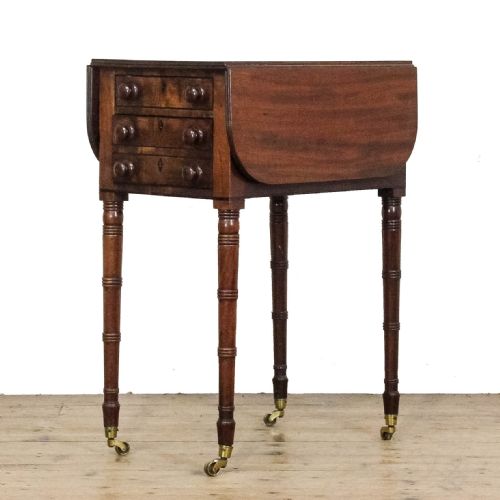


Antique Sewing Table Castors
Antique sewing table castors provide the smooth mobility that lets these versatile 19th-century work and games tables glide across a room.
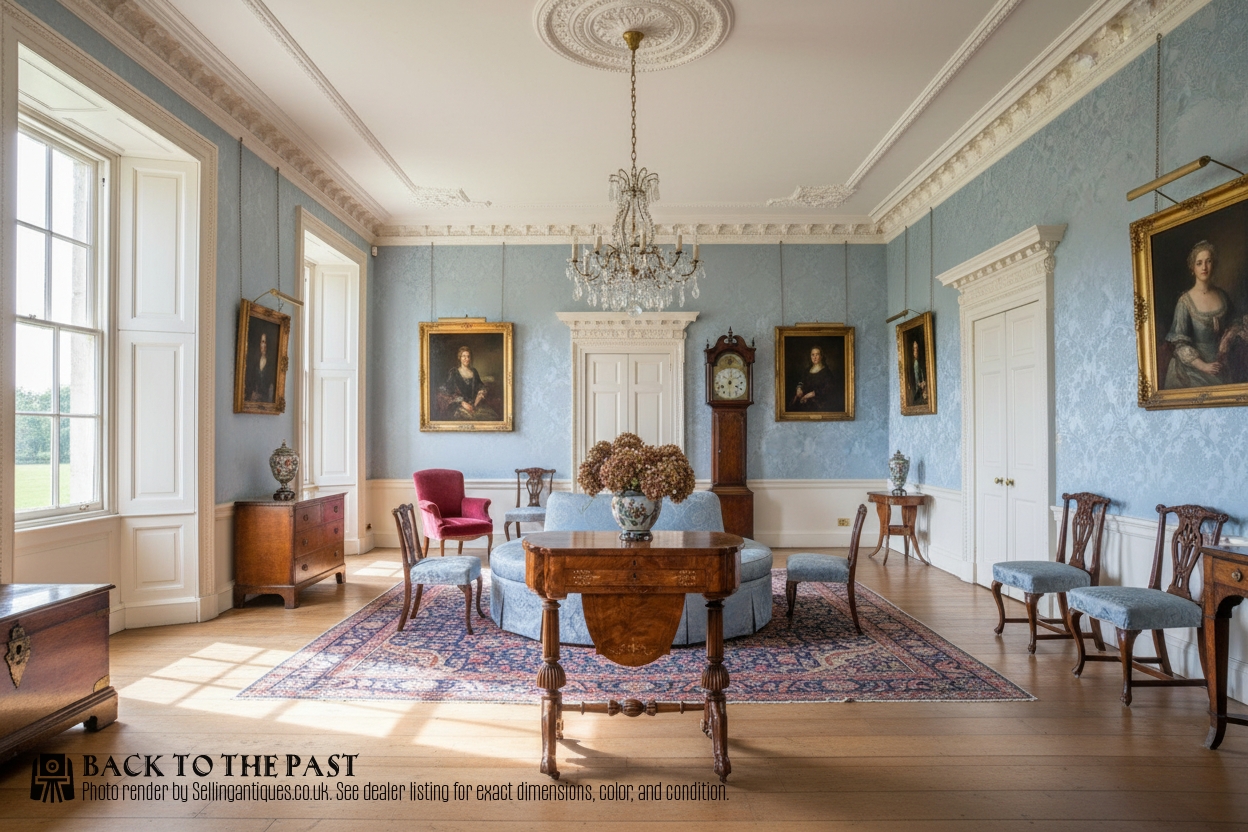
Antique Sewing Table Castors
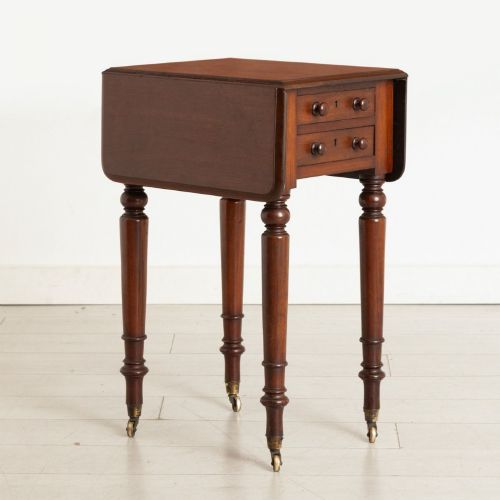
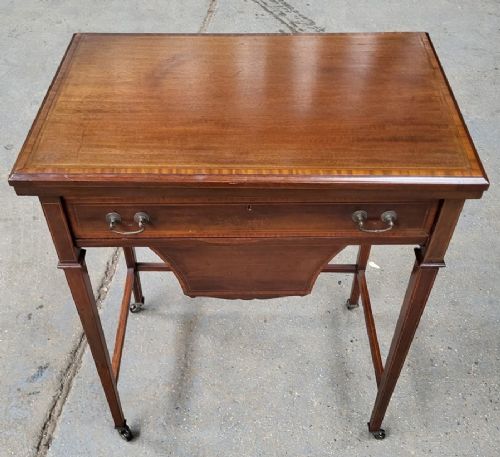
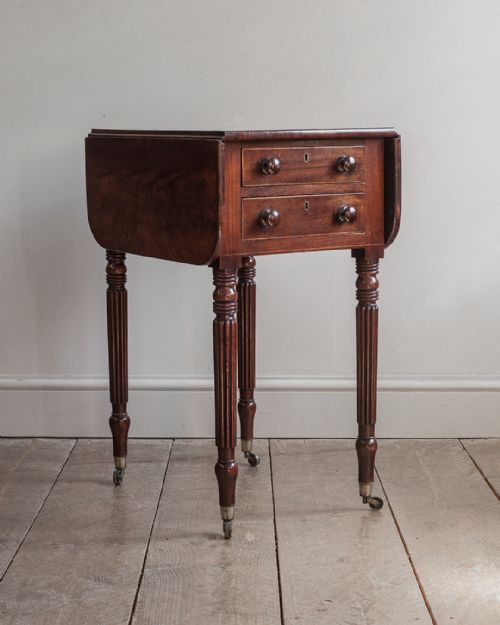
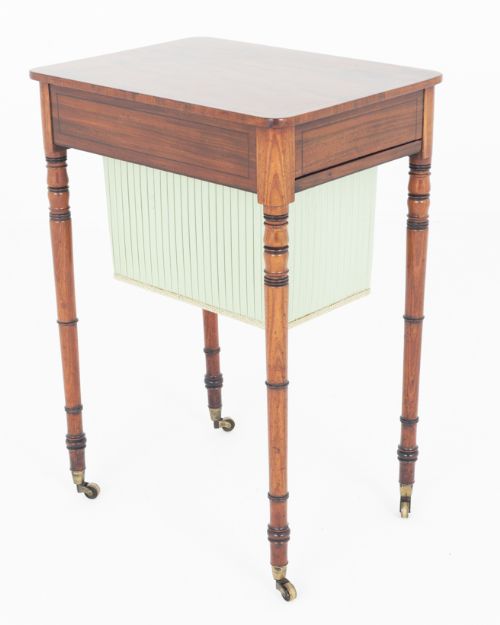
When you search for antique sewing table castors, you are looking at small mechanical feet fitted to the legs of 19th-century work tables, needlework tables, and games tables. These practical fittings allow heavy timber pieces in mahogany, rosewood, and walnut to be repositioned easily for tasks like sewing or writing.
The most common pieces you will encounter on this page span the Georgian, Regency, William IV, and Victorian periods. They take forms such as drop-leaf tables, Pembroke worktables, and occasional lamp tables equipped with fitted compartments or pull-out fabric bags.
Makers often integrated these small wheels into pedestal bases or delicate saber legs to ensure stability without sacrificing the elegant proportions required in a parlour or drawing room.
Materials and construction methods
Makers cast the hardware from durable brass, pairing the small wheels and sockets with fine cabinet timbers like solid and veneered mahogany, rosewood, walnut, burr walnut, and satinwood. These metals and dense hardwoods provided the structural strength needed to support drop leaves, folding tops, and interior storage compartments.
Craftsmen secured the metal castor fixings directly into the foot of the table leg, frequently using turned wooden stems or brass sockets to ensure the mechanism turned freely. Secondary woods and boxwood stringing or cross-banding completed the exterior detailing of the tables resting upon them.
Listings feature 19th-century pieces spanning the Georgian, Regency, William IV, Victorian, and Edwardian periods, utilising brass, mahogany, rosewood, and walnut.
Distinctions in craftsmanship and materials
Quality separates simple utility pieces from finer parlour furniture through the weight of the cast brass and the refinement of the surrounding cabinetwork. Superior examples feature well-figured timbers like burr walnut or rosewood, intricate cross-banding, and robust metal fittings that allow smooth movement.
Lesser items rely on plain mahogany with simpler turned legs and lighter hardware, reflecting a more utilitarian workshop origin rather than high-end urban cabinet-making.
Gillows of Lancaster·Waring and Gillow
The Antique Sewing Table Castors Glossary
- Castor
- A small wheel mounted in a swivel frame, attached to the base of a furniture leg for easy rolling. They are typically made of brass on 19th-century tables.
- Work table
- A small occasional table designed for sewing, needlework, or writing, often featuring internal compartments or a hanging fabric bag. These pieces frequently incorporate drop leaves.
- Pembroke table
- A small rectangular table with hinged drop leaves on two opposing sides. They often include one or more drawers and stand on four legs fitted with castors.
- Cross-banding
- A decorative border technique where thin strips of veneer are laid across the grain of the primary wood. This adds visual framing to table tops and drawer fronts.
- Rosewood
- A dense, heavily figured dark timber favoured by Regency and Victorian cabinet-makers. It often displays rich brown and black grain patterns.
Antique Sewing Table Castors: Frequently Asked Questions
What is an antique sewing table?
An antique sewing table is a compact 19th-century piece of furniture designed for needlework, featuring drawers, compartments, and sometimes a suspended fabric bag for textiles.
These tables were kept in sitting rooms and parlours so ladies could store embroidery, thread, and small tools close at hand.
Were all sewing tables used for sewing?
While intended for needlework, these versatile tables frequently doubled as writing desks, lamp tables, or games tables.
Their lift-up lids, fold-over tops, and pull-out slides made them adaptable for reading, playing cards, or general occasional use in the home.
How do I care for antique wood?
Protect antique wood surfaces by keeping them away from direct sunlight and maintaining stable room humidity to prevent the timber or veneer from splitting.
Apply traditional beeswax periodically and buff gently with a soft cloth to nourish the finish without using modern silicone polishes.