




Regency Period Sewing Box
These regency period sewing box pieces combine clever internal compartments with cabinet-grade timbers, offering neat storage for needlework.
Regency Period Sewing Box
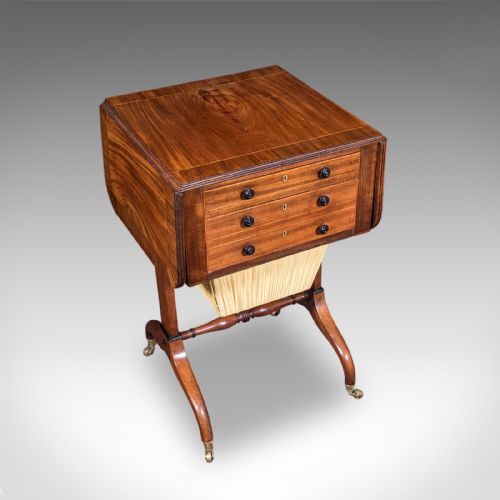
A regency period sewing box encompasses both compact tabletop caskets and larger freestanding work tables designed for domestic needlework. The evidence shows table forms dominate current listings, alongside portable boxes covered in leather or executed in lacquer.
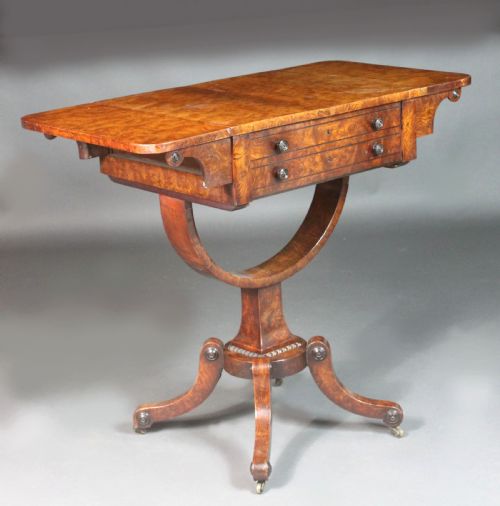
Most examples date from the early nineteenth century under Regency and George IV styles. Woods such as rosewood and mahogany appear alongside exotic veneers like burr ash, pollard oak, and birdseye maple.
Internal arrangements typically include fitted trays with bone accessories and lidded compartments for threads and pins. These pieces bridge the gap between functional sewing equipment and refined parlour furniture.
Materials and construction
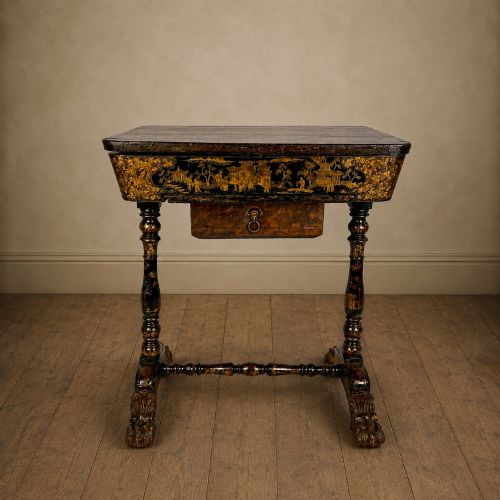
Cabinetmakers constructed these pieces using dense tropical hardwoods such as rosewood and mahogany over sturdy timber carcases. Decorative finishes frequently incorporate brass inlay, fine stringing, and black and gilt lacquer.
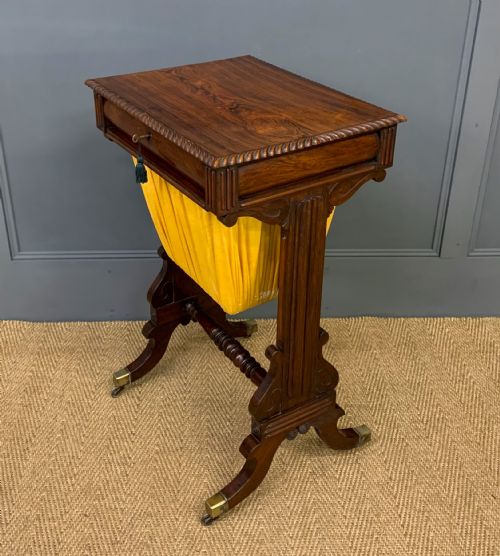
Table versions utilise drop leaves, pedestal columns, and basket slides for fabric bags suspended beneath the top. Portable caskets employ sarcophagus forms and leather coverings, demonstrating meticulous attention to exterior detail.
Current listings feature items spanning the Regency and George IV periods, utilising rosewood, mahogany, and lacquer.
Factors influencing quality
Quality depends upon the choice of timber veneer and the precision of the cabinetwork. Pieces utilising burr ash, pollard oak, or elaborate brass inlay represent the higher tiers of craftsmanship.
The complexity and intact state of internal fittings separate standard boxes from superior examples. Complete fitted trays with original bone contents demonstrate a higher original investment in the piece.
Gillows of Lancaster
The Regency Period Sewing Box Glossary
- Work table
- A freestanding domestic table equipped with a drawer or hanging bag for needlework materials. These items combine a writing or sewing surface with concealed storage.
- Sarcophagus form
- A box shape featuring a domed or sloping lid reminiscent of an ancient stone coffin. This architectural profile is typical of high-status portable caskets.
- Drop leaf
- A hinged flap on the side of a table that raises to extend the surface area. It provides flexibility in smaller rooms.
- Stringing
- A narrow inlay of contrasting wood or light-coloured material used to outline panels. This technique adds linear definition to table tops and box lids.
Regency Period Sewing Box: Frequently Asked Questions
What is inside a regency period sewing box?
These boxes usually contain a removable fitted tray divided into small compartments for thread spools, needles, and thimbles. Many retain original bone or ivory tools.
Beneath the tray lies a deeper well for larger fabrics and unfinished stitching projects.
How do I tell a table from a box?
Tables stand on legs or central pedestals and often include fabric work bags suspended beneath the top. They function as small pieces of occasional furniture.
Boxes are portable caskets designed to sit on tabletops, chests of drawers, or desks.
Which woods are most common?
Rosewood and mahogany form the vast majority of surviving examples. Cabinetmakers also utilised decorative veneers including birdseye maple, burr ash, and pollard oak.
Some portable versions feature leather coverings or painted lacquer finishes instead of exposed wood grain.
Are these pieces strictly for sewing?
While intended for needlework and related crafts, many tables include pull-out writing slides. Their compartmented interiors suit modern organisation just as well as historical needlecrafts.