

Antique Sewing Furniture
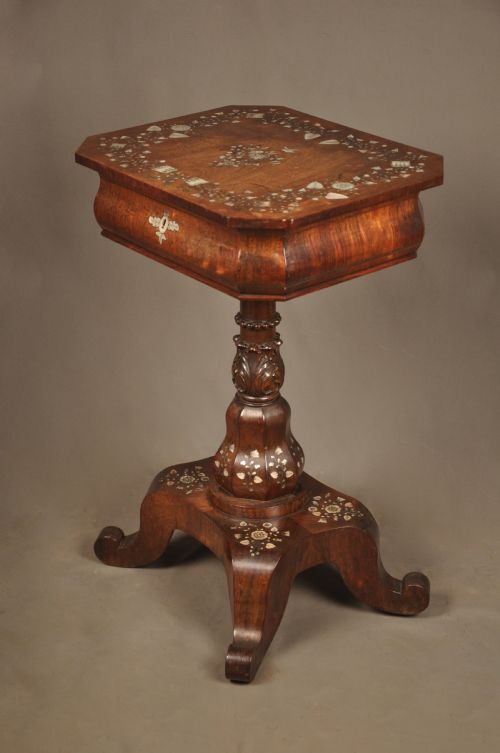
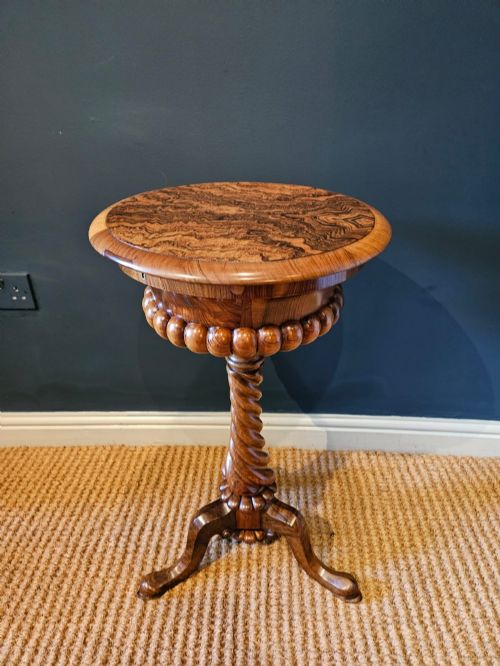
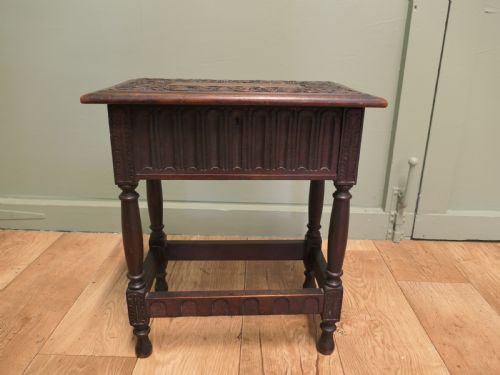
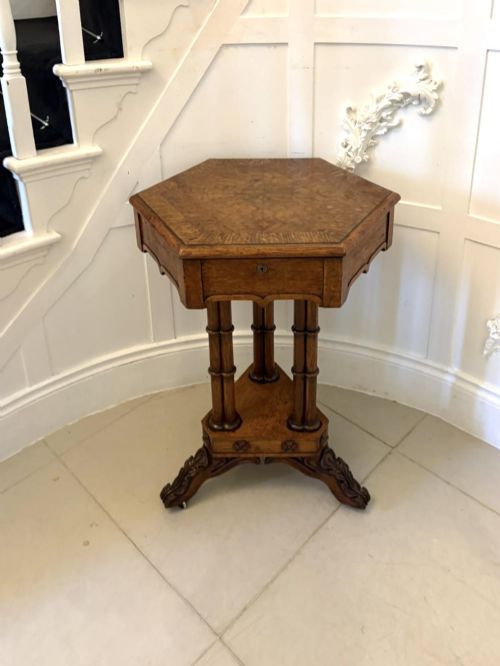
Antique sewing furniture comprises specialised tables and stands from the Georgian, Regency and Victorian periods designed to hold needlework and domestic crafts.
Antique Sewing Furniture
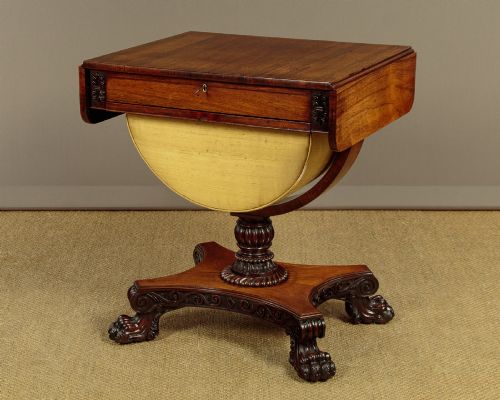
Makers of these items incorporated internal compartments, drawers and hanging fabric bags to store thread, needles and unfinished projects. You also find occasional pieces incorporating games boards, writing surfaces and reading desks within the same compact footprint.
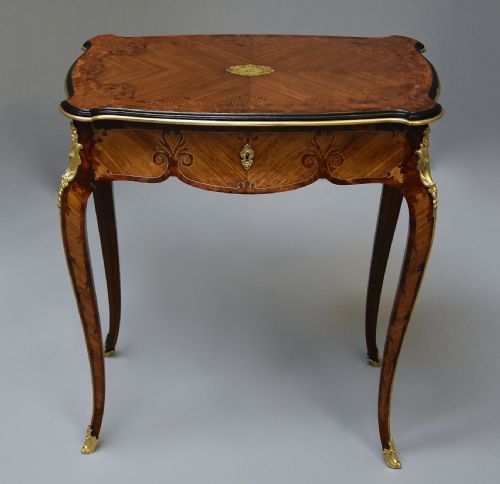
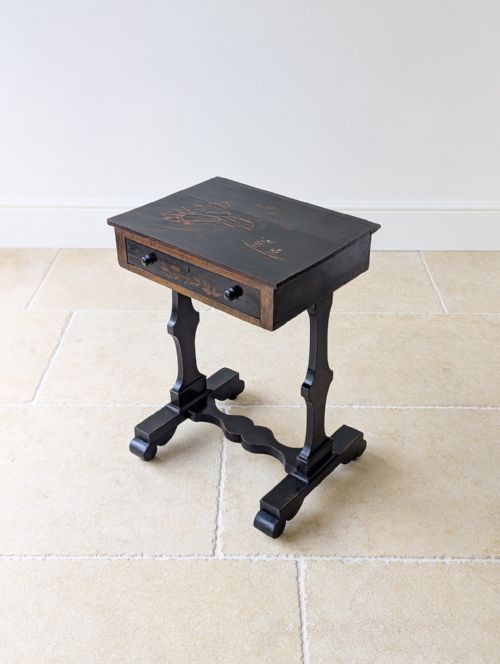
The regional variety spans Scottish satinwood, Irish rosewood, French kingwood and Chinese export lacquer, alongside English mahogany examples. These tables served both a practical purpose in the drawing room and a decorative function appropriate for ladies of the household.
Materials and construction techniques
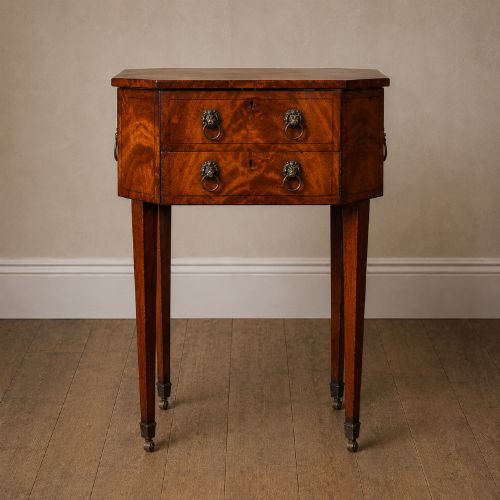
Cabinet makers utilised dense hardwoods like mahogany, rosewood and walnut, often selecting figured veneers, curl grain and burr sections to create decorative surfaces. Inlays of satinwood, boxwood and marquetry provide geometric and floral contrast across Regency and Victorian examples.
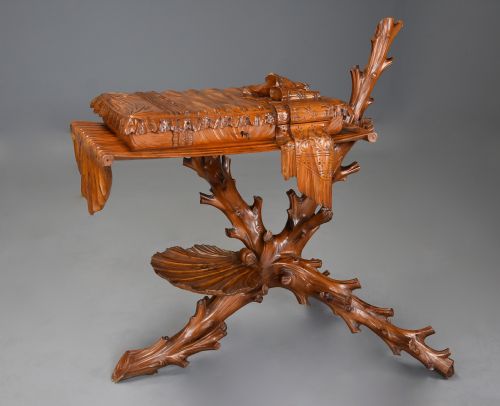
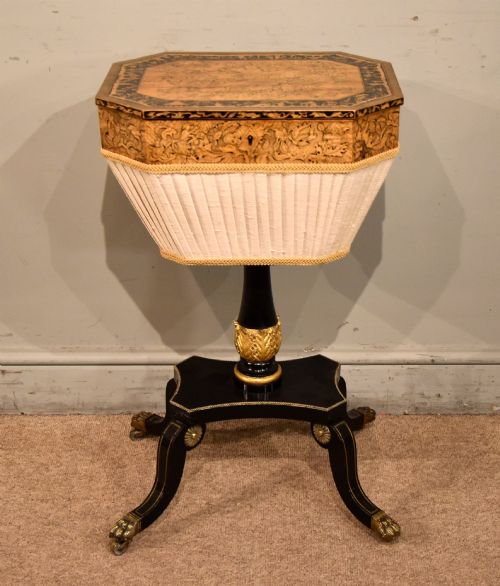
Specialised items feature intricate decorative methods including penwork, ebonising, Chinoiserie gilding and carved pine grotto work. Structural integrity relies on traditional joinery, bobbin-turned pedestals, lyre-ended supports and sophisticated internal mechanisms for drawers and baskets.
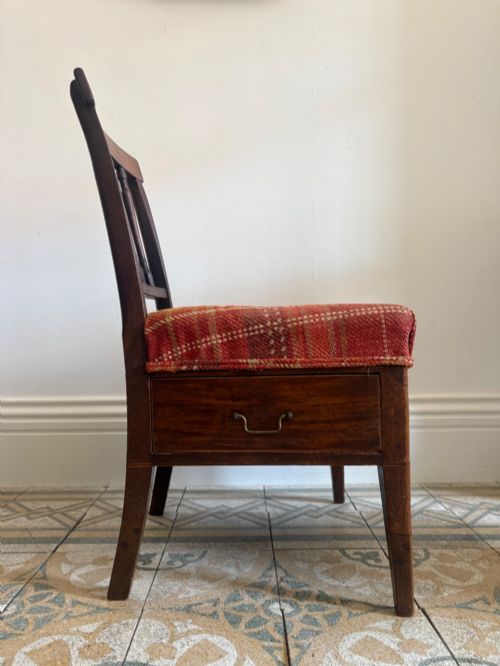
Object forms include Pembroke tables, side tables, work tables, occasional chairs, tiered stands and desks.
Assessing quality in sewing pieces
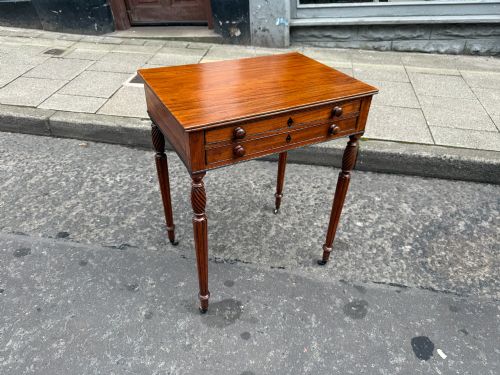
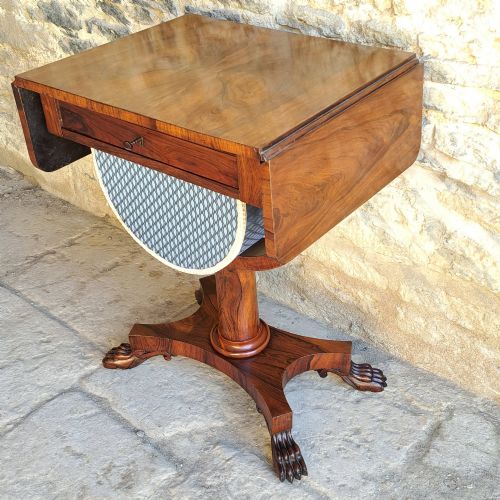
Quality rests upon the selection of timber veneers and the precision of decorative inlays, such as marquetry and contrasting stringing. Superior pieces display refined secondary elements like lion mask brass handles, finely carved pedestals and well-executed penwork or Chinoiserie.
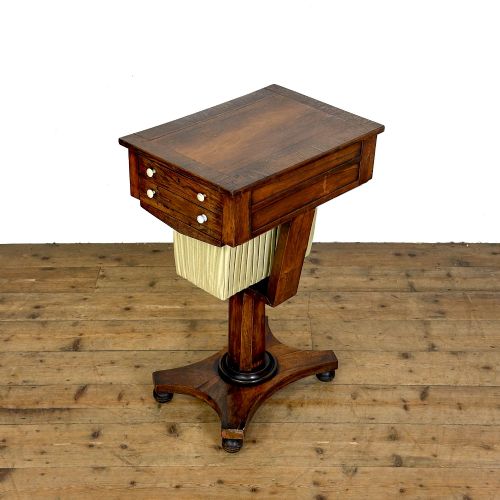
The sophistication of the internal mechanism dictates the merit of a work table, from smooth sliding drawers to fitted compartments and intact silk baskets. Finer examples maintain structural harmony between the exterior cabinet work and the functional storage integrated beneath.
Gillows
The Antique Sewing Furniture Glossary
- Work table
- A small movable table equipped with drawers or a fabric bag underneath for storing sewing equipment. These pieces gained immense popularity during the Georgian and Victorian periods.
- Pembroke table
- A small occasional table featuring two hinged drop leaves on opposite sides. Many examples incorporate sewing drawers or storage bags.
- Marquetry
- The art of applying pieces of veneer to a structure to form decorative patterns and pictures. Craftsmen used contrasting woods like boxwood and satinwood for this detailed work.
- Penwork
- A decorative technique using Indian ink applied with a pen to create intricate surface designs resembling engravings. It appears frequently on Regency fancy furniture.
- Chinoiserie
- European decorative art influenced by Chinese styles and motifs, often featuring gilded and painted lacquer. This aesthetic appears on select export and domestic sewing pieces.
Antique Sewing Furniture: Frequently Asked Questions
What is antique sewing furniture used for?
These tables and stands provided dedicated storage for needlework, threads, pins and ongoing handcraft projects in domestic drawing rooms.
Today, collectors utilise them as compact side tables, lamp tables or bedside cabinets while retaining their original storage compartments.
How do I date a sewing table?
Dating relies on combining the timber species, overall architectural style, leg forms and decorative techniques such as penwork or marquetry. Georgian and Regency pieces favour lighter satinwood and classical proportions, while Victorian items often display heavier rosewood or burr walnut.
Hardware details like brass handles and the presence of makers' marks or labels further refine the period of manufacture.
What woods are common in sewing furniture?
Mahogany forms the foundation of most English pieces from the Georgian and early Victorian periods, accompanied by rich dark rosewood. Walnut, satinwood and maple also feature prominently across different regional workshops and revival styles.
Exotic additions include French kingwood veneers and Chinese export lacquer finishes.
Are sewing tables practical for modern homes?
Their compact dimensions make them exceptionally useful as side tables next to sofas or armchairs in contemporary living spaces. The internal drawers and lift-top compartments provide discreet storage for small household items.
Care should be taken to protect polished wooden surfaces and delicate fabric baskets from direct heat and moisture.