


Antique Sewing Companion
An antique sewing companion organises pins, needles and threads in wood, silver or velvet, offering a practical touch of historical craft.
Antique Sewing Companion
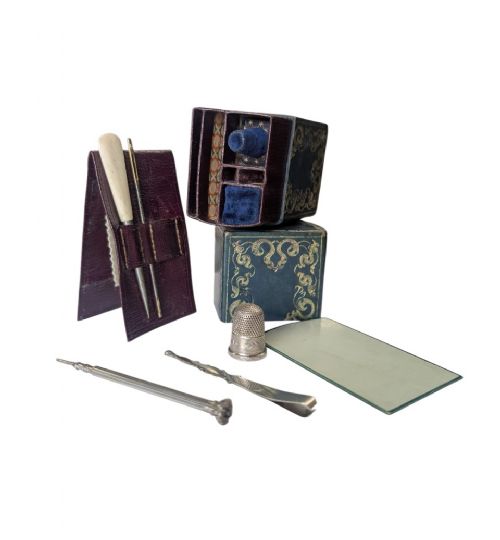
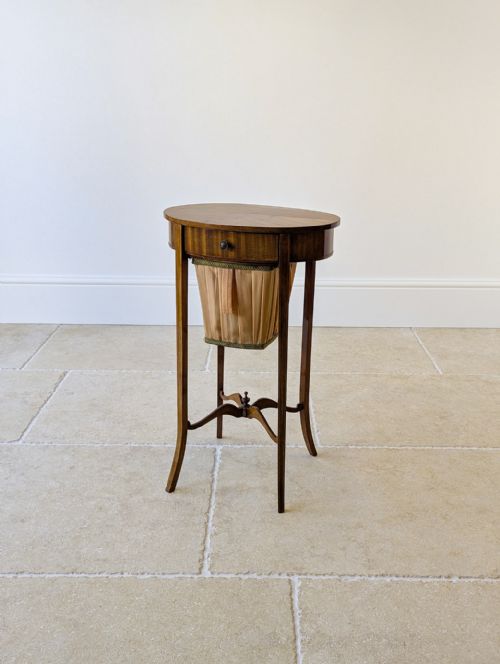
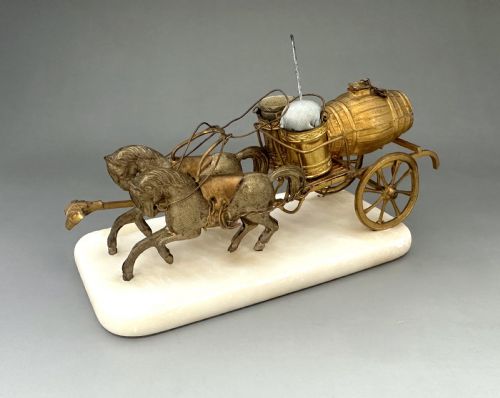
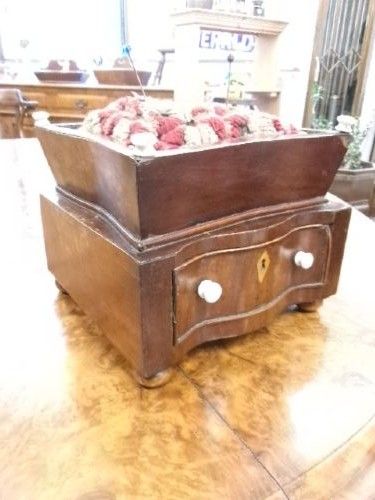
An antique sewing companion encompasses everything from small velvet pin cushions and silver etuis to substantial mahogany and rosewood work tables. Buyers searching for an antique sewing companion often encounter tabletop boxes, novelty silver shapes, and fitted wooden work boxes designed for domestic needlework.
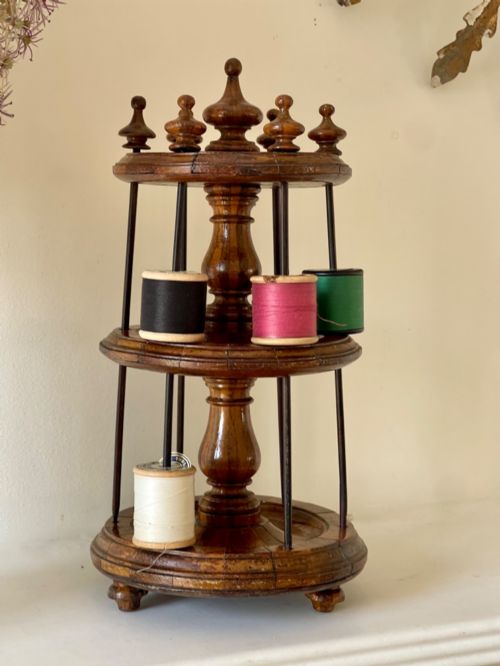
The pieces span the nineteenth century, Victorian, and Edwardian periods, including French Palais Royal examples and Scottish cotton reel stands. Rosewood and mahogany boxes frequently appear alongside brass stands and tortoiseshell or mother-of-pearl containers.
How they were made
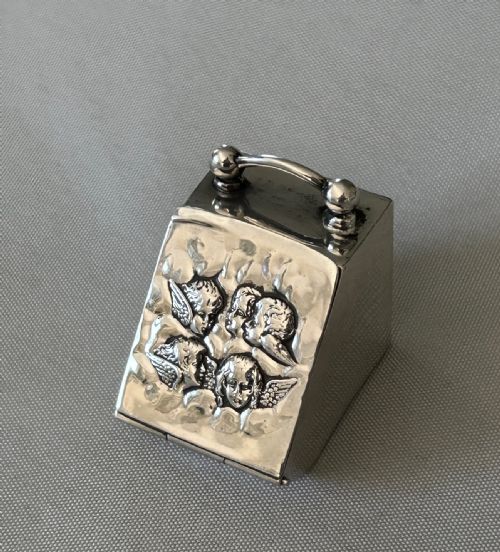
Cabinetmakers constructed larger work tables and boxes in rosewood, mahogany, and burr walnut, sometimes incorporating intricate Tunbridge Ware or delicate mother-of-pearl inlay. Smaller items utilise metals such as brass and sterling silver, cast or formed into novelty shapes like animals and coal scuttles.
Interior fittings rely on turned bone and treen for cotton reels, needle cases, and spindles, paired with velvet and fabric for pin cushions. Metalwork components include fitted thimbles, tiny etui instruments, and hinged silver closures.
Materials across these listings include rosewood, mahogany, burr walnut, silver, brass, tortoiseshell, mother-of-pearl, velvet, and bone.
What varies in quality
Quality reveals itself in the intricacy of the internal fittings, such as matching sets of treen tools, bone spindles, and complete needle cases housed within rosewood or mahogany boxes. Finer pieces demonstrate superior joinery, meticulous Tunbridge Ware mosaic work, and richly figured timber veneers.
Silver and brass components vary from simple utilitarian brass stands to finely chased sterling silver novelty items shaped as pugs, goldfish, and jockey caps. The presence of original silk linings, intact velvet cushions, and matching accessories elevates the execution of the companion.
The Antique Sewing Companion Glossary
- Etui
- A small ornamental box used for holding needles, tweezers, and other small implements. These portable cases appear in brass, tortoiseshell, and silver.
- Treen
- Small handmade wooden household objects turned on a lathe. Spools, needle cases, and cotton reel stands frequently take this form.
- Pin cushion
- A small stuffed pad used for holding pins safely during sewing tasks. They appear independently, mounted on silver animals, or fitted inside work boxes.
- Tunbridge Ware
- Woodworking characterised by tiny mosaic patterns built from different coloured woods. It decorates the surfaces of specific nineteenth-century companions.
- Work table
- A standalone piece of furniture featuring a box or fabric bag beneath the top for sewing materials. These combine a writing or display surface with practical storage.
Antique Sewing Companion: Frequently Asked Questions
What is inside a sewing companion?
These pieces typically contain a combination of pin cushions, cotton reels, needle cases, and small thimbles. Many include fitted compartments carved from wood or lined with velvet.
More elaborate examples incorporate matching treen tools, bone implements, and miniature silver instruments designed for specific needlework tasks.
How do I date a sewing box?
Dating relies on timber choices, such as rosewood and mahogany in the nineteenth century, compared to lighter Edwardian inlaid styles. Structural clues and decorative motifs like Victorian brasswork also help establish the period.
Makers frequently utilised specific materials like mother-of-pearl or tortoiseshell during distinct decades, aiding identification alongside hallmarks on silver elements.
Were these used for travel?
Smaller etuis and portable boxes were designed for travel, allowing owners to carry pins, needles, and threads away from home. Their compact size kept essential tools organised on journeys.
Larger work tables and fitted cabinets remained stationary in domestic drawing rooms, serving as permanent furniture pieces for daily needlework.
What is treen?
Treen refers to small wooden objects made by turning timber on a lathe, such as cotton spools, handle grips, and needle cases. These wooden components form the functional interior fittings of many nineteenth-century boxes.
Craftsmen utilised various woods to create durable, tactile accessories that complemented the polished exterior of rosewood or mahogany companions.