
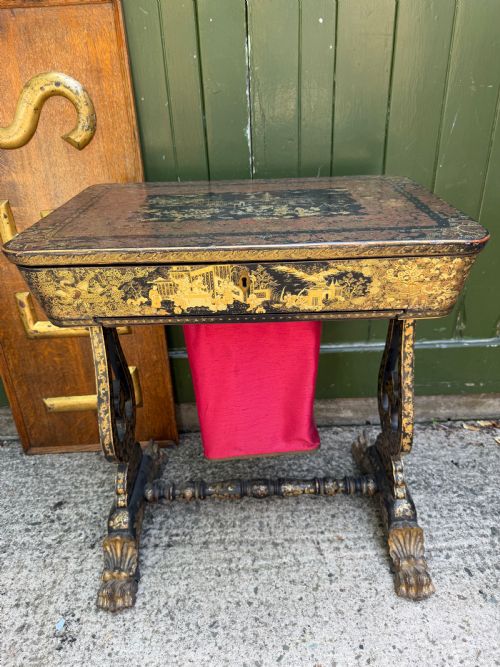
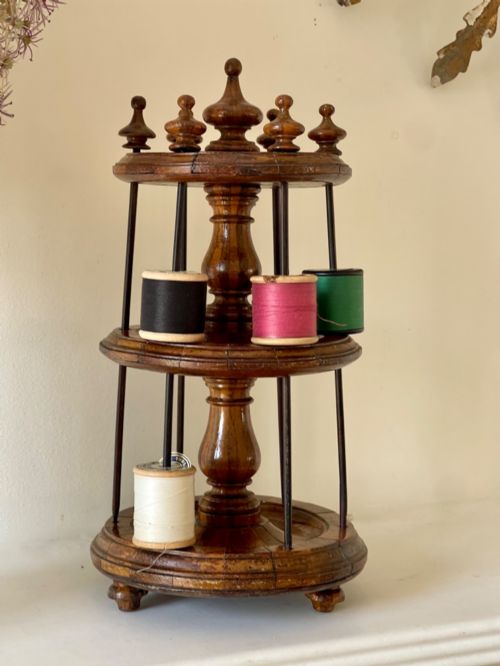


19th Century Sewing Stand
These 19th century sewing stand pieces are clever, elegant furniture built for needlework, offering fitted compartments that collectors prize for period interiors.
19th Century Sewing Stand
A 19th century sewing stand combines practical storage with domestic elegance, serving as a dedicated workspace for needlework and small crafts. These items frequently appear as work tables, sewing tables, and occasional tables designed to sit beside a chair or sofa.
The pieces on this page span the Regency, Victorian, and William IV periods, alongside specific styles like Anglo-Indian. Forms range from compact cotton reel stands to elaborate rosewood and mahogany work tables equipped with interior compartments.
Makers of the era utilised various woods and decorative schemes, resulting in forms that doubled as reading tables or lamp tables. Buyers will encounter both British examples in mahogany and rosewood and export pieces featuring lacquer and gilded decoration.
How they were made
Cabinetmakers constructed these stands using dense timbers such as mahogany and rosewood, often pairing them with turned wood components and brass hardware. Selected pieces incorporate bone inlay or delicate surface gilding to elevate their decorative appeal.
Interiors frequently feature fabric, velvet, or silk cotton linings designed to protect delicate sewing accessories and threads. Structural joinery prioritised stability for daily use while maintaining slim proportions suitable for domestic sitting rooms.
Materials seen across these listings include rosewood, mahogany, brass, velvet, fabric, turned wood, metal, and bone inlay.
What varies in quality
Quality in a 19th century sewing stand rests on the selection of timber grain, the crispness of turned wooden elements, and the complexity of the interior fittings. Pieces displaying sophisticated internal compartments or specialised functions like reading supports command greater attention from discerning collectors.
The cohesion of design across the exterior casework and the interior trays distinguishes standard production items from finer workshop output. Superior examples maintain intact original silk, velvet, or fabric linings alongside precise joinery in the box and underframe.
The 19th Century Sewing Stand Glossary
- Rosewood
- A dense, dark timber featuring prominent grain patterns, heavily utilised by Regency and Victorian cabinetmakers for high-status furniture. It takes a high polish and provides a rich surface tone.
- Mahogany
- A durable hardwood valued for its stability and reddish-brown colour, commonly employed in English work tables and occasional furniture throughout the nineteenth century.
- Teapoy
- A small pedestal table originally designed to hold tea canisters, frequently adapted or related in form to nineteenth-century work boxes and sewing stands.
- Anglo-Indian
- A descriptive term for furniture made in India by local craftsmen for British residents, typically incorporating intricate carved details and exotic timbers.
- Work Table
- A functional nineteenth-century furniture form incorporating drawers, boxes, or fabric bags beneath the top specifically intended for needlework and crafts.
19th Century Sewing Stand: Frequently Asked Questions
What is a 19th century sewing stand used for?
These stands provided nineteenth-century households with a dedicated place to store threads, needles, and ongoing textile projects while sitting in the parlour.
Today, buyers use them as side tables or lamp tables where the internal compartments remain useful for modern storage.
How do I identify a Regency sewing stand?
Regency examples typically display classical proportions, crisp mahogany or rosewood surfaces, and restrained brass mounts dating from the early decades of the nineteenth century.
They often share design traits with contemporaneous lamp tables and occasional tables.
What materials are common on these stands?
Mahogany and rosewood form the primary structural timbers, often complemented by turned wood supports and brass fittings.
Interiors frequently utilise velvet, fabric, silk cotton, and occasionally bone inlay to finish the storage compartments.
Are Victorian sewing stands different from Regency ones?
Victorian pieces tend to incorporate heavier proportions, diverse wood treatments, and sometimes Chinese export lacquerwork with gilded decoration.
Regency variants generally favour cleaner classical lines and rich mahogany or rosewood grain.