


Antique Settee and Armchairs
These antique settee and armchairs bring matched seating together for a drawing room or salon.
Antique Settee and Armchairs
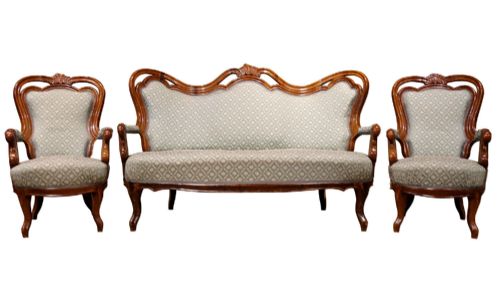
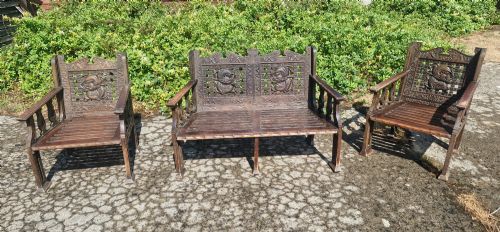
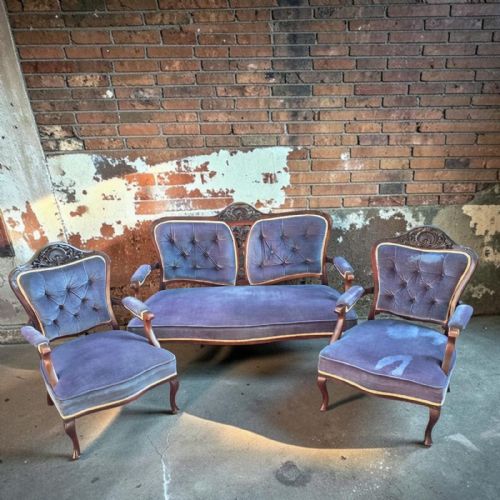
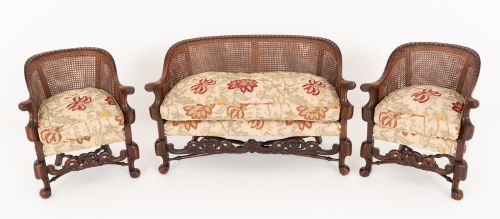
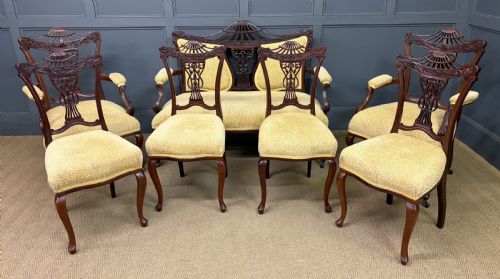
When you search for an antique settee and armchairs, you encounter coordinated seating suites designed for formal reception rooms. These groupings typically comprise a larger settee accompanied by a matching pair of armchairs, forming a unified whole.
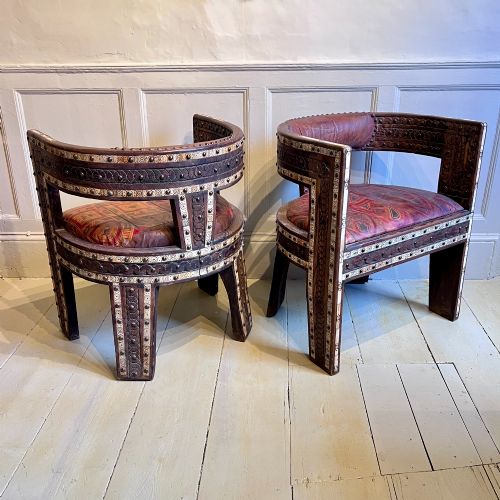
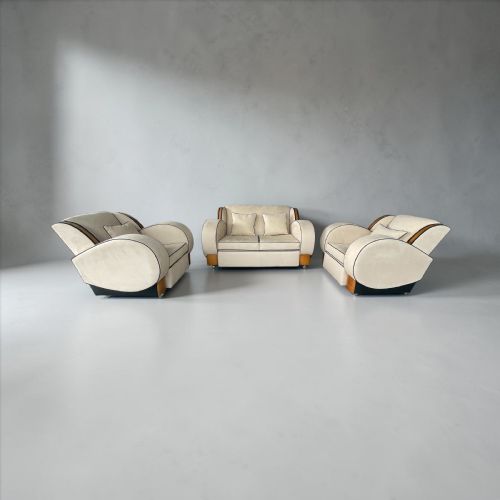
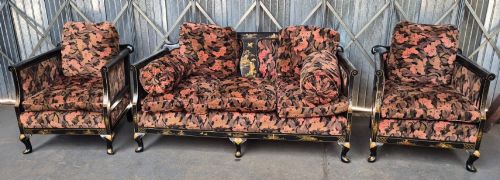
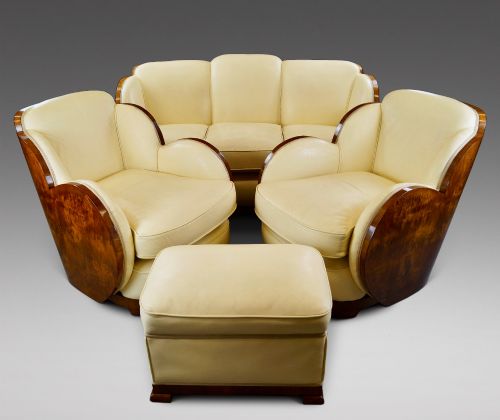
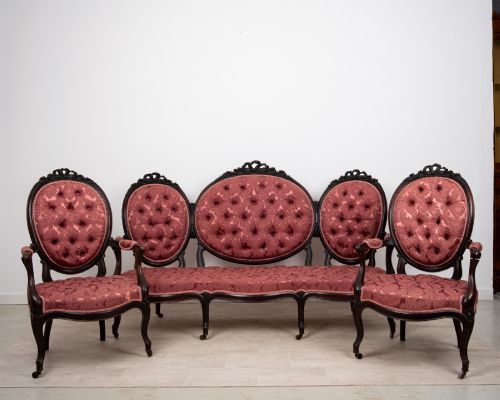
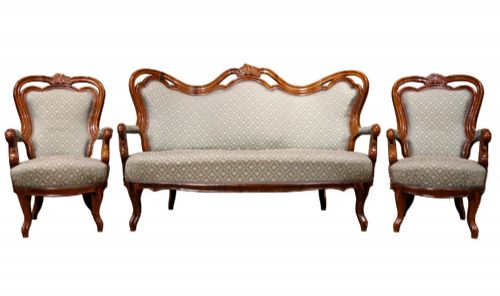
The selections span from the nineteenth century through the Edwardian era and into the 1930s. You will frequently meet Victorian and Edwardian salon suites alongside walnut Art Deco cloud suites and colonial pieces.
Forms range from compact three-piece sets to extensive drawing room groupings with numerous chairs and footstools. The underlying styles encompass carved walnut, inlaid mahogany, and upholstered frames derived from French and English traditions.
Materials and Construction
Makers utilised solid timbers such as mahogany, walnut, and padauk to construct the structural frames of these seats. These woods were frequently carved, ebonised, or inlaid to suit the prevailing taste of the period.
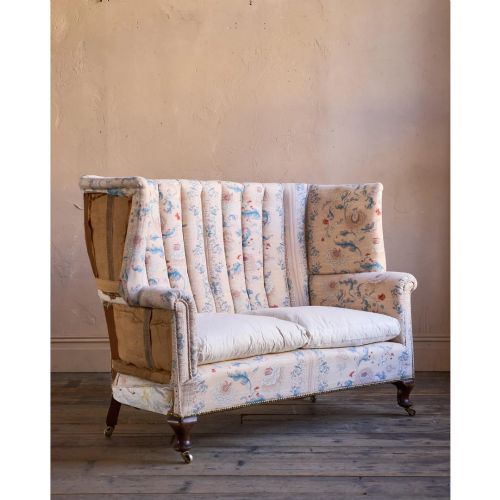
Upholstery techniques involved deep buttoning, fabric coverings, and leather finishes secured over internal webbing and springs. Brass elements and detailed woodwork completed the assembly of the settee and accompanying armchairs.
Materials recorded across the suites include mahogany, walnut, padauk, brass, leather, velvet, and textile.
Assessing Quality and Execution
The calibre of a suite rests upon the crispness of the timber carving and the integrity of the joinery. Superior examples display dense, well-figured walnut or mahogany with hand-carved details rather than applied ornamentation.
Upholstery execution and the retention of matching original textiles or leather significantly influence the standing of a suite. Complete suites that retain their original configuration and harmonious coverings demonstrate greater cohesion than assembled groups.
Epstein·Baumann·Jas / James Shoolbred·Howard and Sons
The Antique Settee and Armchairs Glossary
- Salon suite
- A matching group of seating comprising a settee and armchairs designed for a formal reception room. These suites ensure a unified aesthetic across all principal chairs in a parlour.
- Bergere
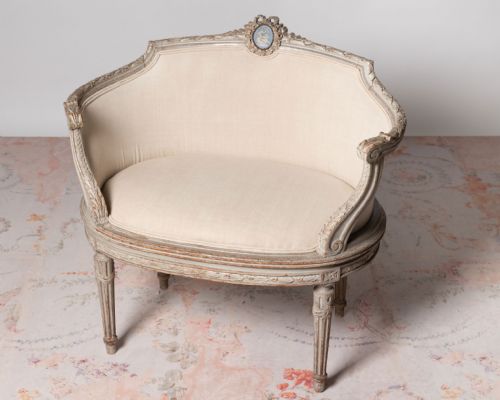
- An enclosed armchair with upholstered sides and back, frequently constructed with cane panels. It forms part of coordinated seating suites from the nineteenth century onwards.
- Knowle sofa
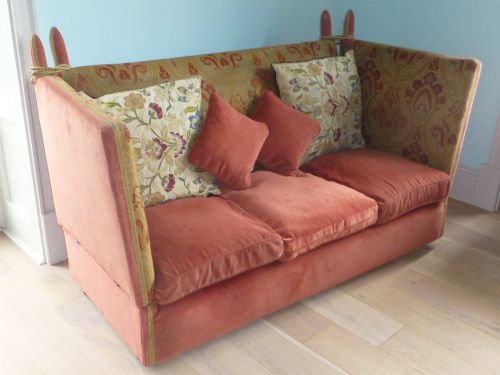
- An upholstered settee featuring adjustable drop arms held in place by wooden pegs and cords. This historic form appears in later variations alongside matching armchairs.
- Aesthetic period
- A design movement of the late nineteenth century focusing on art for art's sake and reform in decorative arts. Pieces from this time employ ebonised finishes and incised details.
- Cloud suite
- An Art Deco seating form characterised by rounded, bulbous upholstery contours resembling cumulus clouds. These suites combine walnut frames with substantial leather or fabric coverings.
Antique Settee and Armchairs: Frequently Asked Questions
What pieces form a complete suite?
A standard suite typically includes a settee paired with two matching armchairs. Larger configurations may incorporate additional side chairs and footstools.
These coordinated groupings were manufactured to provide uniform seating arrangements for formal drawing rooms and reception spaces.
How do I date an antique suite?
Dating relies upon identifying stylistic markers such as Victorian carved walnut, Edwardian mahogany inlay, or Art Deco leather curves. Construction methods and framing materials also indicate the era of manufacture.
Examining the underlying timber and upholstery techniques helps place the settee and armchairs within their historical period.
Where were these suites used?
These seating groups were primarily stationed in grand reception rooms, parlours, and country house drawing rooms. They served as the main seating arrangement for entertaining guests.
Conservatories and private sitting rooms also housed lighter cane or wicker variations during the Edwardian period.
Are these sets always matching?
The listings demonstrate that suites were produced as cohesive units sharing identical wood, carving, and upholstery. This intentional pairing distinguished them from random collections of seating.
Matching suites provide a unified decorative scheme designed by the maker or retailer as a single entity.